
Swimwear Trends 2026: Buyer’s Guide for Brands and Retailers
The 2026 swimwear season is not defined by one loud trend. For buyers and brands, the more useful signal is a group of commercial directions that can be turned into sellable collections: softer color palettes, retro prints, sharper bikini silhouettes, decorative hardware, textured fabrics and resort-ready styling.
This guide is the hub for Hongxiu’s 2026 swimwear trend coverage. It summarizes the main buyer-facing trends and links to narrower articles on runway direction, bikini silhouettes, embellished styles, men’s swim trunks and resortwear opportunities.
1. Soft Pastels and Clean Commercial Color
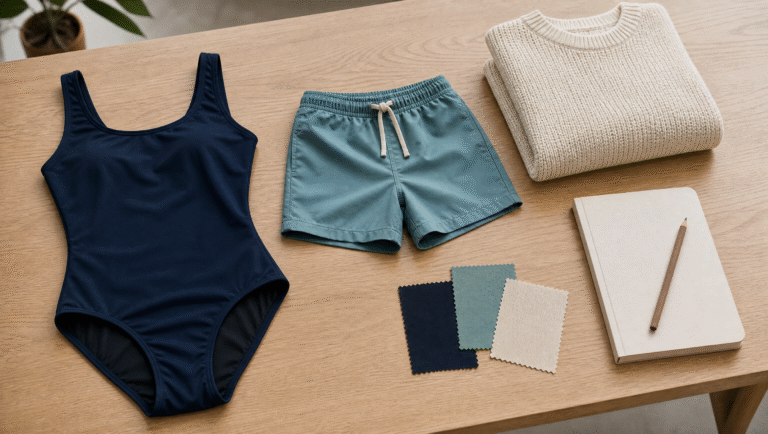
Butter yellow, pale green, soft blue and warm neutrals are becoming more useful than extreme novelty colors. These shades photograph well, pair easily with resort accessories and can be applied across bikinis, one-pieces and cover-ups without forcing the collection into a single aesthetic.
From a manufacturing perspective, lighter colors still need careful fabric selection, lining control and colorfastness testing. Buyers should confirm fabric weight, lining opacity and print or dye performance before bulk production.
2. Polka Dots, Graphic Black and White, and Retro Prints
Retro prints are staying commercially relevant because they are easy for consumers to understand. Polka dots, monochrome stripes and clean graphic panels can update classic swimwear without making the product difficult to wear.
For buyers, the key is execution. A simple print direction still needs accurate placement, clean seam matching and fabric that holds color after sun, saltwater and chlorine exposure.
3. Stronger Bikini Silhouettes
Consumers are asking for bikini shapes that feel more intentional: asymmetrical tops, high-waist bottoms, minimal triangle sets, sporty cuts and cutout details. These shapes can create stronger product recognition than basic color changes alone.
The supporting guide to 2026 bikini silhouette trends goes deeper into which shapes are most practical for brand collections and what they require in pattern development.
4. Hardware and Embellishment as Value Signals
Metal rings, sliders, chains, shell details and bead accents are giving simple swimwear a more premium look. For B2B buyers, this is attractive because a small component can change perceived value without requiring a completely new base pattern.
However, embellished swimwear also creates sourcing and testing responsibilities. Hardware must resist corrosion, plating failure and skin discomfort. The heavy metal embellished swimwear guide explains how to evaluate this trend from a production standpoint.
5. Texture, Sculpting and Runway-Led Construction
Runway swimwear is pushing more sculptural construction, textured fabrics, asymmetric cuts and hybrid styling. These trends are useful for inspiration, but buyers should translate them carefully into commercial SKUs.
The dedicated article on Summer 2026 runway swimwear trends explains which runway ideas are most likely to matter for brands and retailers.
6. Men’s Swim Trunks Become More Technical
Men’s swimwear is moving beyond simple prints. Buyers are asking more questions about quick-dry fabric, recycled polyester, stretch, mesh lining, pocket construction, digital printing and multi-occasion wear.
For brands building a men’s category, the men’s swim trunks manufacturing trends guide explains how fabric and production choices are evolving.
7. Resortwear Expands the Swimwear Basket
Swimwear is increasingly sold as part of a vacation wardrobe. Matching cover-ups, shirts, beach pants and coordinated prints can raise average order value and make a collection feel more complete.
The resortwear 2026 guide covers how swimwear brands can think beyond single swimsuits and plan coordinated seasonal collections.
How Buyers Should Use These Trends
- Choose 2-3 trend directions that match your customer instead of chasing every signal.
- Confirm fabric, trims and construction feasibility before adding complex details.
- Use proven core styles for volume and trend-led styles for differentiation.
- Connect trend planning with MOQ, sampling time and margin targets.
A trend becomes useful only when it can be produced consistently and priced profitably. Before finalizing the range, connect the trend plan with fabric selection, supplier capability and the full swimwear manufacturing process.