
Swimwear Tech Pack Guide for OEM and ODM Production
A swimwear tech pack is the document that turns a design idea into clear factory instructions. For OEM and ODM swimwear production, it is the shared reference used by the brand, pattern maker, sample room, purchasing team, sewing line, and quality control team.
Without a complete tech pack, the factory has to guess. Those guesses often lead to wrong fit, incorrect materials, unclear pricing, extra sample rounds, and delayed bulk production. A strong tech pack makes the swimwear manufacturing process easier to quote, sample, and control.
What Is a Swimwear Tech Pack?
A tech pack is a production specification file. It normally includes flat sketches, measurement charts, size grading, fabric details, trims, construction notes, print or color references, label and packaging requirements, and quality tolerances.
For swimwear, this document is especially important because the product depends on stretch, recovery, body fit, seam comfort, and wet-use performance. A small change in fabric weight, elastic tension, or lining can change the final fit.
1. Technical Flat Sketches
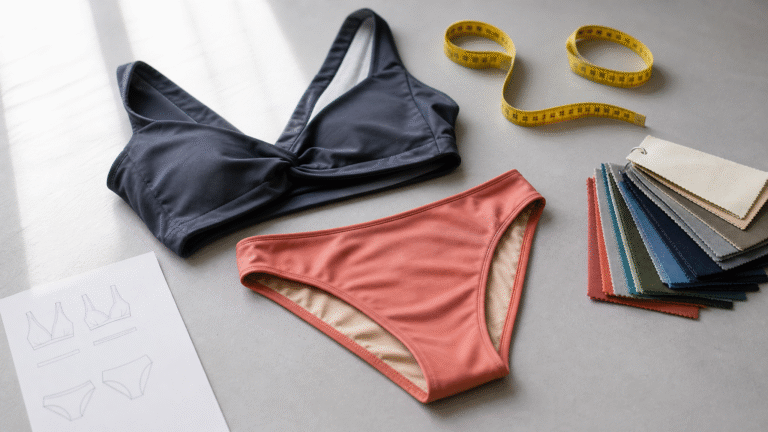
Start with clear front and back flat sketches. Add side views or close-up details when needed. The sketch should show seam lines, strap shape, closure type, cups, cutouts, gathers, panels, binding, waist height, leg opening, and trim placement.
Do not rely only on inspiration photos. Photos are useful for mood and styling, but they cannot replace a technical drawing. A factory needs to know what must be made, not only what the design should feel like.
2. Measurement Chart and Tolerances
The measurement chart should list points of measure for each size. Common swimwear measurements include bust, underbust, waist, hip, torso length, front rise, back rise, side seam, strap length, leg opening, waistband, and cup position.
Add tolerances for each measurement. Swimwear usually needs tighter tolerance than loose apparel because fit issues are more visible and more uncomfortable. Clear tolerances also help QC determine whether a production piece passes inspection.
3. Fabric and Lining Details
List the main fabric composition, weight, stretch direction, color, finish, and supplier reference if available. For printed styles, specify the print method, artwork scale, repeat, placement, and color standard. For solid colors, provide Pantone or fabric swatch references.
Lining should also be specified. A mismatch between shell fabric and lining can cause bagging, transparency, or poor recovery. If you are still choosing materials, review our swimwear fabric selection guide before finalizing the tech pack.
4. Bill of Materials
The bill of materials, or BOM, lists every component used in the style. This includes shell fabric, lining, elastic, thread, cups, pads, underwire, rings, sliders, clasps, hooks, drawcords, labels, hang tags, hygiene liners, polybags, and cartons.
A detailed BOM helps the factory quote more accurately. It also reduces substitution risk. If a brand wants a premium recycled fabric, rust-proof hardware, or a specific type of removable pad, those requirements should appear in the BOM.
5. Construction and Stitching Notes
Construction notes explain how the swimsuit should be sewn. Include stitch type, seam allowance, elastic attachment, binding method, lining method, reinforcement points, topstitching, and edge finishing. These details affect comfort, durability, and visual quality.
For example, a training swimsuit may need secure elastic and durable seams, while a fashion bikini may prioritize clean edges and delicate trim placement. Our edge finishing guide explains how different finishing methods affect the final garment.
6. Labels, Branding, and Packaging
If you are developing private label swimwear, include all branding requirements in the tech pack. This may include neck labels, care labels, size labels, logo placement, hang tags, barcode labels, hygienic liners, zipper bags, tissue paper, and carton marks.
Branding details affect cost and lead time. Some trims and packaging require their own MOQ. If you are comparing launch models, see our guide to private label vs full custom swimwear.
7. Sample Comments and Revision Tracking
A tech pack should not stop after the first sample. Use it to record sample comments, measurement changes, material changes, and approval status. This keeps the brand and factory aligned across prototype, fit sample, size set, and pre-production sample stages.
Good comments are specific. Instead of saying “the fit is wrong,” note whether the strap is too long, the cup coverage is too narrow, the leg opening is too high, or the elastic feels too tight. Specific comments reduce back-and-forth and help the sample room act quickly.
Common Tech Pack Mistakes
- Using only reference photos without technical flats.
- Missing fabric composition, weight, or stretch direction.
- Leaving trims, pads, lining, or elastic unspecified.
- Providing one size only without grading rules.
- Not defining acceptable measurement tolerance.
- Changing design details after quotation without updating the BOM.
- Approving samples without recording final production standards.
How a Strong Tech Pack Helps Buyers
A complete tech pack helps the factory quote faster, sample more accurately, purchase the right materials, control quality, and prepare bulk production with fewer surprises. It also protects the buyer because the approved document becomes the reference for inspection.
If you are evaluating a new supplier, ask how they review tech packs before sampling. A professional swimwear factory should be able to identify missing details, confirm fabric feasibility, and explain where production risk may appear. For supplier evaluation, use our checklist of 7 key metrics to evaluate swimsuit manufacturers.