
What a gather ratio does to a ruched swimsuit’s fit and fabric use
Ruching is easy to brief and hard to specify. A design note that says “add gathers at the side seam” leaves the sample room to decide how much fabric goes into that seam. That decision is the gather ratio, and it follows the style from the first pattern to the bulk cutting ticket.
Get the ratio wrong and the sample can still photograph well. The problem shows up later: a panel that sags when wet, a seam that will not lie flat, or a fabric bill that does not match the quote. None of those look like a gather problem at first.
What a gather ratio measures
A gather ratio is cut length divided by finished length. At 2:1, 40 cm of fabric is gathered into 20 cm of seam. At 1.5:1, 30 cm becomes 20 cm. The finished seam can measure the same in both cases. The amount of fabric inside it cannot.
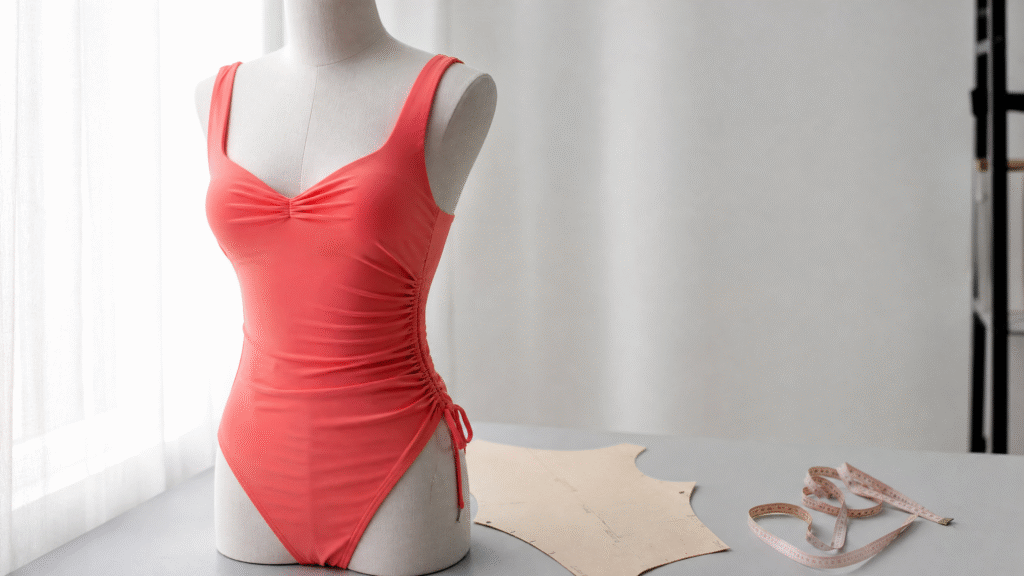
That difference is not ease. Ease is the room between the garment and the body. The gather ratio is the fabric folded into the garment. A 20 cm side seam at 1.5:1 holds 30 cm of cloth; at 2.2:1 it holds 44 cm. Same measurement on the table, different weight, different stretch, different cost.
Direction matters as well. A horizontal gather across a front panel opens over the bust. A vertical gather along a side seam lengthens as it opens. A curved gather does a bit of both. The sketch needs to show the direction, not the word ruched alone.
Why the number changes fit
Swimwear is cut with negative ease. The fabric has to hold the body, so there is not much slack to give away. Gathering uses some of that slack. A tight gather can leave the panel with too little stretch for sitting, swimming, or pulling the suit on. A low ratio can leave it flat, with none of the texture the design was built around.
The lining is the usual failure point. Gather the shell and cut the lining flat to the finished measurement, and the lining becomes a limit. The shell tries to open, the lining does not, and the seam puckers. The suit can feel tight across the gather and loose somewhere else at the same time. Either gather the lining to the same ratio or cut it with enough ease and attach it only where the construction allows.
Seam bulk sets the upper limit. More gather means more fabric inside the seam. On a thin knit that can show as a ridge through the outer layer, or make a clean topstitch difficult. On a heavy fabric the same ratio can feel stiff. The useful ratio is the one that gives the texture you want and still leaves a seam the factory can sew flat.
Fabric recovery sets the range
Stretch and recovery are not the same thing. A fabric can stretch to the right width and still come back slowly. In a gathered panel, slow recovery is what leaves the gather open after wear. Wet fabric makes it worse.
Test the ratio on the fabric that will be cut, not a stock fitting sample. If the style has a placement print, check how the gather moves the artwork as well. An all-over print can hide a lot of distortion. A placement print cannot. The panel shape and the print file have to account for the gather before the seam is sewn.
Elastic can help a gathered edge return, but it adds its own variables. Width, length, and sewing tension all change the result, and they interact with the ratio. A gathered seam with too little elastic can grow. Too much and the edge cups. The swimwear elastic specifications guide covers how to set the elastic separately from the gather.
Test the ratio on the sample
Ask for a marked sample, not a styled photo. The pattern piece should show the ratio, the cut length, and the notches that divide the gather. Then check four things:
- Finished measurement. Does the gathered seam measure what the tech pack says at rest?
- Stretch and return. Mark a fixed length on the gather. Stretch it by hand to the same point on each sample, release, and measure again after a short rest. Compare samples and compare the first wear with the second. The exact number is less useful than the change.
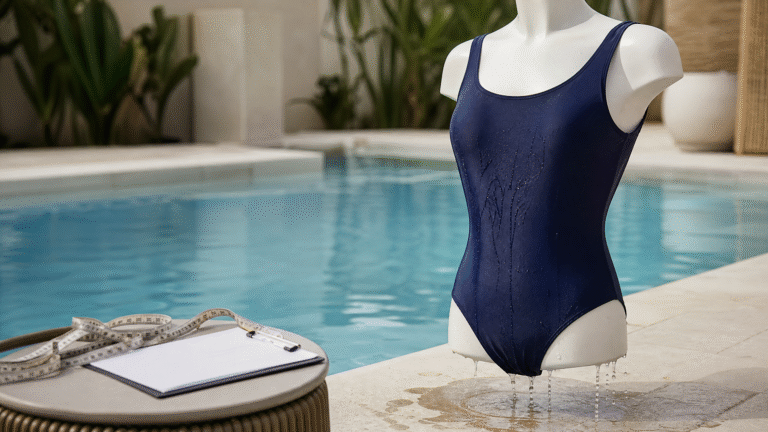
- Wet behavior. Soak the sample. Measure the gather while it is wet, let it dry, and measure again. A gather that stays open after drying points to the fabric or the ratio, not to the sewing.
- Seam quality. Look for puckering, skipped stitches, a hard ridge, lining show-through, and a gather that clumps in one section. A clump pulls the panel off grain.
Put the ratio in the tech pack
Ruching is a look, not a specification. The tech pack needs the number and the instructions that make it repeatable:
- Gather direction on the flat sketch;
- Ratio, cut length, and finished length for every gathered panel;
- Notch placement and how the gather is distributed;
- Seam allowance and seam type;
- Lining treatment, including whether the lining is gathered to the same ratio;
- Elastic specification if the gather includes elastic;
- A photo of the approved sample with the measurement points marked.
This is the same discipline as any other construction detail in a swimwear tech pack. A number that lives in an email or in the sample room’s memory does not survive a fabric change, a new factory, or the next season.
What it does to fabric costing
Cost the gathered panel from its cut length. A 1.8:1 panel needs 80% more fabric than the finished seam length, before seam allowance and marker loss. That arithmetic is simple. It still goes missing when the costing sheet lists only finished measurements.
The marker adds its own waste. Longer pattern pieces nest differently, and a print repeat can leave more offcuts. When two suppliers quote the same ruched style, compare the ratio and cut length behind each price. A cheaper fabric rate can disappear if the quote assumes a higher ratio or a looser marker. The guide to what changes fabric consumption covers the other variables around this calculation.
Check the full size range
A ratio can work on the base size and fail at the top of the range. Keep the ratio constant and the cut length grades with the finished seam, so the gather density stays consistent. Change the ratio between sizes and the texture changes with it. Pick one approach and put it in the grade rule.
Sample the base size and the largest size for any style going to bulk. Check both on wearers who match the target fit. A gathered panel that looks right on the base size can pull, sag, or lose coverage on a larger body. Test it wet, following the fit testing in water steps rather than judging it dry.
When to change the ratio
Change one variable at a time. If the sample looks flat, raise the ratio in small steps and check the seam after each one. If the seam is bulky or the suit feels heavy when wet, lower the ratio or change the fabric before touching the pattern. If the gather opens in water, check recovery and lining first. If there is a placement print, fix the panel and the artwork before adjusting the ratio.
A ratio change is a pattern change. It alters cut length, consumption, and the approved sample. Record the new number and the reason in the tech pack so the next order starts from the version that was actually approved.
Before you approve the style
Approve a ruched style on the pattern and the wet sample. Confirm the ratio, cut length, finished measurement, lining treatment, and seam quality. Check the base size and the largest size, then file the approved sample and the measurement record with the tech pack.
Hongxiu’s swimwear sampling service covers two pieces per style, so a ruched style can be checked in a base size and a large size before bulk. Settle the gather ratio in sampling. It is cheaper to change on paper than in a bulk cutting ticket.