Private Label vs Custom Swimwear: Cost, MOQ and Lead Time Guide
Choosing between private label swimwear and full custom swimwear is one of the first production decisions a brand has to make. It affects startup cost, minimum order quantity, sampling time, price positioning, inventory risk, and how different your collection can look in the market.
The right choice is not always the most customized option. For many new brands, a lower-risk private label launch can be the better first step. For brands with a clear design direction, custom development can create stronger differentiation. This guide compares the two models from a buyer’s perspective and links the decision to practical planning topics such as startup budget, wholesale pricing, tech packs, MOQ and lead time.
Private Label vs Full Custom: The Short Version
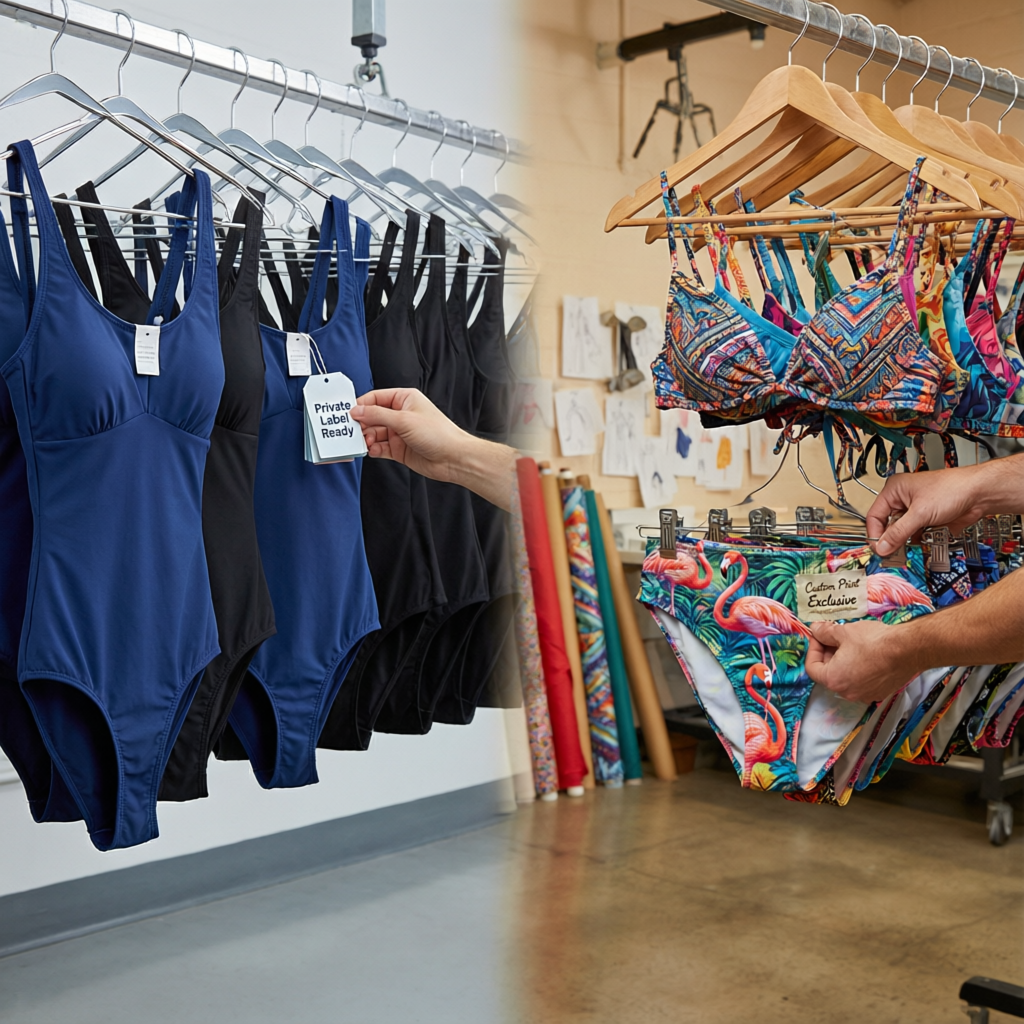
Private label swimwear starts from an existing style, pattern or product base. A brand then customizes selected details such as fabric, color, print, labels, hang tags, hygienic liners or packaging. Full custom swimwear starts from a new design idea and requires product development before production can begin.
| Decision area | Private label swimwear | Full custom swimwear |
|---|---|---|
| Best for | Market testing, faster launch, smaller first collection | Original designs, stronger brand differentiation |
| Development cost | Lower because patterns and construction are already proven | Higher because pattern making, sampling and revisions are required |
| MOQ pressure | Usually easier to manage for new brands | Usually higher, especially with special fabric or trims |
| Lead time | Shorter because less development is needed | Longer because samples must be tested and approved |
| Brand control | Moderate, depending on available customization options | High, from silhouette to fabric, fit and finishing |
| Main risk | Product may be less exclusive | Higher upfront cost and more development uncertainty |
What Counts as Private Label Swimwear?
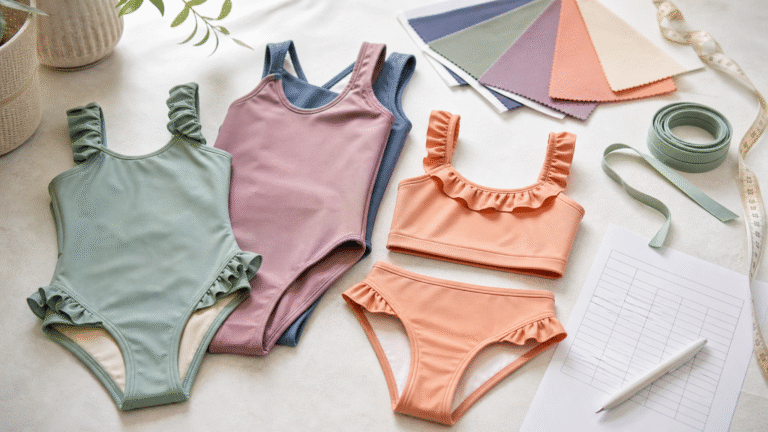
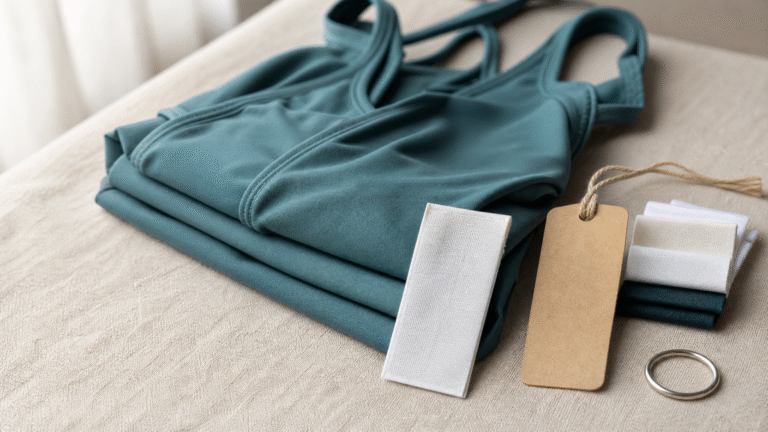
Private label swimwear does not simply mean adding a logo to a generic swimsuit. In a practical B2B workflow, it can include selecting a proven silhouette and then customizing a combination of fabric, color, print, removable pads, lining, metal trims, woven labels, hang tags and packaging.
This model works well when the buyer wants to validate product-market fit before investing heavily in original development. It also helps retailers, e-commerce sellers and first-time founders reduce uncertainty around fit, production method and delivery timing.
What Counts as Full Custom Swimwear?
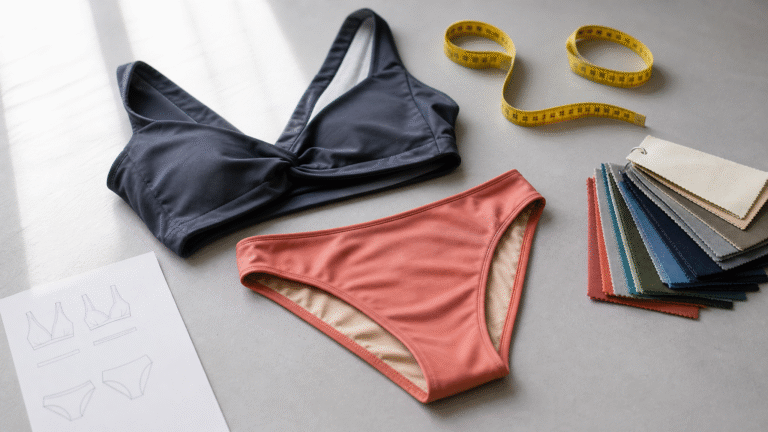
Full custom swimwear begins with a design concept. The buyer normally provides sketches, reference images, measurements, fabric direction, color requirements and construction details. A complete swimwear tech pack makes this process much more efficient because the factory can understand the design intent before pattern making and sampling begin.
Custom production is the better route when fit, silhouette, cut line, support structure, print placement or trim selection are central to the brand’s identity. It is also more suitable for brands that already understand their target customer and can commit to a more structured development process.
Cost Differences: Where the Money Goes
Private label reduces fixed development cost because the base product already exists. The main spending areas are sample confirmation, branded accessories, fabric or print changes, first bulk order and logistics. Full custom adds more cost before production because the product must be developed and tested first.
- Pattern and sample development: custom styles need pattern drafting, sample sewing, fitting and revisions.
- Fabric and trim sourcing: special fabrics, colors, prints, hardware or packaging can increase MOQ and lead time.
- Construction testing: support level, stretch recovery, lining, seam strength and edge finishing need confirmation before bulk production.
- Production setup: complex styles require clearer workmanship standards and more time on the sewing line.
If you are still building the first financial model for your brand, start with the broader swimwear brand startup cost guide, then return to this page to decide which production path fits that budget.
MOQ and Lead Time: Why They Matter as Much as Unit Price
Unit price is only one part of the decision. MOQ controls how much inventory risk you take, while lead time controls when cash turns back into sales. A style with a slightly lower unit price but a much higher MOQ can still be the wrong choice for a young brand.
Private label usually has a simpler approval path because the factory has already confirmed the base fit and construction. Full custom production needs more time for design review, material confirmation, first sample, revised sample and pre-production approval. For seasonal categories such as swimwear, this timing should be planned before the selling season, not after the product idea is finalized.
Which Model Should Your Brand Choose?
- Choose private label if you are testing the market, launching with limited capital, building a small first collection or trying to validate customer demand quickly.
- Choose full custom if your brand depends on original silhouettes, proprietary fit, unique construction, special prints or a clearly differentiated collection concept.
- Use a hybrid path if you want to start from existing styles but customize selected elements such as fabric, trims, labels and packaging.
For many brands, the practical path is progressive: start with private label or ODM, learn which styles and price points work, then move the best-performing direction into deeper custom development.
How This Connects to Pricing Strategy
The production model also affects retail and wholesale pricing. Private label can help a brand reach a workable landed cost earlier, while custom swimwear may need a stronger brand story, higher retail price or larger order volume to protect margin. The next step is to map the factory cost into your sales channel using a clear swimwear wholesale and retail pricing strategy.
Hongxiu’s Practical Workflow
Hongxiu supports both private label and custom swimwear projects. Buyers can start from existing styles for faster market testing, or prepare a custom project through the Hongxiu Custom System when they need a more detailed development workflow. The goal is to help brands move from concept and sample review into bulk production with fewer unclear handoffs.
If you are comparing suppliers at the same time, it is also useful to understand the broader swimwear manufacturing process, because the lowest quote is not always the lowest-risk production decision.