
Swimwear Print Production: All-Over vs. Placement Prints and Artwork Preparation
What swimwear print artwork really needs to work in production
Sending artwork that can’t go straight to production is the fastest way to delay a printed swimwear order. Nearly all swimwear prints fall into two groups: all-over (repeating) prints and placement (fixed-position) prints. Each needs a different file setup, a different approach to scale, and the right match between fabric and printing method. When brands supply clear, production-ready files, they sidestep re-sampling, cut down on back-and-forth, and keep bulk timelines on track.
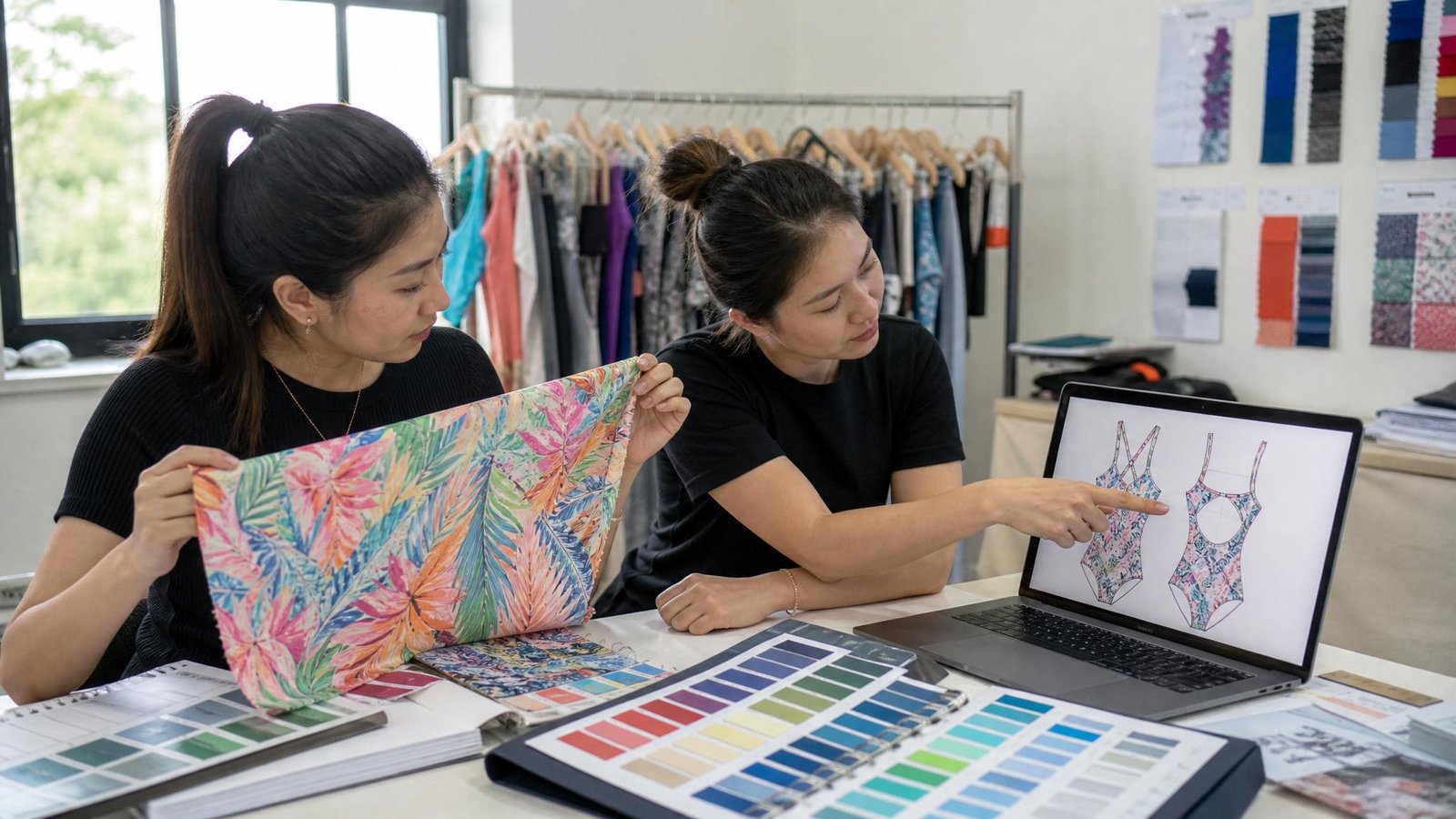
Fabric and print method: a two-path decision
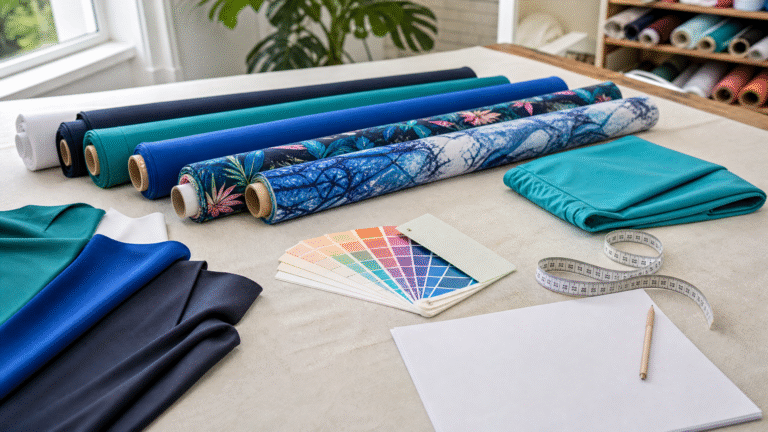
Most printed swimwear starts with one of two fabric bases, and the fabric choice determines the printing method. Polyester-spandex fabrics use heat-transfer sublimation. The ink goes into the fiber, so colorfastness holds up better after repeated chlorine and saltwater exposure. Sublimation also costs less per meter for bulk orders.
Nylon-spandex fabrics use inkjet printing. Colors can look more saturated at first, but the pigment sits on the surface, so colorfastness is lower than sublimation on polyester. Inkjet printing generally costs more per meter. For buyers choosing between the two, it’s a trade-off of richer initial color versus long-term durability and price.
All-over prints: one pattern repeated across the fabric
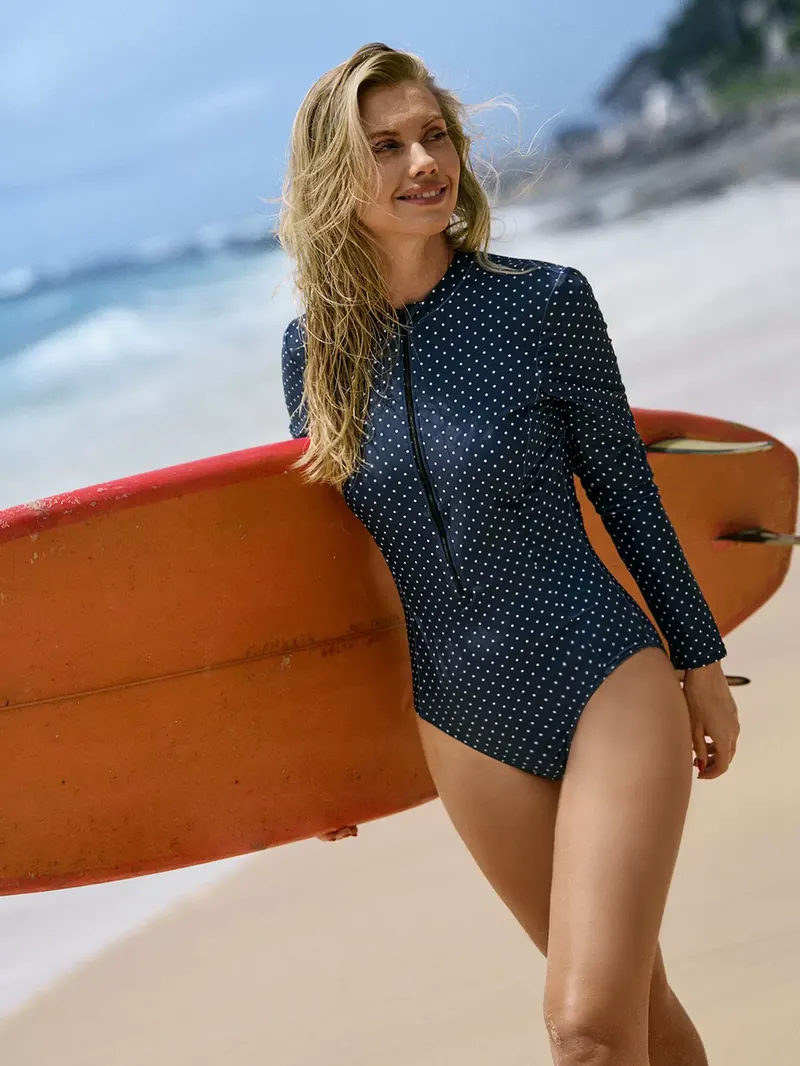
An all-over print (also called a repeating or seamless print) covers the fabric with no visible breaks. The pattern appears on every swimsuit, but since each garment is cut from a different part of the roll, the pattern placement on the final piece will shift a bit.
The artwork must be a seamless, tileable repeat. That means the right edge lines up with the left, and the top lines up with the bottom, without any visible join. If you can’t supply a seamless file, a factory with experience can usually rebuild it into a working repeat, but this adds design time, so tell your manufacturer early in the sampling stage.
Also agree on the repeat size. A repeat that’s too large can look awkward on a small bikini panel, and a micro-repeat might lose its detail. Send a target dimension in centimeters or a scaled mockup so the factory can set the repeat correctly.
Placement prints: graphics fixed to a specific area
A placement print puts the graphic in a fixed spot on the garment piece, like a logo on the chest, a motif on the back, or a brand name on the hip. Production is more step-heavy: the print goes onto the pattern piece before cutting, and laser cutting usually follows to keep the outline precise. This makes the per-unit cost higher than all-over printing.
Your artwork for placement prints needs to show clear measurements. A simple style mockup or a diagram with dimensions in centimeters works far better than a description. Without a size reference, the factory will estimate, and that may not match what you had in mind. Also mark exactly where the graphic sits relative to seam lines, neckline, or leg opening.
Artwork preparation checklist for both print types
- Confirm the fabric base first. Polyester-spandex for sublimation, nylon-spandex for inkjet.
- For all-over prints: provide a seamless repeat file. If unavailable, request artwork reconstruction from the manufacturer before sampling.
- For placement prints: supply a digital mockup showing graphic position and a dimensioned reference (centimeters preferred).
- Include a pantone reference or a physical color swatch if exact color matching is important.
- Specify the intended print area size, especially for placement graphics. A measurement like 8 cm wide by 5 cm high takes out the guesswork.
- Ask about sampling lead times. Print sampling may add 7–10 working days depending on the method.
| Decision Factor | All-Over Print (Sublimation on Polyester) | Placement Print (Inkjet on Nylon) |
|---|---|---|
| Colorfastness | High – pigment penetrates fiber | Moderate – pigment sits on surface |
| Cost per meter | Generally lower | Generally higher |
| Artwork complexity | Seamless repeat file required | Fixed-dimension graphic with position mockup |
| Production variability | Pattern placement varies per garment | Identical placement on every garment |
| Best use case | All-over patterns, florals, abstracts | Logos, brand marks, fixed motifs |
Frequently asked questions about swimwear print artwork
What file format should I send for a sublimation print? High-resolution PDF, AI, or PSD files are standard. Vector formats give the sharpest edges, but 300 DPI raster files work if they’re sized right.
Can I use the same artwork for both fabric types? The artwork can be adapted, but the color output will differ. A print on nylon via inkjet will look more saturated and less durable than the same print on polyester via sublimation. A lab dip or printed strike-off is the only way to see the actual result.
How do I know if my repeat pattern is truly seamless? Test it by tiling the pattern across a large canvas in your design software and checking for visible seams. If you see a join line, the repeat needs adjustment. Many manufacturers can help fix this, but it is safer to brief it early.
Why does placement printing cost more? The extra cost comes from manually aligning the print to each pattern piece and the laser cutting that follows. It takes more labor and more precise setup than running a repeat print on a continuous roll.
What if I only have a rough sketch and no digital file? Give your manufacturer a clear hand sketch with measurements and any reference images. They can turn it into a production-ready file, but allow extra time for artwork development and approval rounds.
Getting print-ready artwork from your manufacturer
With a manufacturer like Hongxiu, print work starts during sample development. If you have ready-to-use artwork, that’s ideal. If not, the team can adjust, rebuild, or create artwork based on your brief. The goal at this stage isn’t a finished bulk order but a print strike-off or pre-production sample that validates color, scale, and placement before full production starts. Sorting out the file format, fabric base, and printing method early makes the whole process run more smoothly.