
How to Evaluate Swimwear Fabric Quality Before Bulk Production
Why Fabric Quality Matters in Bulk Production
Swimwear fabric quality directly determines product performance, customer satisfaction, and return rates. A fabric that looks good on a sample can fail after a few wears if stretch recovery is weak, color fades, or resistance to chlorine and UV is poor. Evaluating fabric before bulk production helps you avoid costly recalls and brand damage. The evaluation process should be systematic, combining lab test reports with physical sample checks.
Key Quality Factors to Check
When you evaluate swimwear fabric for bulk orders, focus on these five critical factors:
- Fabric composition and fiber blend
- Stretch and recovery performance
- Chlorine resistance and colorfastness
- UV protection factor (UPF)
- Pilling and abrasion resistance
1. Fabric Composition and Fiber Blend
The most common swimwear fabrics are nylon-spandex and polyester-spandex blends. Nylon offers a soft hand feel and vibrant colors but is less chlorine-resistant than polyester. Polyester performs better in chlorinated water and maintains color longer. The spandex percentage typically ranges from 10% to 20%—higher spandex gives better stretch but may degrade faster in chlorine. A reputable manufacturer will provide a fabric composition certificate or test report from an accredited lab.
2. Stretch and Recovery Performance
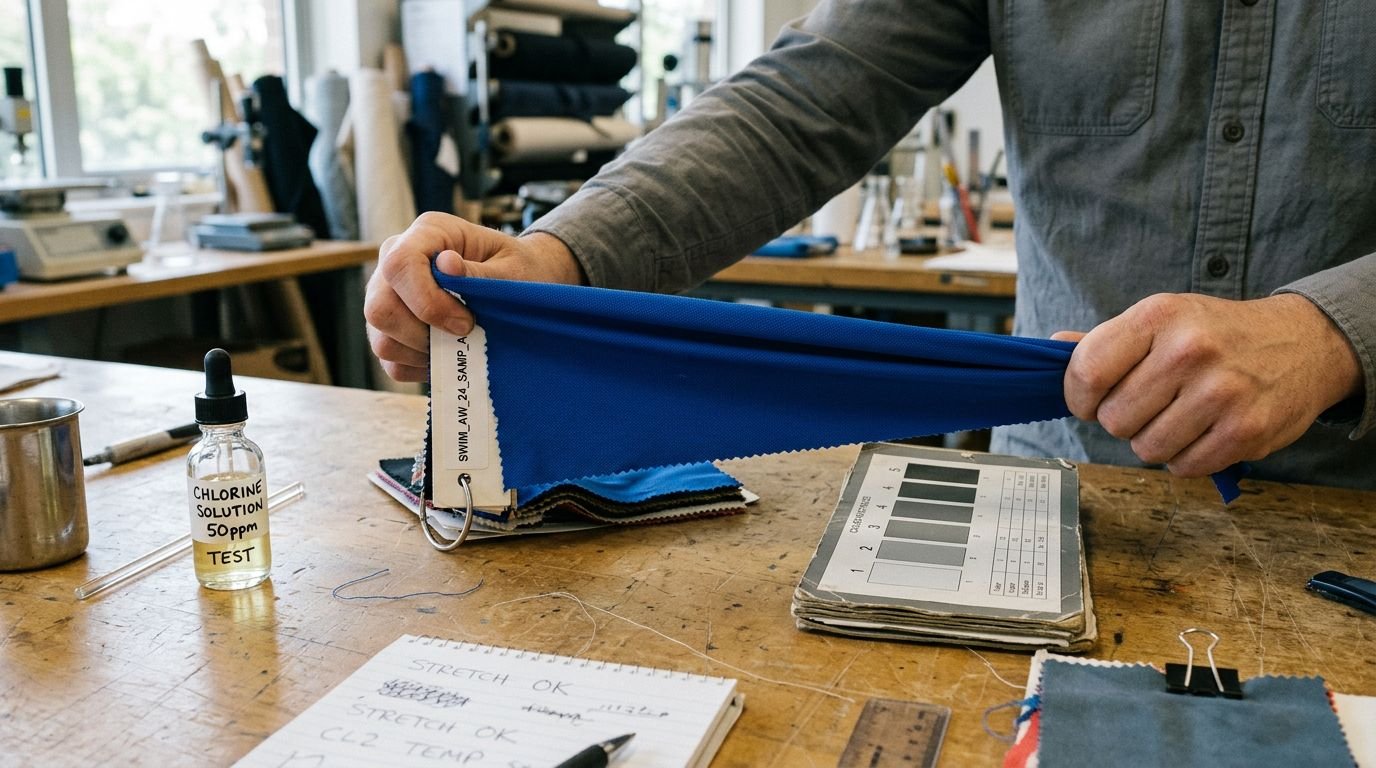
Swimwear must stretch to fit the body and then snap back to its original shape. Poor recovery leads to sagging, bagging, or loose fit after a few wears. To evaluate stretch recovery, request a lab test that measures extension and permanent deformation. A quick physical test: stretch a fabric sample by hand and see if it returns to shape. For bulk production, specify a minimum recovery percentage (e.g., 90% after 100 cycles) in your tech pack.
3. Chlorine Resistance and Colorfastness
Chlorine is the biggest enemy of swimwear fabrics. It breaks down spandex fibers and fades colors. For swimwear intended for pool use, choose chlorine-resistant fabrics—typically polyester blends with elastane treated for chlorine resistance. The standard test is ISO 105 E03 (chlorine water colorfastness) or AATCC 162. Ask your manufacturer for test results showing color change and staining grades. A rating of 4 or above is acceptable for most brands.
4. UV Protection Factor (UPF)
If your brand markets UV-protective swimwear, fabric UPF rating must be verified. UPF 50+ is the standard for blocking 98% of UV rays. The rating depends on fabric composition, color, density, and stretch. Darker colors and tighter weaves generally offer higher protection. Testing is done per AS/NZS 4399 or AATCC 183. Request a UPF test report from your supplier and confirm that the rating holds after stretch and wet conditions.
5. Pilling and Abrasion Resistance
Pilling (formation of small fiber balls) can ruin the look of swimwear after a few uses. Abrasion resistance matters where skin rubs against the fabric, such as inner thighs and underarms. The Martindale test (ISO 12947) measures abrasion resistance, and pilling is tested via ICI Pilling Box or ASTM D4970. For swimwear, a pilling rating of 3-4 or higher is desirable.
Practical Testing Steps Before Bulk Production
You don’t need to become a textile expert, but you should follow a simple checklist to verify fabric quality:
- Request a fabric test report from your manufacturer for each lot.
- Get a physical fabric sample (minimum 0.5 meter) and inspect for hand feel, stretch, and color.
- Perform a simple chlorine soak test: dip a fabric swatch in a 5 ppm chlorine solution for 10 minutes and check color change and strength.
- Test stretch recovery by stretching and releasing 10 times—observe if the fabric returns to shape.
- Check color bleed by rubbing a wet white cloth against the fabric (crocking test).
- Verify that the fabric meets your required UPF rating if applicable.
If you are working with a swimwear manufacturer like Hongxiu, they can provide pre-production fabric samples and testing support. But always cross-check with your own or an independent lab for critical orders.
Common Fabric Failures to Avoid
Buyers often overlook these issues until it is too late:
- Using low-spandex fabric (below 10%) that loses shape after a few wears.
- Choosing nylon fabric for high-chlorine pool swimwear—it fades quickly.
- Ignoring shrinkage: unwashed fabric may shrink 3-5% after first wash, affecting fit.
- Accepting fabric with strong chemical smell, which indicates poor finishing.
- Not verifying color consistency between different dye lots.
Frequently Asked Questions
- Q: What is the best fabric composition for swimwear? A: For pool swimwear, polyester-spandex (80/20) offers better chlorine resistance. For beachwear, nylon-spandex provides a softer hand feel. Always match fabric to end use.
- Q: How do I know if a fabric is chlorine resistant? A: Check the fabric test report for chlorine resistance standards (ASTM D1141 or AATCC 162). A rating of 4 or higher for color change is good.
- Q: Can I rely solely on fabric mill test reports? A: Test reports from mills are a good start, but independent verification is recommended for large orders. Ask for a pre-shipment fabric test.
- Q: What is the minimum spandex percentage for swimwear? A: At least 10% spandex for moderate stretch, but 15-20% is common for better recovery. Too much spandex reduces durability.
Evaluating swimwear fabric before bulk production is an investment in product quality and brand reputation. By systematically checking composition, stretch, chlorine resistance, UV protection, and pilling, you reduce the risk of returns and unhappy customers. When in doubt, ask your manufacturer for detailed testing data and sample yardage to assess firsthand.
If you are sourcing swimwear fabric and need guidance on testing or selecting the right material, a B2B manufacturer with expertise in fabric performance can help you navigate options. Hongxiu Swim, for example, works with brands to evaluate fabric options and provides test reports before production. Contact their team to discuss your fabric requirements and get samples for evaluation.