Custom vs. Pre-Existing Styles: Choosing the Right Swimwear Development Path for Your Brand Launch
The choice between custom development and private-label modifications of existing styles is one of the first decisions that affect your launch budget, timeline, and differentiation. Most first-time brands start with private-label modifications because it’s a faster, less risky way to get to market. It lets you test demand with smaller production quantities and lower upfront sampling costs. Fully custom development gives you complete design ownership, but it typically requires higher minimum orders, longer lead times, and a bigger budget for sampling and pattern work. Your path depends on how you balance creative control against launch speed, cost, and quantity flexibility.
Understanding the two development paths
Pre-existing styles with private label modifications
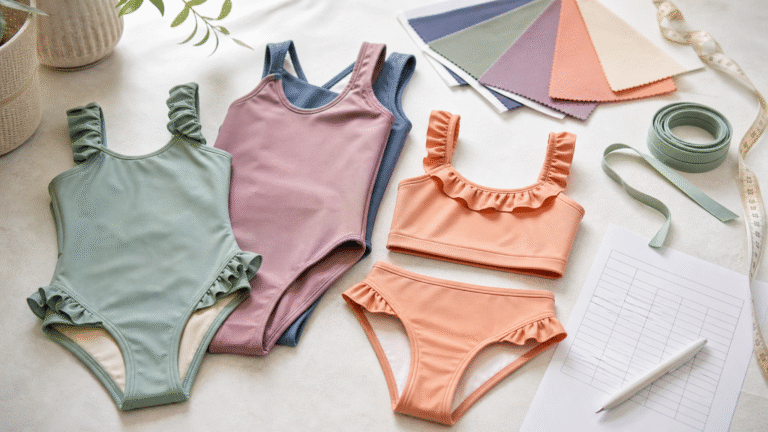
Many swimwear manufacturers maintain a library of proven styles—basic bikinis, one-pieces, tankinis, and cover-ups—that have already gone through pattern development and fitting. When you choose private label, you select a base style and customize it with your branding, fabrics, colors, prints, and trims. The underlying construction and fit remain mostly unchanged, which is why this path is faster and more cost-effective.
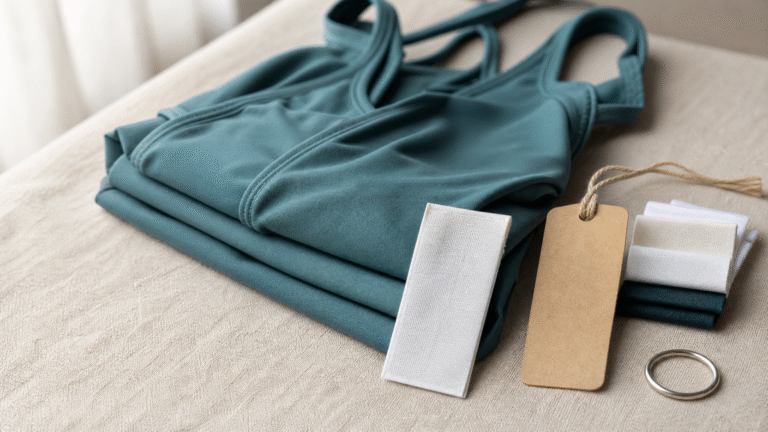
Common modifications include swapping solid colors for custom prints, changing lining or hardware, adding branded labels and hang tags, and adjusting strap or closure types. Because the pattern stays with the factory, MOQs per style often start as low as 100 to 300 pieces, and sometimes even lower if you combine styles to meet a total order quantity. Sampling lead times are usually 2 to 4 weeks, and sample costs are minimal because only surface-level changes need approval (like lab-dips for color or strike-offs for prints).
This route suits brands that need to launch quickly, test multiple styles in small quantities, or operate on a lean budget. The trade-off is that other brands may use the same base silhouette, so your visual differentiation relies heavily on prints, colors, and branding rather than a unique cut.
Fully custom swimwear development
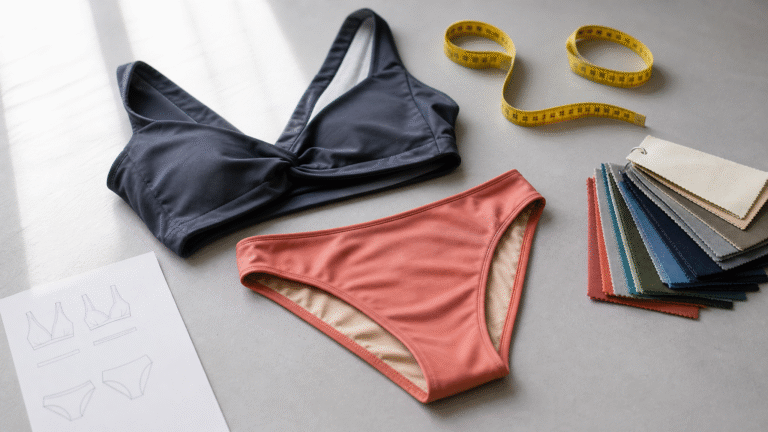
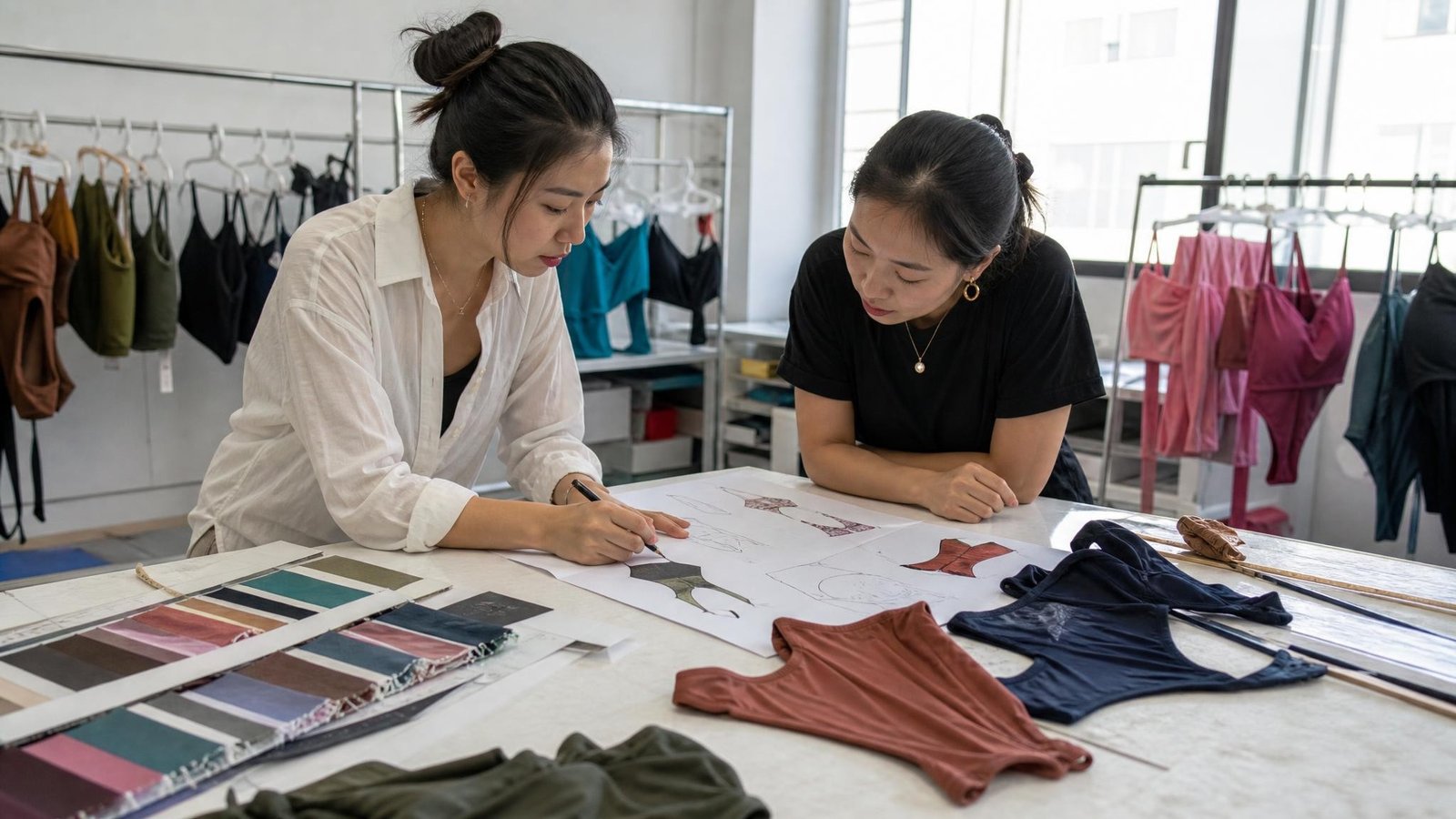
With custom development, you start from scratch. You provide design sketches, tech packs, or detailed specifications, and the factory creates entirely new patterns, samples, and graded size sets. Every element, including necklines, leg cuts, seam placements, lining shapes, and hardware choices, is built to your exact requirements. This path offers complete creative control and results in a product no other brand will have.
However, it comes with higher barriers. MOQs tend to be 500+ pieces per style because the factory must cover pattern-making costs and devote production time to a new style. Sampling alone can take 4 to 8 weeks, often involving multiple fit samples to perfect the silhouette and fabric behavior. Costs add up: you pay for pattern development, each sample round (including fabric, labor, and shipping), and possibly separate lab-dips and print strike-offs. If your tech pack lacks detail or your design ideas change mid-process, the timeline and budget can expand further.
Custom development is ideal for established brands with a strong design DNA, for luxury or niche labels where a proprietary fit is essential, or for any launch where the silhouette itself is the main differentiator. Pattern ownership usually transfers to you, but always confirm this in your agreement.
| Factor | Pre-Existing Styles (Private Label) | Fully Custom Development |
|---|---|---|
| Typical MOQ per style | 100 to 300 pieces | 500+ pieces |
| Sampling time | 2 to 4 weeks | 4 to 8 weeks (multiple fit rounds) |
| Sampling costs | Low (often only lab-dip/strike-off fees) | Higher (pattern making + multiple samples) |
| Creative control | Limited to fabric/color/print/branding | Full control over silhouette, construction, fit |
| Pattern ownership | Factory retains pattern | Usually transferred to brand |
| Best for | Startups testing demand, budget-conscious launches | Established brands, strong design vision, higher budgets |
How to choose the right path for your launch
Decision-making doesn’t have to be rigid. Many brands take a hybrid approach, mixing a few custom hero styles with a core range of private-label pieces from existing blocks. As you evaluate your options, run through these practical checkpoints:
- Launch budget: Can you absorb pattern-making fees, multiple sample rounds, and higher per-style MOQs?
- Timeline: Do you need approved samples in under a month, or can you allocate 8 to 10 weeks for development?
- Differentiation: Is a unique cut non-negotiable for your brand identity, or can strong prints and color stories carry your message?
- Design capability: Do you have a precise tech pack, or are you still refining your vision?
- Risk tolerance: Are you prepared to manage fit iterations and possible delays, or do you prefer a faster, more predictable process?
- Quantity flexibility: Will your launch test a dozen styles in 100-piece lots, or are you concentrating on a few signature looks at higher volumes?
If you answer ‘small budget, tight timeline, varied assortment’ to most of these, private-label modifications will likely serve you better. If you have the capital, a clear design identity, and time to refine fit, custom development can build deeper brand equity.
Common mistakes when choosing a development path
- Assuming custom means higher quality: construction standards depend on the factory, not on whether the style is custom or pre-existing.
- Underestimating sampling time for custom work: several fit samples are normal, and each round adds weeks.
- Overlooking fabric MOQs: even with pre-existing styles, specialty fabrics or custom prints may have high minimums that force larger orders.
- Not clarifying pattern ownership in custom contracts: get written confirmation before investing in pattern development.
- Starting custom development without a complete tech pack, leading to costly back-and-forth and re-sampling.
Frequently asked questions
What MOQ can I expect for pre-existing swimwear styles?
Typically 100 to 300 pieces per style, but total order quantity may need to meet fabric or print minimums. Some manufacturers allow mixing several styles to reach a combined target.
How long does custom swimwear sampling take?
Expect 4 to 8 weeks from tech pack to approved sample. This includes pattern creation, first sample, fit revisions, and potentially separate lab-dips or strike-offs.
Can private label modifications include changing the silhouette?
Generally no. Changes that alter the shape, like raising a leg line, repositioning seams, or redesigning a neckline, require a new pattern, which falls under custom development.
Do I need a tech pack for pre-existing styles?
Not necessarily. You can select from the factory’s style library and specify modifications via spec sheets, measurements, or mood boards. A tech pack becomes essential for fully custom projects.
If you’re still weighing the smartest path for your launch, Hongxiu Swim can help you map out realistic timelines, costs, and MOQ scenarios based on your collection size and budget. With experience in both private label modifications and full custom development, we can outline what a practical first order looks like, no pressure, just honest advice.