
swimwear manufacturer&supplier in China – Hongxiu Clothing Co., Ltd.

Selecting the right swimwear manufacturer is a strategic decision that defines your brand’s product quality, market responsiveness, and long-term viability. This process involves evaluating a factory’s capabilities far beyond a simple price quote. A true manufacturing partner aligns with your vision, ensures technical excellence, and provides the operational stability needed for growth. This guide outlines the critical, often overlooked factors that separate competent suppliers from exceptional long-term partners.

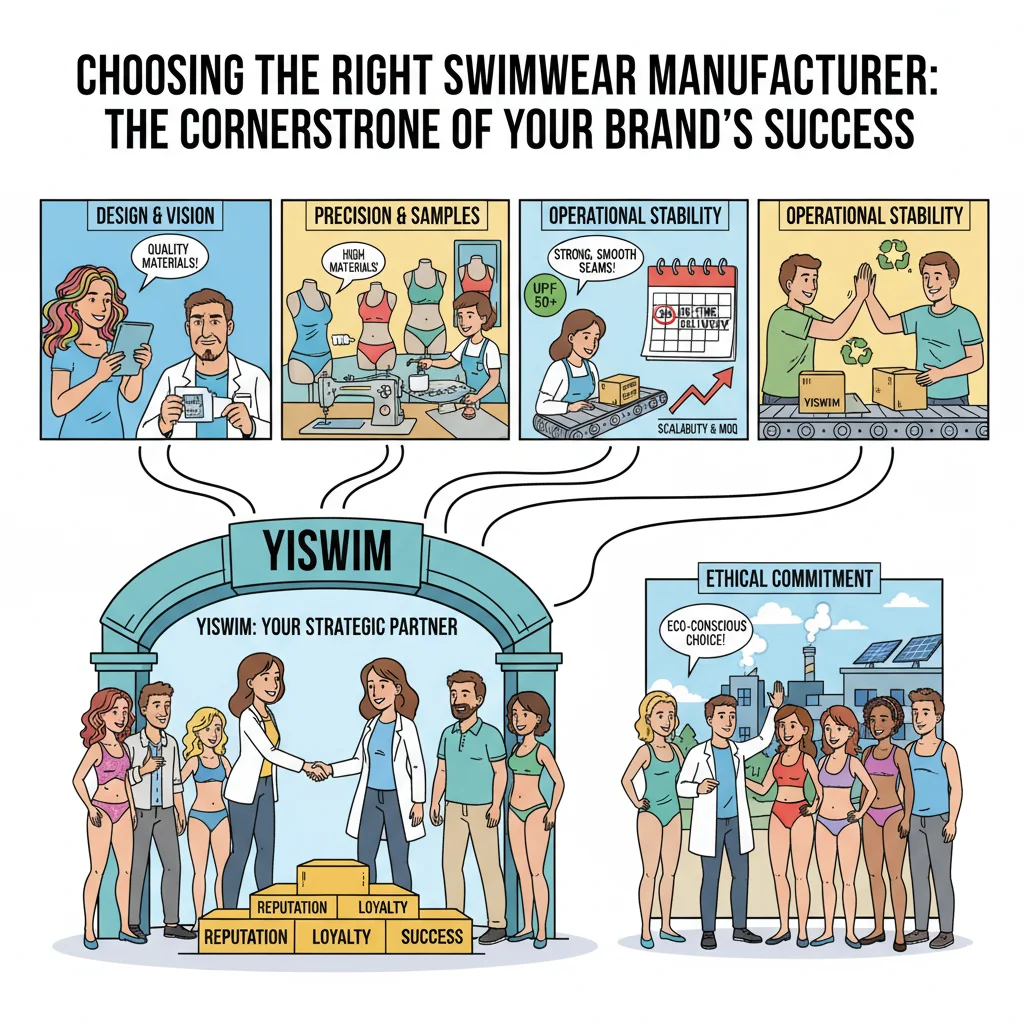
Illustration of YISWIM swimwear manufacturer’s key strengths: design vision with quality materials, precision sampling on sewing machines, operational stability with UPF 50+ seams and scalability, ethical commitment to eco-conscious production.

Evaluating Core Manufacturing Competencies

Quality is not a single attribute but the sum of material science, construction skill, and rigorous testing. A manufacturer’s competency here directly impacts customer satisfaction and return rates.

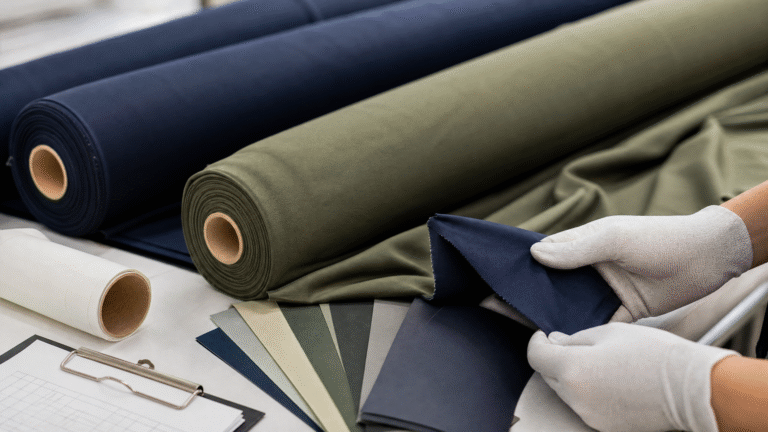
Start with fabric sourcing. A proficient factory doesn’t just buy fabric; they understand its performance. They should be able to recommend materials with proven:

  • Colorfastness: Resistance to fading from sun, saltwater, and chlorine.
  • Chlorine Resistance: Critical for swimwear longevity, especially for athletic or poolside lines.
  • High UPF Rating: UPF 50+ is the industry standard for quality sun protection.

Request mill test reports for fading, stretching, and pilling. Ask who their primary fabric suppliers are; relationships with reputable mills indicate stability and access to quality raw materials.

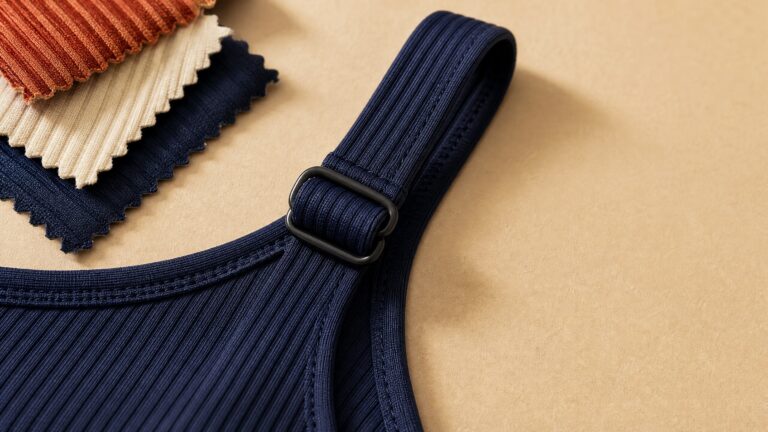
Next, scrutinize construction. Examine sample seams under tension. Quality stitching for swimwear uses techniques that move with the fabric:

  • Flatlock or 3/4-thread Overlock Stitches: These seams stretch without breaking.
  • Precision on Elastic Edges: Edges should be even, clean, and securely attached without puckering.
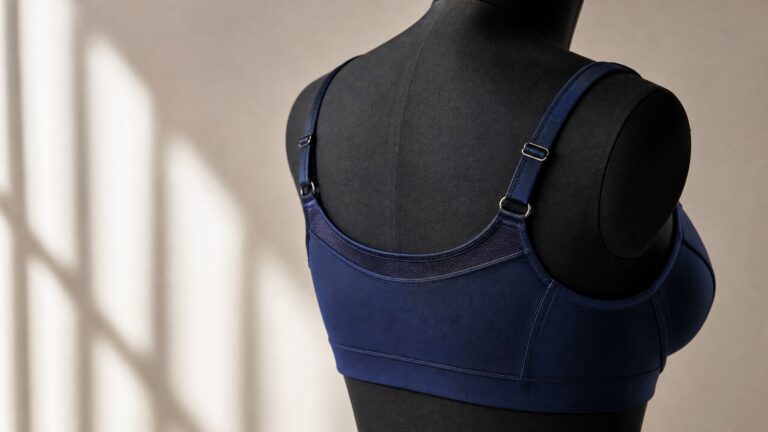
  • Reinforced Stress Points: Look for strong bar tacks at the crotch, strap attachments, and any hardware points.

Poor construction leads to immediate fit issues and premature garment failure. Finally, inquire about in-house or facilitated durability testing. Reliable partners often conduct:

  • Repeated stretch cycle tests.
  • Saltwater and chlorine soak simulations.
  • Controlled sun exposure tests for colorfastness.

This proactive approach to testing reduces failure rates before products reach your customers.

The Technical Design and Sampling Workflow

The transition from your design sketch to a wearable, production-ready sample is where a manufacturer proves its value as a technical partner. This phase determines fit, cost, and feasibility.

A skilled technical design team does more than digitize your sketch. They analyze it for potential construction flaws, advising on:

  • Seam Placement: Optimizing for aesthetics, comfort, and durability.
  • Grading Rules: Ensuring the design scales correctly across your full size range (XS-XXL or beyond) without distorting the intended fit.
  • Ease and Stretch Allowance: Calculating how much the garment needs to stretch over the body for a secure yet comfortable fit.

A structured sampling process is non-negotiable. It should include distinct stages:

  1. Prototype (Proto Sample): A first draft, often in a similar but not final fabric, to assess basic shape, style lines, and proportions.
  2. Fit Sample: Made in your specified fabric and in a size run (e.g., S, M, L) on standard fit forms or models. This stage is for fine-tuning fit and construction.
  3. Pre-Production Sample (PP Sample): The final sample made exactly to production specifications, using all correct materials, trims, and labels. This is your sign-off sample.

Clear, documented feedback at each stage is crucial. A good factory will provide detailed measurement charts and photos with each sample submission. Furthermore, an experienced partner optimizes fabric consumption through efficient marker making and lay planning, directly reducing your material cost per unit and minimizing waste.

Assessing Production Capacity and Scalability

Your chosen swimwear factory must be able to handle your initial order volume and grow with you. Operational stability prevents costly delays and quality inconsistencies.

Key questions to address include:

  • Lead Times: What is the standard production lead time from fabric arrival to finished goods? Is this timeline realistic and consistently met?
  • Minimum Order Quantities (MOQs): Are MOQs per style/color reasonable for a new brand? Will they adjust as you grow?
  • In-House vs. Outsourced Processes: Which operations (cutting, sewing, printing, bonding, packaging) are done in-house? Outsourcing core processes adds risk and communication layers.
  • Production Line Specialization: Do they have dedicated lines or teams for specific constructions (e.g., sewn suits, bonded/ultrasonic welded suits, active swim)?

Scalability is about more than just adding sewing machines. Discuss their capacity planning. Can they accommodate a sudden 50% increase in order volume for a best-selling style? How do they manage workforce training to maintain quality during scale-up? A factory with a stable, skilled workforce and modern equipment is a more reliable long-term bet than one relying on temporary labor and outdated machinery.

Request a virtual or in-person factory tour. Observe the workflow, housekeeping, and worker skill level. A clean, organized factory floor with logical workflow lines typically correlates with better quality control and efficiency.

Ethical Compliance and Sustainable Manufacturing

Modern brands are accountable for their supply chain ethics and environmental impact. Your manufacturer’s standards become an extension of your brand values.

Ethical compliance is the baseline. Verify that the factory adheres to internationally recognized standards. Key certifications to look for include:

  • Sedex/SMETA Audit: Assesses labor standards, health & safety, and business ethics.
  • WRAP Certification: Focuses on lawful, humane, and ethical manufacturing.
  • BSCI (Business Social Compliance Initiative): A common code of conduct for social compliance.

Request recent audit reports. Be wary of factories that cannot provide transparent documentation.

Sustainability is increasingly a core competency, not a niche. Evaluate the factory’s capabilities and initiatives in:

  • Eco-Friendly Material Sourcing: Access to recycled nylon (e.g., ECONYL®), recycled polyester, and responsibly sourced natural fibers like organic cotton for cover-ups.
  • Waste Reduction Programs: How do they handle fabric off-cuts? Do they have recycling programs or partnerships?
  • Water and Energy Management: Practices in dyeing and printing processes, such as using digital printing (which uses less water) or implementing water recycling systems.
  • Green Packaging Options: Offering recycled, recyclable, or compostable packaging materials.

A manufacturer invested in sustainable practices is better positioned to help you meet evolving consumer demands and regulatory requirements.

Understanding the Total Cost Structure

The quoted FOB price per piece is just the starting point. A transparent manufacturer will help you understand all cost components to avoid hidden fees and plan your margins accurately.

Break down the cost with your potential partner:

  • Fabric Cost: Based on consumption per style (in meters/yards) and the price per meter from their chosen mill.
  • Trim Cost: Zippers, hooks, rings, labels, and elastics. Small items can have a significant cost impact.
  • Labor Cost (CMT): The “Cut, Make, and Trim” cost, covering all sewing operations. Complexity of design directly affects this.
  • Overhead and Profit Margin: The factory’s operational costs and profit.

Other critical cost factors include:

  • Sampling Fees: Are prototypes and fit samples charged? Are these fees credited against future production orders?
  • Testing Costs: Who pays for required fabric or garment compliance testing (e.g., colorfastness, flammability)?
  • Shipping and Logistics: Clarify Incoterms (typically FOB). Understand all port charges, documentation fees, and inland freight costs to your destination.

Request a detailed cost breakdown sheet. A factory that is vague or resistant to providing this lacks transparency, which can lead to budget overruns later.

Navigating Contracts and Communication Protocols

A clear, detailed contract and established communication channels are your primary tools for risk management. This phase formalizes the partnership and sets expectations.

A comprehensive manufacturing agreement should cover:

  • Product Specifications: Reference the approved PP sample and include detailed tech packs with measurements, materials, and construction details as contractual attachments.
  • Quality Acceptance Criteria (AQL): Define the acceptable quality level for inspections (e.g., AQL 2.5 for major defects). Specify who conducts final inspection and where.
  • Delivery Schedule and Penalties: Outline key dates for fabric arrival, production start, and shipment. Include clauses for late delivery penalties.
  • Payment Terms: Standard terms are often 30% deposit with order confirmation, 70% balance against copy of Bill of Lading. Never agree to 100% payment upfront.
  • Intellectual Property (IP): Clearly state that all designs, patterns, and tech packs remain your exclusive property.

Establish a communication protocol from the start. Determine:

  • Your primary points of contact for technical questions, production updates, and commercial issues.
  • The frequency and format of production updates (e.g., weekly WIP reports with photos).
  • The preferred tools for communication (email, WhatsApp, project management software).

Regular, structured communication prevents small issues from becoming major problems.

Building a Partnership for Long-Term Growth

The most successful brand-supplier relationships evolve from transactional arrangements into strategic partnerships. This requires mutual investment and a forward-looking approach.

Look for a manufacturer that demonstrates a genuine interest in your brand’s success. Signs include:

  • Proactively suggesting material or construction improvements that enhance quality or reduce cost.
  • Being flexible and collaborative when solving inevitable production challenges.
  • Investing in new technologies or processes that could benefit your future collections.

Foster this relationship by:

  • Providing Clear Forecasting: Share your sales projections and launch calendar as early as possible to help them plan capacity.
  • Consolidating Orders: Where possible, group styles to achieve more efficient production runs and better pricing.
  • Offering Constructive Feedback: After each production run, provide specific feedback on what went well and what could be improved.

A true partner views your growth as their growth. They will work with you to develop exclusive fabrications, streamline processes, and adapt to market trends, becoming an integral, value-adding part of your supply chain rather than just a vendor.

Choosing the right swimwear manufacturing partner is a multifaceted evaluation of quality, capability, ethics, and partnership potential. By thoroughly assessing each of these areas, you secure a foundation that supports your brand’s reputation, operational efficiency, and capacity for innovation in the competitive swimwear market.