
Rust-Proof Swimwear Hardware Guide: Sliders, O-Rings and D-Rings
Sliders, O-rings, and D-rings are small, but they can decide whether a swimsuit feels premium or disappointing. These hardware parts touch the skin, carry strap tension, and face saltwater, chlorine, sunscreen, sweat, and washing. If they rust, peel, or slip, the whole garment loses value.
This article focuses specifically on rust-proof swimwear hardware procurement. For the broader category, including hooks, clasps, underwires, and decorative trims, see the swimsuit metal trims guide.

Why Hardware Fails in Swimwear
Swimwear hardware fails for three main reasons: unsuitable base material, weak surface treatment, or poor fit with the strap and fabric. A slider may look good when new but corrode after pool exposure. An O-ring may keep its color but feel too heavy. A D-ring may be strong but cut into elastic if the edge finish is poor.
Material Choices for Rust-Proof Hardware
Stainless steel usually offers strong corrosion resistance, but it can be heavier and more expensive. Brass can perform well with proper plating. Zinc alloy is common for fashion trims but needs careful coating and testing. Plastic or resin hardware can avoid rust but may not deliver the same premium look.
Match Hardware to Strap Width and Fabric Tension
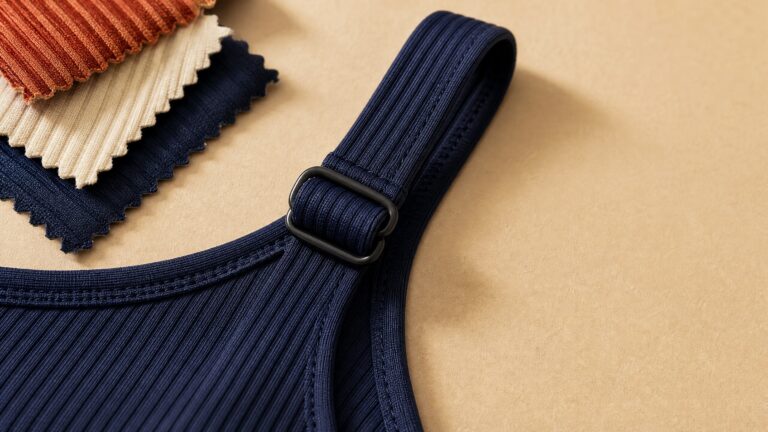
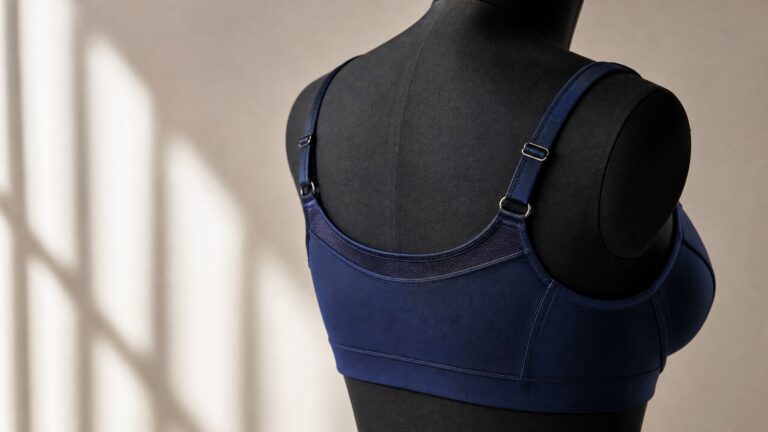
Hardware must match strap width and fabric thickness. If the slider opening is too large, the strap may slip. If it is too small, the strap may bunch or become difficult to adjust. O-rings and D-rings should not have sharp edges that damage elastic or fabric.
These details should be confirmed in the swimwear tech pack and checked during sampling. Hardware cannot be evaluated separately from the fabric, elastic, and stitching.
Bulk Procurement Checklist
- Confirm base material and surface treatment.
- Check size, inner opening, thickness, and weight.
- Review color under natural light and studio light.
- Test with actual straps and elastic.
- Check for burrs, sharp edges, and rough seams.
- Confirm MOQ, lead time, and batch consistency.
- Protect hardware during packing to avoid scratches.
A hardware decision often changes the garment construction. Coordinate hardware sourcing with fabric selection and the full swimwear manufacturing process.