
Catch a bad fabric lot before it reaches the cutting table
A fabric fault found after cutting is no longer a fabric problem. It becomes a replacement panel, a short shipment, or a garment that fails inspection. The roll was the last point where the fault could be isolated cheaply.
Most factories check something when fabric arrives. The gap is usually the standard. “We checked it” can mean a glance at the wrapping, a width measurement on one roll, or a full roll inspection with a written record. Those are not the same gate, and the buyer often cannot tell which one they paid for.
The check worth agreeing on before the first roll lands covers four things: what to inspect, what to record, who can hold a roll, and when a lot should not be cut.
Why receiving is the last cheap place to catch a fault
Once the marker is laid and the knife goes through, the fabric is committed. A hole near the selvedge can be cut around if the cutter knows where it is. A shade band across the middle of a roll cannot be hidden in a small bikini panel. Find the fault after cutting and the cost moves from fabric to garments, rework, and schedule.
A mill test report does not replace this check. It describes the quality the mill tested, often from a sample or a lot. It does not tell you whether this roll has a needle line two meters in, or whether the shade at the end of roll 14 matches roll 3. Receiving inspection and lab testing answer different questions. A fabric program needs both.
Agree the standard before the rolls arrive
The receiving check starts with a document, not a clipboard on the loading dock. The approved fabric specification should state composition, knit structure, weight, width, stretch and recovery, surface finish, and the approved shade. The swimwear fabric guide covers the attributes worth writing down.
Then add the parts that are specific to receiving:
- A sealed reference swatch, signed and dated, kept at the factory. Note the light source used for shade approval.
- A definition of what counts as a defect, and which defects are acceptable in a short length.
- The sampling plan: which rolls are opened, how much fabric is checked, and who signs the result.
- The person who can place a roll on hold, and the person who can release it.
- The claim window with the mill, and who pays for a lab test if a roll is disputed.
Put this in the purchase order or tech pack, not in an email that arrives after the fabric. If the factory buys the fabric, the brand should still know what the factory checks at receiving. The article on who supplies the swimwear fabric explains why that responsibility changes with the buying route.
Match the paperwork to the roll
Every roll should arrive with an identity. The roll ticket normally carries the mill, lot or dye lot, shade code, roll number, width, length or weight. Check that the ticket matches the packing list and the approved shade code. A roll with no ticket waits until its identity is confirmed.
Ask for the test report that belongs to the lot, not a general report for the fabric quality. If the fabric carries a recycled or fiber claim, the certificate should connect to the lot or transaction, not only to the mill’s overall program. A document that cannot be tied to the roll is useful for the file but weak for a claim.
This is also where a substitute shows up. A mill may ship a close shade or a slightly different width when the ordered lot is short. That can be a reasonable solution if the brand approves it in writing. It should not be discovered by the cutting room.
The physical check, roll by roll
Start with the outside. Look for torn wrapping, water marks, crushed edges, dirt, and rolls that have been stored on their side for a long time. Damage to the outer layers is not automatically a rejection, but it tells you where to look first.
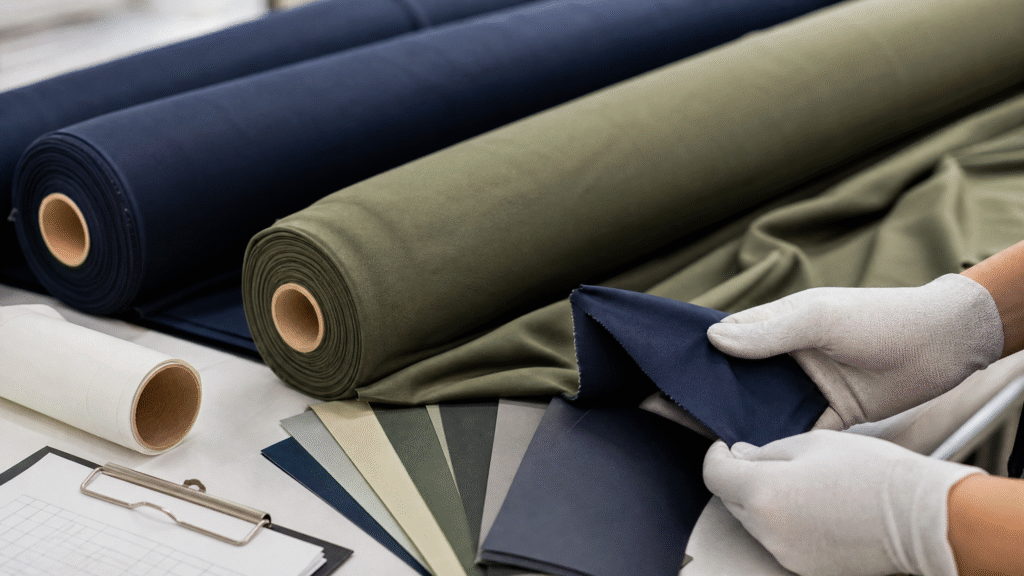
Then open the roll. Unroll enough fabric to see more than the top layer, because the first meter can look perfect. Check:
- Width at several points along the roll, not only at the end. Record the narrowest point.
- Length or weight against the ticket. A short roll changes the yield you planned.
- Shade against the sealed swatch under the agreed light. Check both ends and at least one point in the middle.
- Shade across rolls in the same lot. Roll-to-roll variation is easier to manage before cutting than after.
- Surface defects: holes, needle lines, dropped stitches, runs, slubs, oil spots, crease marks, and contamination.
- For printed fabric, registration, repeat, and alignment against the approved strike-off.
- Hand and stretch compared with the reference. A fabric can match in color and still feel different.
Record where each defect sits, using meters from the start of the roll. “Some holes” cannot be used by a cutter. “Hole at 12.4 m, 30 cm from selvedge” can.
Shade deserves its own routine. Two rolls can carry the same shade code and still sit apart. Metamerism adds another trap: a pair that matches under a warehouse light can separate under daylight. Use the light source written into the standard, often D65, and let the swatch and the roll settle in the same conditions before you judge. Do not approve shade beside a window in late afternoon.
How much to inspect
For a small custom dye lot, open every roll. The lot is the unit that will be cut, and one bad roll can affect a size run. For a large repeat order, agree a sampling plan. The four-point method is one option. It only works if both sides agree on the points per 100 square yards, who applies it, and what happens to a roll that fails.
Even with a sampling plan, some checks are roll level. Every roll should get an identity check, a width check, and a shade check. Surface inspection can be sampled. If you cannot open every roll, record which ones you did inspect, including the first, a middle roll, and the last.
If the factory buys the fabric, ask to see the receiving record on the first order. If you supply the fabric, agree with the factory who inspects it and who owns the mill claim. The factory can check what arrives against the spec. It did not choose the lot, and it cannot turn a bad lot into a good one by cutting around every fault.
What a visual check cannot tell you
A receiving check catches what is visible. It does not confirm chlorine resistance, UV performance, shrinkage, pilling, fiber content, or colorfastness. Those need lab tests on the bulk lot. A fabric can pass a visual inspection and still fail after repeated pool use.
The receiving record should sit alongside the test reports and the approved specification, not replace them. If the brand needs a performance claim, test the lot that will be cut. The guide to evaluating swimwear fabric quality before bulk production covers the tests and what they can support.
Decide the disposition and write it down
A receiving check ends with a decision, not an observation. The useful options are:
- Accept. The roll matches the standard and can be cut.
- Accept with a restriction. The roll is usable for a lining, an inner panel, or a style where the deviation will not show. Record the restriction.
- Hold. More information is needed, or the roll is waiting for a mill response. Keep it physically separated.
- Reject. The roll does not meet the standard. Keep it intact until the claim is settled.
The receiving report should list the purchase order, supplier, lot, roll numbers, checks performed, measurements, defects with locations, photos, and the decision. Add the name and date of the person who made it. If a roll is rejected, notify the mill with the roll number and photos rather than a general complaint about the lot. If a roll is accepted with a concession, tell the cutting room in writing and adjust the marker or the yield. A concession is a business decision, so put a name against it.
Where this fits in the production sequence
Receiving is the first fabric gate. After it comes the pre-production check in the base size and the largest size, then in-process checks, then final inspection before packing. Hongxiu’s quality control process describes those later stages. A receiving hold can move the schedule, so build a buffer before the cutting date. Skipping the check to save a day usually costs more than the day.
If you are sourcing fabric for a new range, send the specification and the reference swatch before the order is placed. Hongxiu’s fabric and trims sourcing service can source materials with the order or work with fabric you nominate. Agree the standard before the mill books the dye lot, and the receiving check becomes a confirmation rather than a negotiation.