

The real cost of swimwear production starts after the quote
A swimwear manufacturer‘s unit price is typically the FOB cost: garment and basic export packaging. For a brand launching a line, the landed cost will be higher. Sampling rounds, mold charges, freight, quality inspections, duties, and a few surprises sit between the factory floor and your warehouse. Small brands sometimes burn 40% of their first-season budget on costs they never itemized. This post covers the cost drivers buyers miss and the questions that give you a clear picture of total ownership cost.
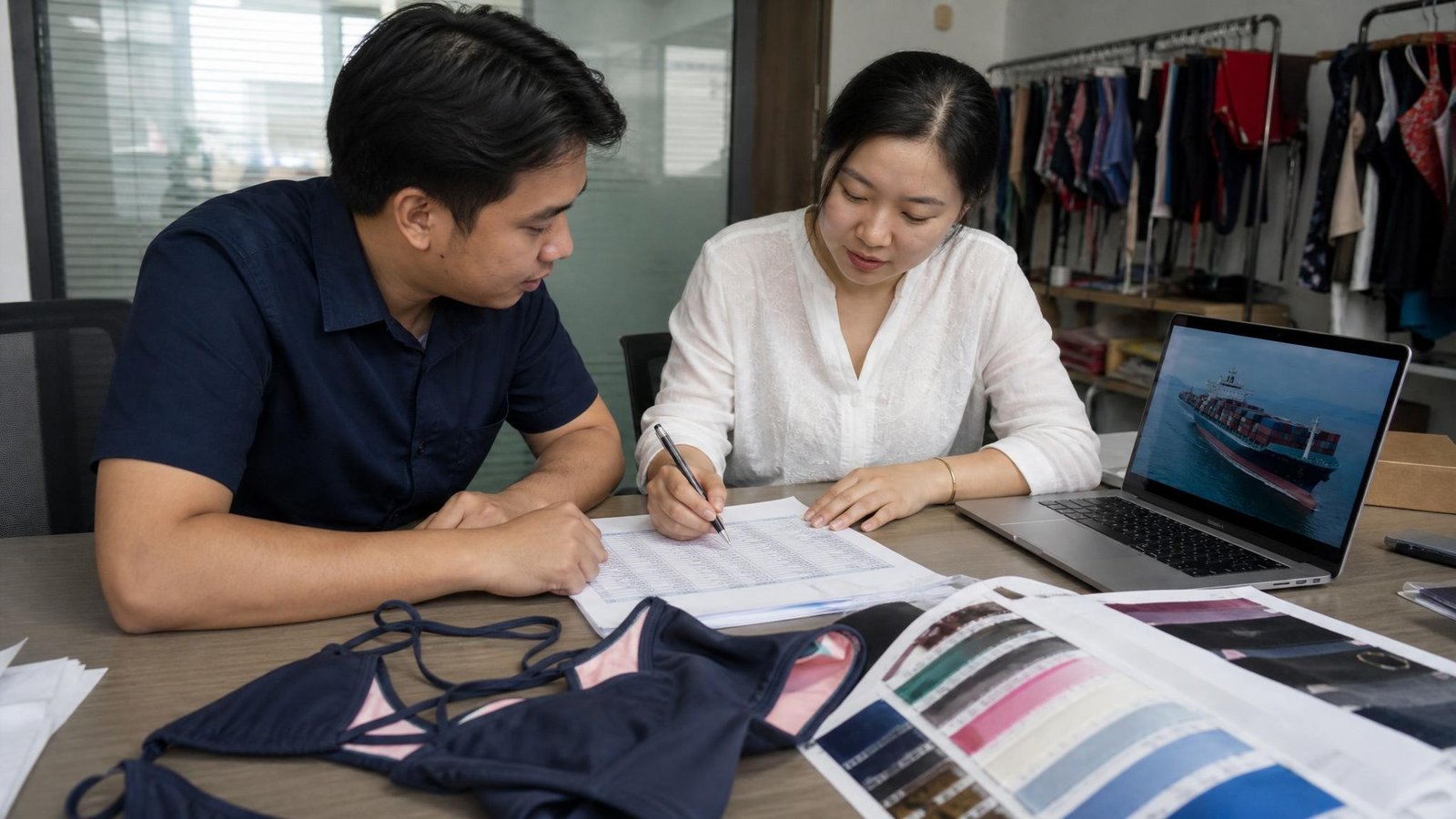
Where hidden costs hide in swimwear sourcing
Here are the main cost areas that push your final number up. Individually, they’re manageable; together, they change your margin calculation.
1. Sampling fees
Buyers often assume sampling is included, but swimwear sampling is labor intensive. A factory may offer free sampling for simple style modifications on existing blocks, but anything custom, like new pattern making, grading, or multiple fit rounds, gets charged. You can expect to pay $50-$150 per design sample, with surcharges if you need multiple sizes or express courier delivery to hit your launch calendar. Ask: Does the sample fee get deducted from the bulk order? How many revisions are covered before extra charges kick in?
2. Mold and pattern costs
Swimwear often uses custom hardware, like rings, sliders, clips, and sometimes pad molds for molded cups. Creating a new metal mold for a branded clasp can cost $80-$300, a one-time charge that spreads poorly over a small first order. Pattern grading (creating the size set beyond the base size) is another separate line item. Ask your supplier: Which molds or patterns already exist, and which ones will you need to fund? This directly affects your startup cost per style.
3. Freight and logistics
Freight is the most underestimated cost. A single carton of 50 bikinis shipped by air courier might cost $6-$8 per unit, more than the FOB price on a simple style. Ocean freight consolidates better but still adds $1-$3 per unit plus port charges, customs broker fees, and last-mile delivery. Always ask for a freight estimate based on your actual order quantity and packaging dimensions, not a rough guess. If the factory quotes CIF or DDP, clarify what is included.
4. Quality control and compliance
Skipping third-party QC is a bigger risk with swimwear than with basic apparel. Fit consistency, seam stretch, colorfastness, and lining shrinkage need checking. A typical in-line or final random inspection costs $280-$350 per day in China, which adds $0.10-$0.25 per piece on a medium run. If you require lab testing for AZO dyes or UV protection claims, budget another $150-$400 per test. These numbers protect your brand, but you need to include them in the product cost from the start.
5. Duties, taxes, and payment fees
Swimwear tariff rates vary by country. For example, swimwear imports into the US under Chapter 61 or 62 may carry a duty of 7-14%, depending on fabric type. Add wire transfer fees (typically $25-$45 per transaction) and possible currency conversion markups. If you pay by credit card or PayPal, factor in 3-5%. These are small percentages that eat into your margin if you do not account for them in your pricing model.
A quick-reference cost breakdown
| Cost Element | Typical Range | Why Buyers Miss It |
|---|---|---|
| Design sampling (per style) | $50-$150 per round | Assumes sampling is free with bulk promise |
| Mold/pattern opening | $80-$300 one-time | Not quoted unless asked; amortization not considered |
| Air freight (per unit, small batch) | $6-$8 per piece | Focus is on low unit price, ignoring shipping shock |
| QC inspection (per day) | $280-$350 per day | Treated as optional until a quality failure occurs |
| Duties & import fees | 7-14% of declared value | Not included in factory quote; varies by country |
| Payment fees | 2-5% of total | Seen as minor, but cumulative with other costs |
This table is a planning framework, not a quote. Real numbers depend on your order size, destination, and complexity.
Ask these questions to avoid budget surprises
When you’re talking with a swimwear supplier, whether on Zoom or in a factory meeting, go through these points. It’s not about distrust; it’s about clarity.
- What exactly is included in the FOB unit price? Fabric, lining, elastics, trims, labels, hang tags?
- How many sample rounds are included, and what is the cost for additional fit or photo samples?
- Are there setup charges for new prints, hardware molds, or pad shapes? Are those refundable against bulk?
- Can you provide a freight estimate based on my target quantity and final packaging dimensions?
- What is your internal QC process, and what does third-party inspection access look like?
- Who bears the cost if a bulk order fails agreed AQL levels or lab tests? What is the rework or refund policy?
- Do you handle export documentation, or will I need a separate forwarder? What are the estimated incidentals?
Building a realistic budget: from unit price to landed cost
A simple approach is to add a 20-40% buffer on top of the FOB cost for a first-time order. For 500 pieces of a basic bikini at $6 FOB, budget an additional $1.20-$2.40 per piece, bringing your landed cost to $7.20-$8.40. If your retail price relies on a $6 landed cost, you’ll need to adjust. This buffer shrinks as volumes rise and relationships mature, but do not bank on that for launch planning.
A manufacturer that anticipates these questions, such as Hongxiu Swim, which works with brands from sampling through bulk, will normally break costs into clear line items during the quotation stage. That transparency saves weeks of back-and-forth and prevents the sinking feeling when an unexpected invoice lands.
Frequently asked questions
Can I negotiate away these hidden costs?
Not all costs are negotiable, but many are avoidable. For example, using existing hardware molds or stock prints eliminates tooling charges. Larger MOQs often absorb sampling fees. Freight can be optimized by consolidating shipments or switching to sea freight early. The key is to ask the questions up front so you can choose which costs to carry and which to design out.
Is air freight always more expensive than sea freight?
Per unit, yes. But for very small orders (e.g., 100 pieces), the minimum sea freight charges and import handling can make air freight competitive on total cost. Also, if time-to-market is critical, the opportunity cost of waiting four weeks for ocean transit may outweigh the freight difference.
How much should I budget for quality control as a first-time buyer?
Plan for at least one in-line inspection and one final random inspection per production run. Budget $500-$700 total for a typical first order, plus any lab tests your market requires. This is much cheaper than recalling products or dealing with chargebacks.
Do all swimwear manufacturers charge for samples?
Most do, especially for custom development. Some factories will refund the sample fee if you proceed to bulk. Always confirm the policy in writing.
If you’re comparing swimwear suppliers and want line-by-line cost clarity for your designs, a transparent discussion before committing to production is the smartest move.