
Rash guard sizing starts with ease, not the swimsuit block
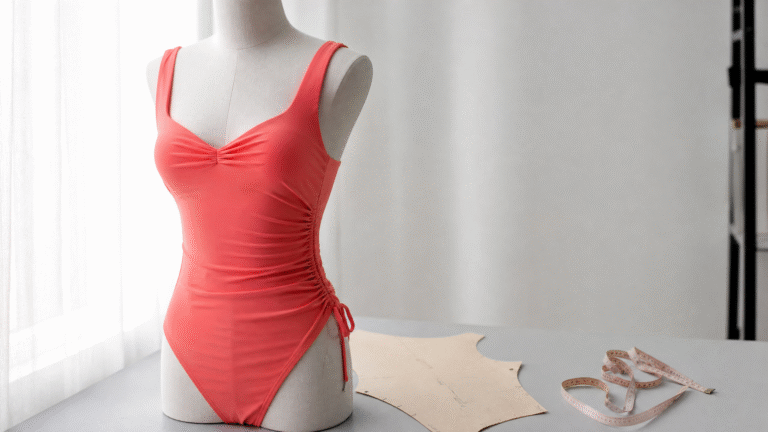
A rash guard looks like a swimsuit with sleeves. When a brand adds one to a line, the first sample often starts as a long-sleeve version of an approved swimsuit block. It fits on the form. Then someone reaches overhead, paddles, or sits down, and the armhole pulls, the hem rides up, or the sleeve twists.
A swimsuit is built to stay close in the water. A rash guard covers more skin, has to move through a wider range of motion, and should sit against the body without turning into a compression garment. The pattern, the fabric, and the seam spec all change. The sleeve is the most visible change. The block underneath it decides whether the sleeve works.
The block changes before the sleeve does
Adding a sleeve to a swimsuit block changes the armhole and the sleeve cap. It does not create a rash guard block. The armhole has to be deep enough for the arm to move, and the sleeve cap has to match that curve without pulling across the chest.
A raglan sleeve runs from the underarm to the neckline. It gives the shoulder more room and puts the seam where a print can cross it without breaking. A set-in sleeve needs a shaped cap and a clean armhole seam. It looks more structured, but it leaves less margin for error in the armhole curve. Either can work. The choice should follow the fit class and the print plan, not the sample room’s habit.
Body length is the other common miss. A rash guard should stay over the waistband when the wearer raises both arms. Adding length at the hem is not the same as sizing up. If the sample only covers the waist when standing still, the pattern needs length. The fit model does not.
Ease is a measurement, not a size up
Sizing up a swimsuit adds circumference in places the rash guard does not need it and leaves the sleeve short. It also distorts the neckline and armhole, and those corrections come after the pattern has been cut.
Write the ease into the fit class before you grade. A surf rash guard can sit close to the body. A sun shirt for resort or family swim may be looser. Those are two products with different measurements, even if they share a fabric.
Check these points on the first sample:
- Chest, waist, and hip circumference, measured flat and worn.
- Bicep and forearm circumference at the sleeve opening and cuff.
- Armhole depth and sleeve cap height.
- Body length from the high point of the shoulder, front and back.
- Neck opening and neck drop.
- Sleeve length from the shoulder point, with the arm bent and straight.
A rash guard should leave enough room to breathe and reach without the shoulder seam lifting. The sleeve opening should clear the upper arm without cutting in. The cuff should stay in place without leaving a mark. None of those checks need a number on the first pass. They tell you whether the block is close enough to refine.
Fabric has to work when it is wet and stretched
A fabric that passes a dry stretch test can still go sheer at the bust or cling at the hem when it is wet. Rash guards cover more surface area than a bikini, so opacity matters across the whole front and back, not only at the cup.
Ask for elongation and recovery as two separate numbers. A knit that extends easily but does not return will bag at the elbow and knee, and the garment will feel larger by the end of a swim.
Composition is a separate decision. Nylon and spandex give a soft hand. Polyester and spandex often hold color better in chlorine and take sublimation prints well. The choice should follow the fit class, the print plan, and the care story the brand can support. The swimwear fabric guide covers how to compare those qualities without relying on a mill’s label alone.
Sun protection needs a separate test. A tight, dark knit usually blocks more UV than a loose, light one, but a UPF claim is not a fabric description. It needs a test on the finished fabric, including the stretched and wet states the garment will see in use. Ask which standard the lab will follow, such as AATCC 183 or AS/NZS 4399, and whether the test is run on the finished garment or a flat swatch.
Flatlock seams are a machine decision
A rash guard spends more time against skin than a bikini. A raised overlock seam under the arm or across the waist can rub during a paddle, and the problem gets worse when the seam is wet.
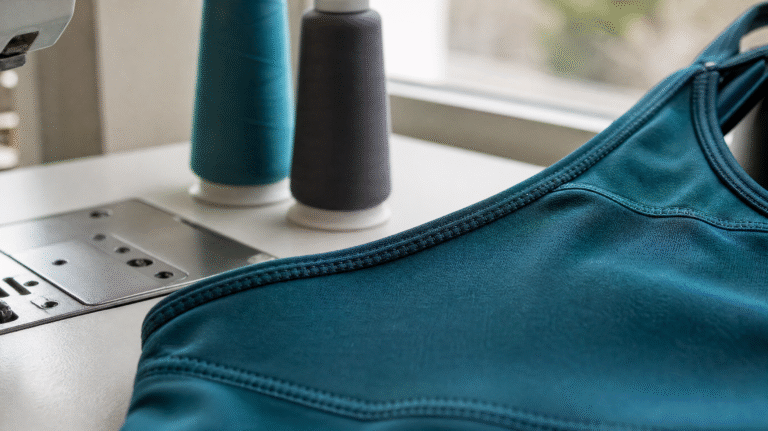
Flatlock joins two panels and lays the seam allowance flat, so the inside feels smooth against the body. Coverstitch can finish hems and some seams. Overlock is faster and cheaper, but it leaves a ridge. The right choice depends on where the seam sits and how much stretch it has to carry.
Not every swimwear line has flatlock capacity. Ask before the quote, not after the sample. A sample room can hand-finish a seam that the bulk line cannot reproduce at the quoted price. If the factory sends a sample with a beautiful flat seam, ask to see the same seam from a bulk run.

Seam placement matters as much as the seam type. Keep the underarm seam out of the highest friction zone. Avoid running a seam across the shoulder blade if the wearer will carry a board or a pack. When a seam has to cross a high-movement area, test it wet and under load. A seam that looks flat on a hanger can still pull when the arm goes forward.
Thread and stitch density matter too. A flatlock seam with the wrong thread or too few stitches per inch will stretch differently from the fabric around it. It may look intact and still let the seam grin open at the elbow or under the arm.
Test the garment in motion
A static fit on a form will not show sleeve twist or hem ride-up. Put the sample on a person and run through the movements the product is sold for: arms overhead, forward reach, a paddle stroke, a squat, sitting on the floor, and a swim if one is possible.
Watch for these failures:
- The sleeve rotates around the arm when the wearer reaches forward.
- The armhole gapes at the front or cuts under the arm.
- The hem lifts above the waistband when the arms go overhead.
- The neckline pulls away from the chest when the wearer bends.
- The seam rubs under the arm or across the shoulder.
- The fabric turns sheer at the bust, shoulder, or knee when wet.
Record each observation against a named point on the garment. “The left armhole gapes at the front when the arm is raised” gives the pattern maker something to correct. “Feels tight” does not. Photograph the front, back, and side before and after the movement sequence, and keep the photos with the sample number.
The swimwear sampling stage is the cheapest place to fix these problems. A correction after bulk cutting costs fabric, time, and a second sample round. The swimwear final inspection can catch a bad seam or a short body, but it cannot fix a block that was never right.
Grading a rash guard is not grading a swimsuit
A swimsuit grade rule usually moves the bust, waist, and hip. A rash guard needs those points plus the bicep, forearm, armhole depth, sleeve length, and body length. If only the torso grows, the sleeve becomes tight and the armhole stays small.
Decide the size range before the first sample. A men’s rash guard, a women’s sun shirt, and a youth top follow different grade rules even when the fabric is the same. The smallest and largest sizes in the range should be sampled, not only the middle. The middle size can hide a bicep that is too tight at the top of the range or a neck opening that is too wide at the bottom.
The neck opening needs its own review. A high neck that is too wide will gape when the wearer bends. One that is too narrow will pull at the throat and feel restrictive. Test the opening with the garment wet, because a binding that feels fine dry can tighten after a swim.
What belongs in the tech pack
A rash guard tech pack should read as a construction document, not a style brief. The swimwear tech pack guide covers the full structure. For this product, make sure these points are explicit:
| Item | What to state |
|---|---|
| Fit class | Close surf fit or looser sun shirt, with the intended ease at chest, waist, and hip |
| Block | Raglan or set-in sleeve, armhole depth, sleeve cap height, body length front and back |
| Fabric | Composition, weight, four-way stretch, recovery, opacity when wet, UPF test plan |
| Seams | Flatlock, coverstitch, or overlock by seam location; thread type and stitch density |
| Neckline and cuff | Opening, binding width, recovery, and finish |
| All-over or placement, panel matching, and how the seam will cross the artwork | |
| Labels | Care, content, origin, and placement that will not rub |
| Testing | Stretch and recovery, seam strength, colorfastness to chlorine and sea water, pilling, UPF if claimed |
| Size range | Points of measure, grade rules, and the sizes to sample |
Questions to ask before you quote
The quote is more useful when it separates capability from price. Ask these before you compare suppliers:
- Does the sample room have flatlock machines, and will the same machines run bulk?
- Which fabrics in the required stretch and recovery range are available, and can the mill show opacity when wet?
- Can the factory test UPF on the finished garment, or does it only supply a fabric certificate?
- How does the factory grade the bicep, armhole, and sleeve length across the size range?
- What is the minimum per color and per size, and how does that change for a print?
- Who owns the pattern and the grade rules if the brand moves to another supplier?
- What is the sample lead time, and how many sample rounds are included?
- Can the factory show a bulk seam from a previous rash guard or activewear order?
Treat the rash guard as its own development project, even when it sits beside a swimsuit in the same collection. The block, the fabric, and the seam decide whether it works in the water. Settle those first, and the first sample becomes a fit review instead of a redesign.
If you are adding rash guards to a swim or resort line, OEM swimwear manufacturing is where the pattern, fabric, and seam decisions can be reviewed together before sampling.