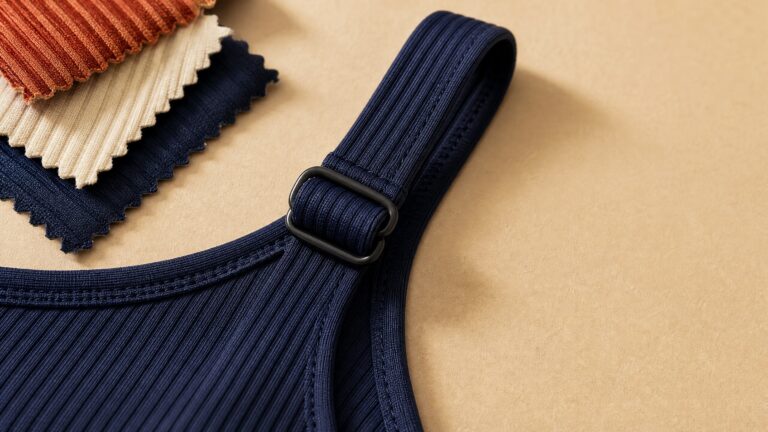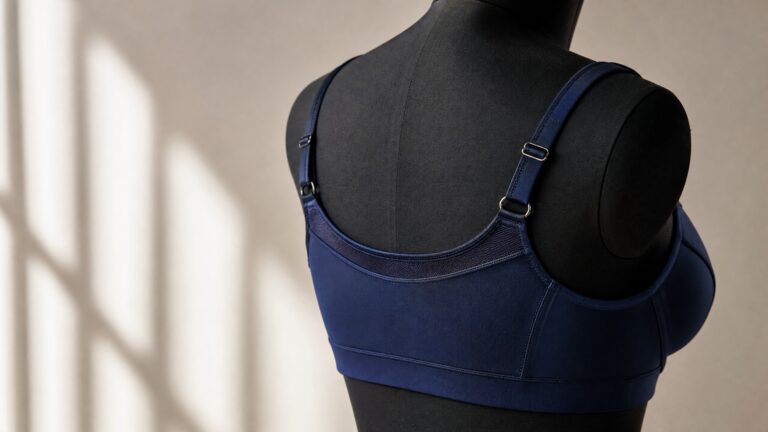

Approve swimwear color under the light your customer will see
The light in a buyer’s office is rarely the light a swimsuit will be sold in. A swatch can pass on the table, then read colder under a shop’s fluorescent tubes or flatter in direct sun. By the time the bulk delivery arrives, that approval is already several decisions old.
A lab dip is still worth doing. It shows whether a dyehouse can get close to a target on a particular fabric. It does not show whether the bulk dye lot will match, whether the trims will sit beside it, or how the shade will hold up in chlorine and sun. Those are separate checks, and they belong in the order before the first roll is dyed.
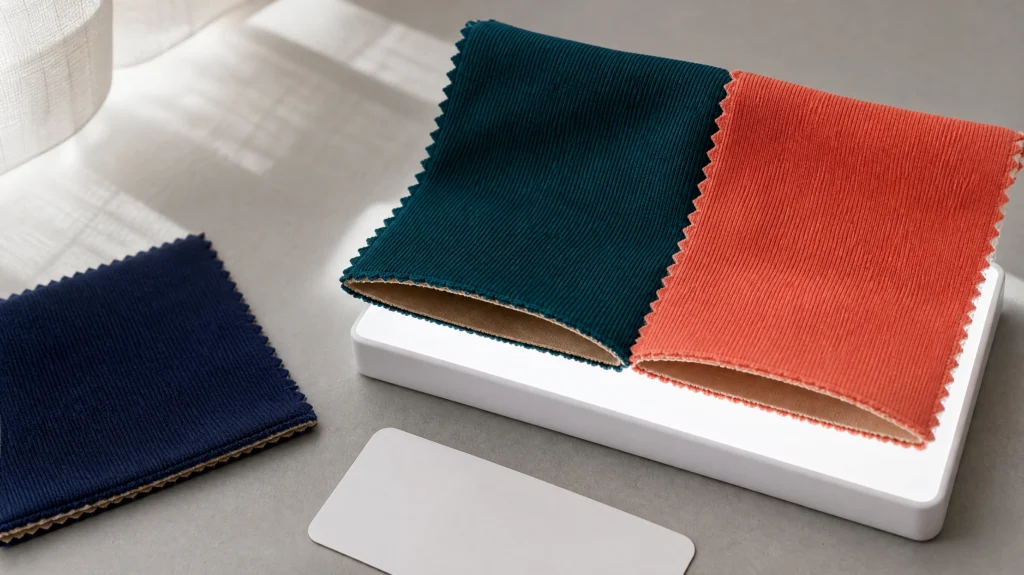
What the dip can and cannot tell you
The dip is the dyehouse’s recipe test. A small piece of fabric goes through a dye bath, someone compares it with the target, and the recipe is adjusted until the result is close. It catches a target the fabric cannot reach before anyone commits to a production run.
The test piece is rarely the finished garment. It may be a stock greige, and it may skip the heat setting or surface finish used in bulk. A match before finishing can move after finishing. A dip made on a different quality can match there and fail on yours.
The target has the same problem. A Pantone number is a reference, not a piece of fabric. TCX cards are cotton and TPG cards are paper. A swimwear knit with elastane will not read the same as either, and nylon and polyester will not read the same as each other. The reference still helps, but it has to be tied to a substrate and a finish.
Choose the standard first
Before the dyehouse can match anything, the buyer has to decide what the standard is. A Pantone TCX reference works for a new color with no history. When the color already exists in the range, a retained piece of previously approved fabric is better. If the new order has to sit beside stock, use a cut piece of an earlier garment. Each choice answers a different question, and mixing them up causes confusion later.
Record the substrate with the standard. Fiber content, fabric weight, knit structure, and finish all change how a color reads. “Navy on our swim knit” is not a specification. “Navy on 80 percent nylon, 20 percent elastane, 190 gsm, matte finish” is closer. If the mill has to guess the substrate, the dip is testing a different product.
For custom dyeing at Hongxiu, the standard minimum is one full dye lot at 600 yards per color. If the greige is not in stock, the minimum can be higher. That is worth knowing before a color is locked, because a shade that is expensive to set up is a shade you do not want to change after the dip is approved. Our swimwear color and print guide explains the reference options and where they stop being reliable.
Keep a physical standard, not a file. Label it with the color name, reference code, fabric quality, dye lot if there is one, and approval date. Store it away from sunlight. A standard that fades on a shelf is no longer a standard.
For a repeat order, decide whether the new fabric has to match the standard or match the previous delivery. Those are different requirements. A reorder that must pair with stock already in a warehouse needs a comparison against an actual garment, not only a swatch. The process for matching a reorder to existing stock is stricter than a first-run approval, and it should be agreed before the mill starts.
Check the color in the light it will live in
Color changes with the light. A match under office fluorescent can fall apart under daylight, under the warm light of a shop, or under the UV in sunlight. This is metamerism. Two colors can look the same under one light source and have different spectral curves, so they separate under another.
A light box helps, though not every buyer has one. Without it, use at least two real conditions: north-facing daylight and the closest match to the lighting where the garment will be sold. Do not judge a swimwear color only on a phone screen. Camera white balance, screen calibration, and compression all shift the shade. Use a photo to record the decision, not to make it.
Look at the dip the way the garment will be worn. Swimwear is stretched over the body, and a knit changes appearance when it opens. A color that looks solid flat can read lighter over the bust or seat. Fold the sample, stretch it gently, and compare it with the standard at the same thickness. If the fabric is lined, check the dip with the lining behind it. The lining changes the final color.
For light colors and optical whites, add a UV check if you can. Fluorescent brighteners in white and pale shades can react to UV and read differently in sunlight than indoors. That is one reason a white swimsuit approved in a showroom can look blue or yellow at the beach.
Trims rarely match exactly
A swimsuit is not one color. It is fabric, lining, elastic, thread, pads, and sometimes hardware. Each material takes color differently, and some are not dyed in the same process. An exact match across all of them is often not realistic, especially on a deep shade or a bright white.
Decide early which parts must blend and which can be tonal. On a black or navy style, a slight difference in the elastic may be invisible in wear. On a pale pink style, the same difference can show at the leg opening. If the trims are meant to match, review them with the fabric dip, not after the garments are sewn.
Thread is a common problem. It is often chosen from a standard shade card rather than dyed to the fabric. A thread that is close but not identical can disappear in a seam and stand out on a topstitch. If the design uses contrast topstitching, the thread is a visible design line and should be approved as one.
The bulk lot needs its own approval
Approving a lab dip lets bulk dyeing start. It does not promise that the bulk will match. Dye lots vary. The first production lot can be slightly lighter, darker, redder, or greener than the dip, and the difference may sit inside the dyehouse’s normal tolerance while still being visible beside the approved standard.
Ask for a bulk sample from the actual production lot before cutting. It should come from the roll that will be used, not from a separate hand dip. Compare it with the sealed standard under the same lights you used for the lab dip. Check the center and the selvedge. If the order spans several rolls, check more than one. Shade bands within a roll are harder to work around than a uniform difference between rolls.
If the shift is uniform across the whole lot, the buyer has a choice: accept it, reject it, or reserve the fabric for a style where color matters less. A lot with visible bands is a cutting problem. It becomes a replacement panel, a short shipment, or a garment that fails inspection. That is why fabric inspection before cutting belongs in the same conversation as color approval. Fabric can pass a weight and width check and still fail a shade check.
If you reject a bulk lot, do not approve the next one against the rejected lot. Go back to the sealed standard. Otherwise the color drifts with every correction.
Work backward from the ship date
Color approval is usually the step that gets squeezed. Sampling is planned, fabric is booked, and color is treated as a detail that can be settled while everything else moves. Then the dip arrives late, one feedback round takes a week, and the bulk date is already fixed.
Ask the mill or dyehouse for its lab dip turnaround at inquiry. Put the approval date in the calendar with the same weight as the sampling date. At Hongxiu, standard swimwear sampling runs 7 to 14 working days, and ODM bulk production runs 28 to 35 days. Custom dyeing has to fit inside that schedule, so a late color decision can move the ship date, not just the dye date.
Leave room for one feedback round. A first dip that needs a small correction is normal. A first dip that needs a new target usually means the standard was not clear. If the color is critical, approve the dip before bulk fabric is ordered, not after it lands.
Write down what was approved
One page is enough, as long as someone who was not in the meeting can follow it.
- The color name and reference code.
- The fabric quality, fiber content, weight, and finish.
- The physical standard used, with its date and source.
- The light sources used for the review.
- The trims reviewed with the fabric, and which ones may differ.
- The bulk lot number and the result of the bulk sample check.
- The name of the person who approved it, and the date.
The record is more useful than a photo. It tells the dyehouse what to match, tells the cutter what to check, and gives the next buyer a reason the color was accepted.
Plan the checks in order
A lab dip answers one question: can this dyehouse hit this target on this fabric? The order needs several more answers. Will the bulk lot match the standard? Will the trims sit beside it? Will the color survive chlorine, sunscreen, and sun? The colorfastness testing that matters at the end of the season is a separate test, and it belongs in the plan before the order is placed.
Agree each check early and in sequence. The cost of a late color argument shows up after the fabric is cut, when the options are much narrower.
If you are planning a color for an upcoming collection, send the reference, the fabric quality, and the lighting where the garment will be sold. We can confirm what the dyehouse can achieve, and where the limits are, before the first dip is made.