
Chlorine, sunscreen, and sunlight expose what a sample color approval misses
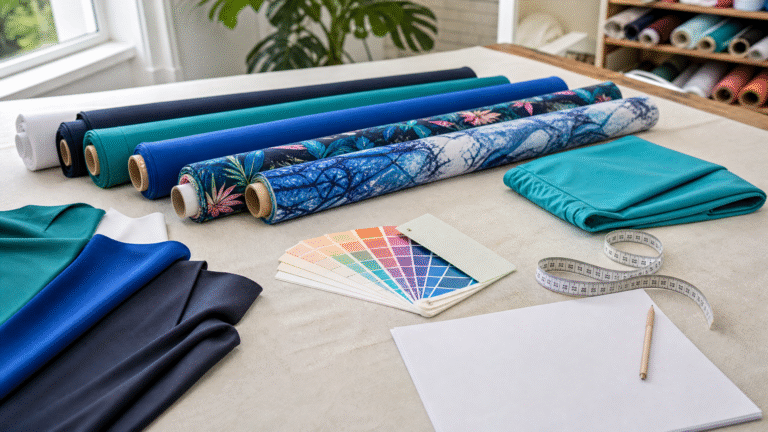
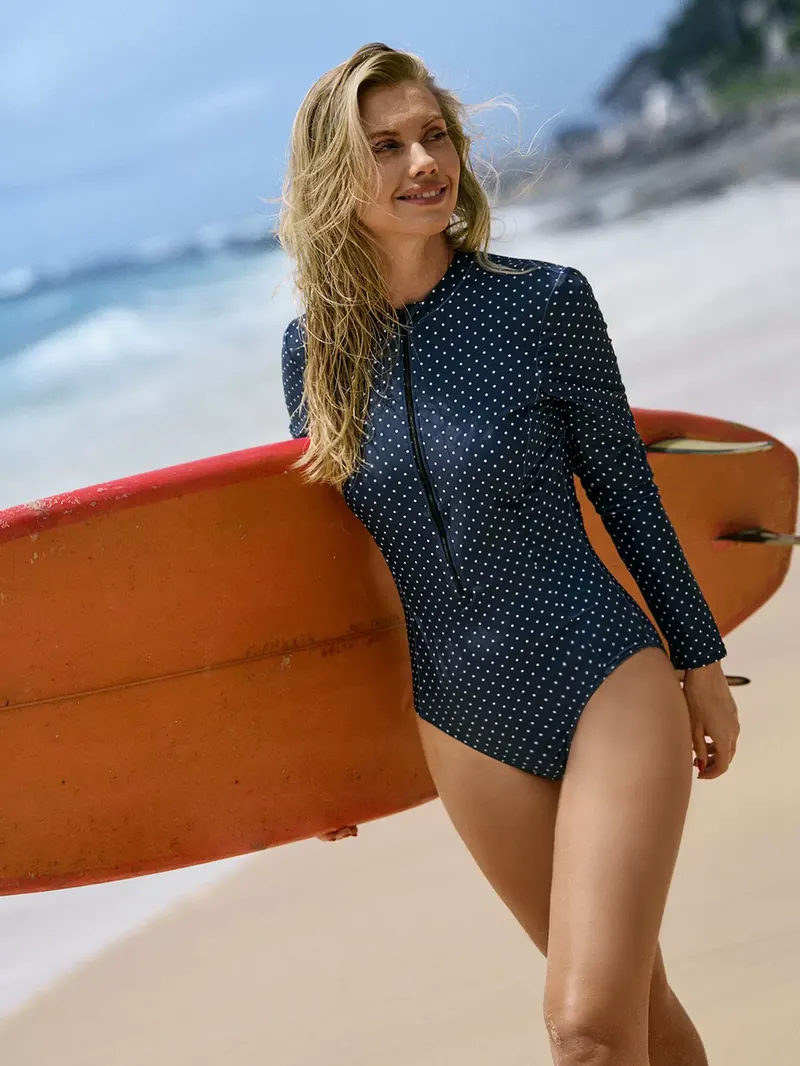
Color approval usually happens on a sample table under office light. The same color then goes into a chlorinated pool, onto a sunny beach, and under a layer of sunscreen. Fading, yellowing, and orange staining tend to appear on the first bulk order, not on the sample. The cause is rarely one mistake by the dye house. It is usually whatever the spec asked the fabric and the garment to survive, and whether anyone tested for that before the order was placed.
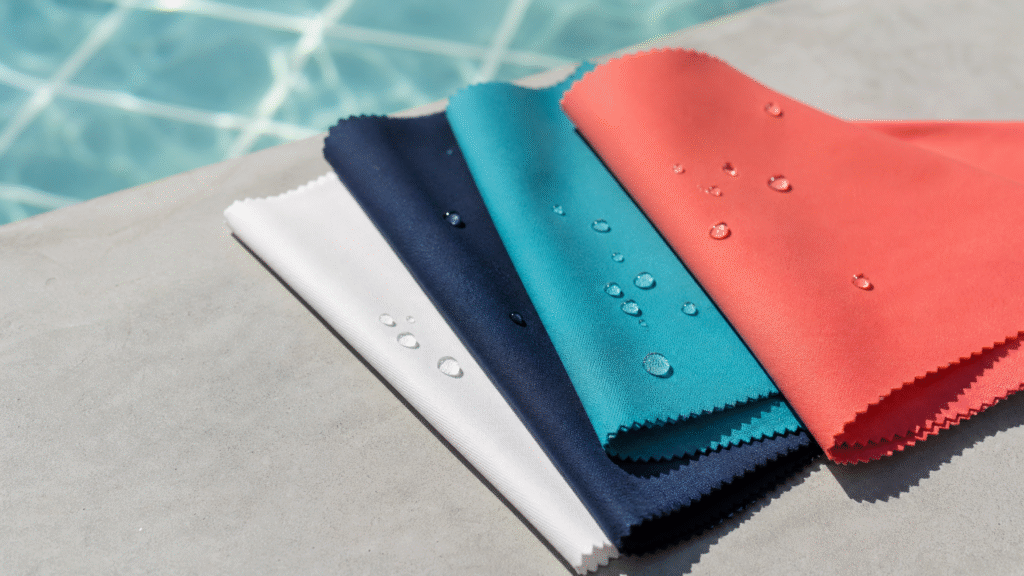
Three things attack swimwear color at once
Chlorine, ultraviolet light, and the chemistry of sunscreen and sweat damage color in different ways, and they often overlap. A suit that fades in a pool may be losing dye to chlorine while its elastane is losing recovery at the same time. A bright color that looks flat after a holiday may have been attacked by UV, by sunscreen residue, or by both.
What chlorine does to dye and to stretch
Free chlorine is an oxidizer. It reacts with dye on the fiber and with the soft segments in elastane. The first visible result is a shade shift, usually lighter and less saturated. The second is a slow loss of recovery. The suit sags, leg openings relax, and the fabric can turn more transparent as it stretches.
For a fashion cover-up, some loss over two or three seasons may be acceptable. For aqua fitness, competitive, or any style sold on fit, it is a product failure. Fiber choice is the main lever. PBT and chlorine-resistant elastane grades resist oxidative attack better than standard elastane, and they cost more. Our swimwear fabric selection guide shows where that trade-off sits next to hand feel, stretch, and price.
UV light and fluorescent brighteners
Ultraviolet light breaks down dyes and finishes over time. It also attacks the fluorescent brighteners that make white and neon colors look crisp. A white or neon suit can turn dingy well before a darker suit shows obvious fading, which is one reason complaints cluster around pale and bright colorways.
Light fastness is tested on its own because pool, sea, and sun expose a garment differently. A color that holds up in chlorinated water can still fail in strong sunlight, and the reverse is also true.
Sunscreen and sweat
Some sunscreen ingredients are hard on fabric. Avobenzone, a common UVA filter, reacts with iron minerals in hard water and can leave orange or rust colored marks on light garments. This is a reaction between the sunscreen, minerals in the water, and the fabric surface, not a dye fault in the usual sense. Iowa State University Extension describes the reaction and notes that letting sunscreen dry before dressing reduces it.
Sweat adds another variable. Perspiration is acidic and carries salts and oils that can move dye or shift shade, especially on saturated colors. Testing perspiration and chlorinated water separately helps, because a color can pass one and fail the other.
The tests that predict the common failures
Five tests cover most of the risk on a normal swimwear order:
- Colorfastness to chlorinated water, using AATCC TM162 or ISO 105-E03.
- Colorfastness to light, using AATCC TM16 or ISO 105-B02.
- Colorfastness to perspiration, using AATCC TM15 or ISO 105-E04.
- Colorfastness to sea water, using AATCC TM106 or ISO 105-E02.
- Colorfastness to laundering, using AATCC TM61 or ISO 105-C06.
For a print or a multi-color style, ask for the staining result as well as the color change result. The grey scale for color change, ISO 105-A02, is the usual way to report the grade. Buyers often work to a minimum around grade 4, but the pass level belongs in the tech pack and should match the end use. A resort cover-up and a training suit rarely need the same number.
Stretch recovery after chlorine
Color fastness testing does not tell you whether the elastane survived. If the style depends on fit, add a recovery check after a defined chlorine exposure cycle. Our guide to swimwear elastic specifications explains how tension and fit are controlled on a normal order. The chlorine version of that test asks a different question: how much recovery is left after repeated exposure.
If the product claims sun protection
UPF is measured separately from colorfastness. A dry, new, relaxed fabric can test at one level and drop once it is wet and stretched on a body. ASTM D6603 is the common UPF test method, and ASTM D6544 covers the conditioning that should happen before the measurement. UV Standard 801 goes further by testing wet, stretched, and aged states. If the product says UPF 50+, the report should state which method and which fabric state produced that number.
What to put in the tech pack
Write the test method and the pass threshold, not a general request for good colorfastness. Two labs can run different methods and return different grades for the same fabric. Also name:
- the colorways and dye lots to be tested;
- whether the result has to hold in wet and stretched states;
- the care instructions you plan to print, since they set customer expectations;
- who pays for the test and when the report is due.
This follows the same logic as any other swimwear fabric quality check before bulk production. Test the color you will actually buy, on the fabric you will actually use, before the order is committed.
How to read the report before you accept it
Check three things. The sample tested should match the production color and fiber content, because a result for a similar shade is not a result for your shade. The grade should be reported against the grey scale, with the light source and viewing conditions noted. The test should be recent enough to reflect the current dye lot and finish.
If the report only shows color change and your style is a print or has contrast panels, ask for the staining result too. Dye that bleeds onto an adjacent white panel is a visible defect even when the main color still passes.
Care instructions are part of the color spec
Care guidance cannot rescue a weak color, but it can reduce the damage that customers read as a defect. Rinsing after a swim removes chlorine before it keeps working. Air drying in shade avoids heat damage. Letting sunscreen dry before dressing lowers the avobenzone staining risk. These points belong on the care label and on the product page. Our post on swimwear care and content labels covers the rest of that labeling work.
A practical sequence
Lock the color and the test method during development. Test the actual fabric and colorway during sampling. Read the result against the end use. Book bulk only after that. If the calendar is tight, raise it early, because repeating a test costs far less than a returned production run. A manufacturer that runs swimwear programs every season can tell you which tests its mills already run and where the gaps usually are.
If you are developing a color that has to survive a real pool and a real summer, send the colorway and the intended use. We can tell you which tests are worth running before you commit. Start with our private label swimwear options or the fabrics and trims we source.