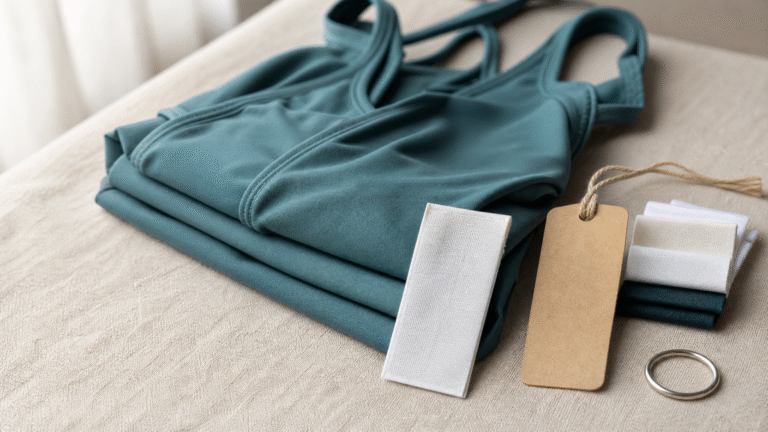

Swimwear production change control after sample approval
A swimwear sample can be approved while its production instructions are already out of date. A later message changes the lining, another changes a strap, and the original approval remains in the email thread. Without a written release, those messages leave the production version unclear.
Swimwear production change control records exactly what a revision changes and whether production can use it. Use it after a sample has been approved, especially when materials have been ordered or cutting has started.

Keep one released baseline
Record the approved sample reference, tech pack revision, material list and purchase order together. Include the sizes and colorways covered by the approval. The swimwear tech pack guide covers the contents of that specification; the change record explains what happens when those contents are revised.
Give working files an unambiguous status: proposed, under review, released or superseded. A newer filename does not authorize production. Keep the previous version for traceability, but remove it from the active instruction set once its replacement is released.
Describe the difference before discussing the deadline
A request such as “use the new lining” leaves too much open. Identify the old component reference, the proposed replacement, the reason for changing it, and every affected style, size, colorway and order. Attach a marked image if the location is hard to describe.
The factory also needs to report how far the order has progressed. Separate materials ordered, materials received, pieces cut, pieces sewn and finished units. These stages need different decisions. A change that is straightforward before purchasing may require segregation or rework once garments are underway.
Use a short change record
The following is a suggested buyer workflow, not a report of a particular factory order.
| Field | What to record |
|---|---|
| Identity | Change reference, style, purchase order and current released revision. |
| Scope | Old and new requirement, affected sizes and colors, and whether existing work is included. |
| Production position | Material and garment quantities at each stage, with the time of the check. |
| Review | Sample or test evidence needed, cost impact and revised milestones. |
| Decision | Approve, reject or hold; decision owner and date. |
| Release | Replacement document revision, effective batch and acknowledgment from each affected team. |
Choose one person on the buying team to approve the change. Design, merchandising and quality teams may all comment, but contradictory instructions should be resolved before the factory receives a release. Ask for an acknowledgment that identifies the revision, rather than a general “received.”
Recheck what the change can affect
Do not carry an earlier approval across to a changed garment without reviewing its relevance. A lining substitution, for example, raises questions about coverage, stretch compatibility and the way the assembled garment fits. The component name alone cannot answer those questions.
For a strap or elastic change, review the affected fit and construction details. For artwork, confirm the file revision, scale and placement on the relevant pieces. For labels or packing, check which order quantities need the revised instructions. Agree the evidence required for that specific change rather than automatically repeating every development step.
The existing sample approval guide explains what the main sample stages establish. A change record should say which of those approvals remains valid and which must be reopened. If a replacement sample is needed, discuss its scope through swimwear sampling before treating the revised style as ready for bulk.
Set the boundary between old and new production
Write down where the revision takes effect: the next purchase order, a named batch, or the uncut balance of an existing order. If work is already in progress, decide explicitly whether it can continue, must be held, or needs rework. Record who approved the decision on affected goods and any cost or delivery change.
Consider a hypothetical lining change affecting only the next order. The release should state that the current order keeps its approved lining and that the replacement applies to the named future order after review. Without that boundary, a shared style code can leave purchasing and sewing working to different assumptions.
If both versions will ship, make them traceable in the order records and agree how they will be separated through packing and receipt. Do not quietly mix versions under an approval that describes only one of them.
Close the change at inspection
A release is not complete when the revised PDF is sent. Confirm that purchasing, pattern or cutting, sewing and QC have the instructions relevant to their work. Retain the acknowledgment with the change record.
Inspection needs the released revision and the applicable physical reference. List the changed details as specific checkpoints, then record whether the inspected goods match them. Hongxiu’s quality control page describes the available checks and inspection options.
Before closing the record, check that the old instruction has been superseded, the decision on affected goods is documented, and any open sample or inspection issue has an owner. This leaves the next reorder with a usable starting point instead of a search through old messages.