
A swimsuit that fits the sample can still shrink after the first wash
A swimsuit can pass fit approval and still disappoint a customer a month later. The sample sits well on the fit model, the measurements match the spec sheet, and the style is signed off. Then the customer washes it the way most people wash a swimsuit, and the body measures shorter than the approved sample. The straps dig in, the seat rides up, and the size chart no longer describes the garment in the bag.
That gap is rarely a sewing fault. It is dimensional change in the knit, and it belongs in the fabric spec long before a marker is laid out.
Where shrinkage comes from
Swimwear knits are built under tension. Elastane yarns are stretched while the fabric is knitted, and the cloth passes through dyeing, heat setting, printing, and finishing while still carrying part of that tension. When the finished garment meets heat and water, the yarns relax and the loop structure contracts. A panel that measured 100 cm in the cutting room can measure 96 cm after the first wash.
Length and width do not move at the same rate. A knit often relaxes more in one direction than the other, and which direction depends on how the fabric was constructed and finished. Two fabrics with the same composition, weight, and supplier can behave differently when their finishing routes differ. Fiber and knit construction set how much give the fabric has in the first place, so the fabric guide and the shrinkage spec usually get read together.
Heat is the biggest lever in normal use. A warm machine wash and a tumble dryer move a knit further than a cold hand wash and a line dry. Chlorine and long sun exposure work over the life of the suit instead of in a single wash, but they add to the change a customer eventually sees.
Why an approved sample can hide the problem
Fit approval is a snapshot. The sample may be cut from a small piece of cloth from a different production lot, or one that was already relaxed before cutting. It may have skipped the final print or finish that bulk fabric will go through. A sample measured once, dry, on a table says a lot about construction and very little about how the fabric behaves after three washes.
Construction can hide the problem too. A firm lining or a powernet panel holds the outer fabric in place, so a small amount of shrinkage shows up as tightness instead of a measurement change. The fit comment reads “slightly small through the body” and the real cause never gets named.
Fit is the visible question. Dimensional stability sits underneath it, which is why the sample room and the fabric lab should compare measurements.
The number to agree on before cutting
Before bulk fabric is cut, agree on one number both sides can measure: the maximum dimensional change allowed after a defined wash and dry cycle, stated separately for length and width. The tolerance should name the test method, the number of cycles, and the care conditions used.
A single blanket tolerance across every fabric in a range is easy to write and less useful. A soft, open knit and a dense, high-elastane power fabric do not relax the same way, and a print or a brushed finish can change the result again. Set the tolerance per fabric or per fabric family, and write it into the approved spec so it survives staff changes and reorders. It feeds directly into consumption as well: if the fabric relaxes, the marker has to allow for it, which is one reason shrinkage moves fabric consumption on a swimsuit order.
How to test it and when
The cheapest place to catch shrinkage is at fabric approval, before a single production garment is sewn. Ask for dimensional stability testing on the actual bulk-lot fabric rather than a development sample. Hongxiu lists shrinkage alongside color fastness to chlorine, sunlight, and sweat, and pilling as optional lab tests that can be confirmed to standard methods on request; the buyer requesting the test covers the cost. Ask for the report, not a pass or fail line, so you can see the method and the numbers.
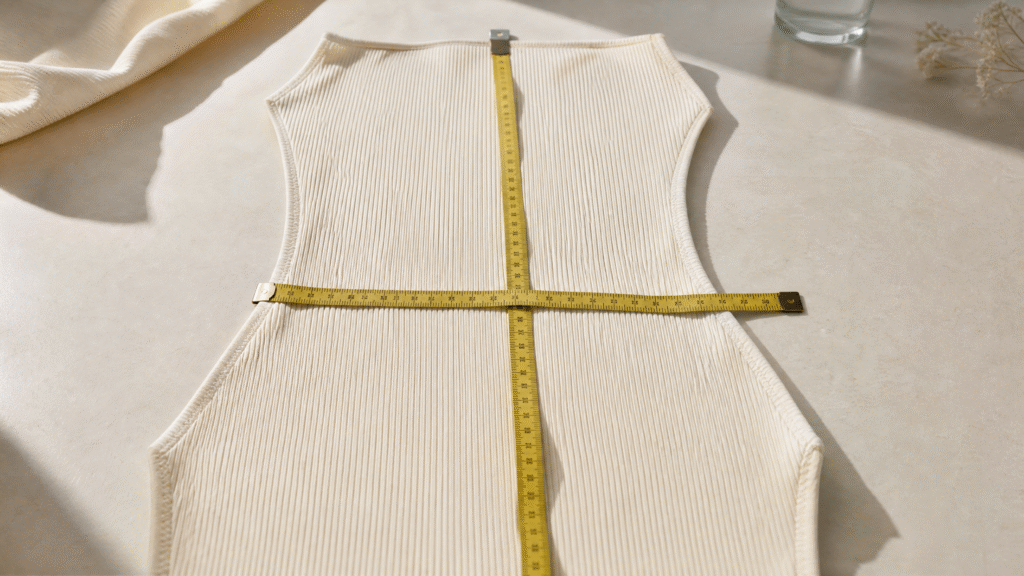
One test is not enough for a garment. After the fabric clears, wash a sewn sample and measure it again. This catches the cases where construction or a bonded edge changes the way a panel moves. Test with the care method you plan to print on the label. A cold hand wash spec and a warm machine wash spec describe two different garments.
In production, quality control checks flat-lay measurements against the approved sample and the spec, within tolerance. Adding a post-wash measurement to the approval checklist connects the fabric report to what the customer receives.
What to do when the fabric fails
A failed shrinkage test is a decision, not a dead end. The realistic options come down to these:
- Relax the fabric before cutting, when the mill and the finishing route allow it.
- Add allowance in the pattern or grade so the suit finishes at the intended measurement.
- Change the finishing route or the fabric itself.
- Adjust the care instructions to the behavior you measured.
- Accept a wider tolerance for a lower-cost fabric, and record that tradeoff in the spec.
The order matters. The first three change the marker or the measurements, so settle them before cutting. The last two are commercial choices, and both are cheaper before the order than after it.
Care labels and customer expectations
A care label is a promise to the customer, and it only works when it matches how the fabric behaves. If a knit relaxes in a warm dryer, a label that says so prevents most of the damage the customer would otherwise cause. If you already know the fabric moves more in length than in width, the label and the size chart should not claim otherwise. The same decisions come up while you write care and content labels for bulk production.
A care label is not a repair for a fabric that was never specified. It is the last check, and it should agree with the tolerance you set at approval.
What to ask before the order
A short list to carry into fabric approval:
- The maximum dimensional change allowed, per direction, with the method named.
- A report from the actual bulk-lot fabric, not a development sample.
- A wash-and-remeasure result on a sewn sample, using the planned care method.
- A post-wash measurement step in the QC checklist.
- A care label that matches the result.
None of this is complicated. It just has to happen before the fabric is cut, because after that the remaining option is a compromise.
If a range needs the shrinkage question settled at sampling, the swimwear sampling and fit approval stage is where it gets decided.