
Why light swimwear turns see-through and what the lining spec controls
A pale swimsuit tends to fail in the same place. It looks solid on the fit form and in the studio photo. Then a customer wears it into the water, the knit stretches, light comes from behind, and the coverage is gone. The complaint arrives as a problem with the outer fabric, and often the outer fabric is doing exactly what it was specified to do. The lining was never asked to keep the color opaque.
Most buyers treat lining as a default. The factory adds a layer, picks a fiber, and moves on. On black and deep navy that is usually fine. On ivory, pale pink, light blue, and any print with a white base, the lining choice decides how the garment behaves once it is wet and stretched.
Below is what actually determines opacity, how lining changes the result, and which fields are worth settling in the spec before sampling closes.
What determines whether a light swimsuit shows through
Opacity is not a single property of a single fabric. It comes out of several variables at once.
Fabric weight and knit tightness set the starting point. A denser knit blocks more light than an open, lightweight one, which is why fabric weight and knit construction belongs in the conversation before color is chosen. Yarn color matters too, since pale yarns pass more light than deep ones.
Stretch is where light colors often give way. A knit opens as it stretches, so the bust, the seat, and any area under tension turn transparent before the rest of the garment does. Water makes many swim knits more transparent, and backlight shows what indoor light hides. Fit adds the last variable: a style that pulls tight covers the same area with less material.
The common reaction to a failed light style is to blame the weight of the outer fabric. Weight matters, but heavier outer fabric raises cost across the whole garment. A lining spec aimed at the actual problem often costs less.
How lining changes the result
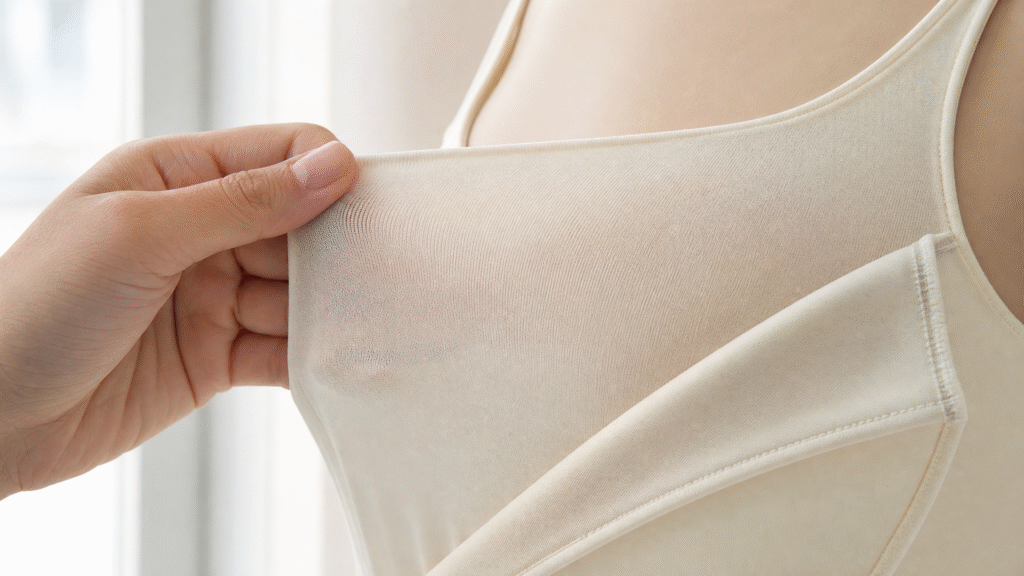
Most swim linings fall into two groups. Solid knits, often a fine tricot, give a smooth, opaque layer with little show-through. Open mesh and power mesh are lighter and more breathable, and power mesh adds compression, which is why shaping styles use it. Mesh alone is a weak fix for a pale color because it is made to be open.
Color matters as much as construction. A lining matched to the outer color keeps the garment consistent when it stretches. A nude or skin-tone lining under a pale outer fabric cuts the contrast between lining and skin, so the lining stops reading as a visible panel. A darker lining behind a light print can add depth, but only when the print is dense enough to hide it.
Where the layer sits changes the result as well. Full front and back lining gives the most even coverage. A partial lining saves material and leaves the uncovered area exposed. On one-pieces and high-coverage styles, the lining also affects how the garment feels, how fast it dries, and how it packs.
Where light colors need the most attention
Risk is not spread evenly across a light garment. The bust and cup openings stretch the furthest, and if the style carries bra pad construction, the pad edge is another place where a thin outer layer can show. The seat comes next, especially on high-leg cuts. Cutouts and strappy styles expose a single layer by design. A placement print on a white or cream base is only as opaque as the unprinted ground. Straps and bands combine narrow panels with strong stretch.
When a brand plans a light colorway across several silhouettes, each silhouette needs its own review. The same lining can pass on a high-coverage one-piece and fail on a high-leg bikini bottom.
What to put in the lining spec
Lining is easier to control when the tech pack states the decision rather than leaving it to the factory. In the spec, start with composition and a mill reference, then add a color reference drawn from your swimwear color and print guide: a lab dip or Pantone number, plus a note on whether the lining matches the outer or the skin tone. Record target weight and stretch direction so the layer moves with the outer fabric.
Next comes the coverage map. Mark front, back, gusset, cup, and any partial panels on the technical drawing. State the attachment method, whether the lining is bagged out with the outer, sewn as a separate layer, or bonded. Finally, name the opacity test condition: dry only, or dry and wet, and stretched or relaxed.
A spec that leaves those fields blank hands the decision to whoever is at the machine. A filled spec makes the result repeatable on the next run and the reorder after that.
How to check opacity before bulk
A workshop check catches most problems without a lab. Pull the approved sample over a skin-tone form, stretch the fabric the way it stretches in wear, and look at it against strong backlight, both dry and wet. Compare it with the same check on an approved reference style.
Instrumental testing is the second option. Labs can measure the light passed through a fabric and report a percentage opacity using methods such as DIN 53146 or DIN 53147 adapted for textiles. A fuller opaqueness test measures the fabric against pale and dark skin references and against black, white, and red contrast panels, and it can run dry, wet, stretched, or after washing. Choose this route when a light core color carries a whole range and the brand wants a record rather than an opinion.
Either way, the test condition belongs in the spec. “Opaque enough” is not a specification. “No visible show-through in the wet, stretched state against a pale reference” is.
Cost, lead time, and change control
Lining adds fabric and sewing steps, so it moves consumption, cost, and sometimes the minimum order quantity. It is also expensive to settle late. A lining change after sample approval touches the pattern, the marker, and the bill of materials, and it can push the production schedule. Treat the decision as part of the sample round instead of a correction applied at bulk.
What to do next
Light swimwear turns see-through when the lining is not specified for how the garment is worn: stretched, wet, and backlit. A heavier outer fabric is one answer, not the only one. Match the lining construction and color to the outer, mark the coverage, record the color reference, and test the sample wet and stretched. Then write the result into the spec so the next run repeats it.
If you are building a light colorway and want the lining settled at the sample stage, start with our swimwear fabric and trim sourcing or send the tech pack through OEM swimwear manufacturing.