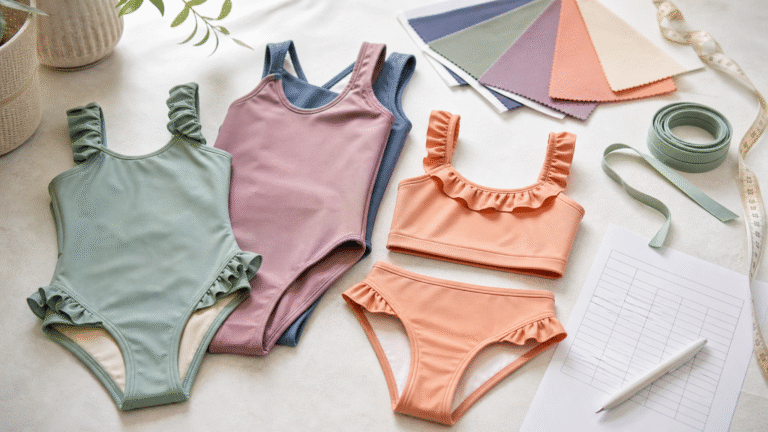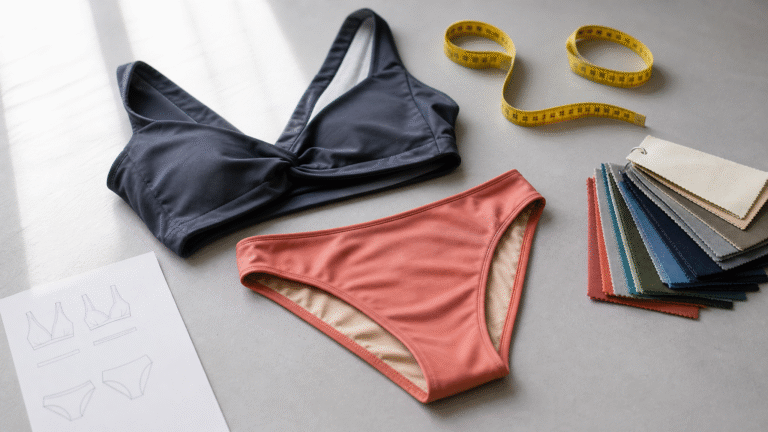

What changes fabric consumption on a swimsuit order
A buyer approves a sample, asks for a bulk price, and a fabric cost comes back per unit. A second supplier quotes the same style, and the fabric number is different. Neither supplier has necessarily made an error. Fabric consumption is an estimate, and it moves with a few decisions that are easy to leave unstated.
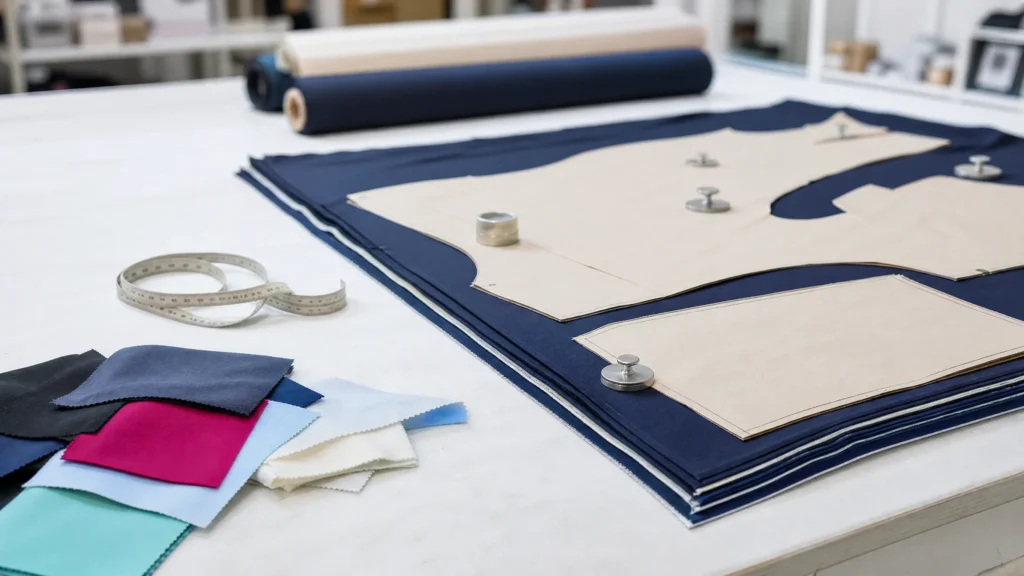
Consumption is the fabric a factory assigns to one garment. It is more than the combined area of the pattern pieces. It also covers the gaps between pieces on the cutting table, the allowance for seams and shrinkage, and the fabric lost when a print repeat or a roll defect breaks the layout.
What the number covers
A consumption figure is built from several inputs:
- pattern area for each size
- marker efficiency, or the share of the fabric that the pieces cover
- usable fabric width
- seam, hem and binding allowances
- shrinkage after finishing
- matching allowance for prints, stripes and direction
- lining and inner support pieces
- fabric lost to roll ends and defects
Remove any one input and the number looks lower. That is what makes a bare fabric cost so hard to compare.
Fabric width and marker efficiency
Wider fabric is not automatically cheaper. A marker that nests well on a narrow open-width knit can waste more on a wider roll when the pieces cannot be arranged across the extra width. What matters is how many panels fit across the usable width and how much of that surface the marker covers.
Small panels behave differently from large ones. A bikini has many short edges and curved seams, so the perimeter waste is proportionally higher than for a simple one-piece. Tubular fabric removes a side seam in some styles, but it also fixes the cuttable circumference and limits how the marker can be arranged.
The swimwear fabric guide explains how weight, stretch and recovery change the fabric choice. Consumption turns that choice into cut metres or kilograms.
Print repeat and direction
An all-over print with a large repeat pushes the pieces into fixed positions. Side seams, centre fronts and straps have to line up, and the fabric between repeats cannot be used freely. A smaller repeat gives the marker more room. A one-way print, or a fabric with a visible direction, also stops the factory from flipping a piece to close a gap.
Placement prints work differently. The print is fixed to a location on the panel, so the unusable area depends on the size of the placement and the panel it sits on. The comparison of all-over and placement print production follows those artwork decisions through to the cutting table.
Shrinkage moves the marker
Swimwear knits relax and shrink after dyeing, heat setting or washing. Cut a pattern to the finished measurement with no allowance and the garment can finish small. Factories compensate by cutting larger, and larger pieces raise consumption.
The allowance is not the same for every fabric. It belongs to the actual production lot, so an estimate copied from a sample of a different lot is only a starting point. Test the bulk fabric and confirm the allowance, and most of the surprise disappears.
Lining is a second consumption line
Front lining, full lining, power mesh and bra cups all consume material beyond the shell. Some quotes fold lining into a single fabric cost; others list it on its own line. Both can be correct, but they cannot be compared line by line until the scope matches. Pads and cups usually count as trims, while the fabric that holds them sits in the consumption figure.
A style with a full lining and a power mesh panel carries a higher fabric cost than the same silhouette with a front lining only. That difference belongs on the consumption sheet, not only in the final price.
What to ask for on a consumption sheet
Ask for consumption by size rather than one blended number, because larger sizes need more fabric. The sheet should state the fabric width, whether the fabric is open width or tubular, the weight and composition, the marker efficiency assumption, the shrinkage and seam allowance, whether lining is included, how roll ends and defects are handled, and the size and colour breakdown behind the figure.
Ask whether the figure comes from the approved sample or from a standard block. A number taken from an actual marker is more useful than an estimate based on a similar style.
Comparing two quotes without guessing
Put both quotes on the same assumptions before judging the price. Confirm fabric width, lining scope and allowance. When one quote assumes a wide open width and the other assumes a tubular knit, the per-unit fabric cost can differ even if the fabric price per kilogram is identical.
Recheck consumption after any specification change. A new print repeat, an added panel line or a different lining changes the marker. The post on fabric and workmanship cost drivers shows where those changes land in the unit cost.
Leave room for order rounding. Factories buy fabric by the roll or by weight, and a small order can need more fabric per unit than a large one because the unused balance is spread across fewer garments. A reorder price can move for that reason alone.
Before the order is placed
Ask for a consumption sheet that lists its assumptions, then compare quotes on the same basis. If the style is still at the sample stage, confirming the bulk fabric width and shrinkage behaviour before the fabric is ordered is worth the time.
For teams moving from an approved sample to bulk, the OEM swimwear manufacturing and private label swimwear pages cover the development steps that sit before cutting.