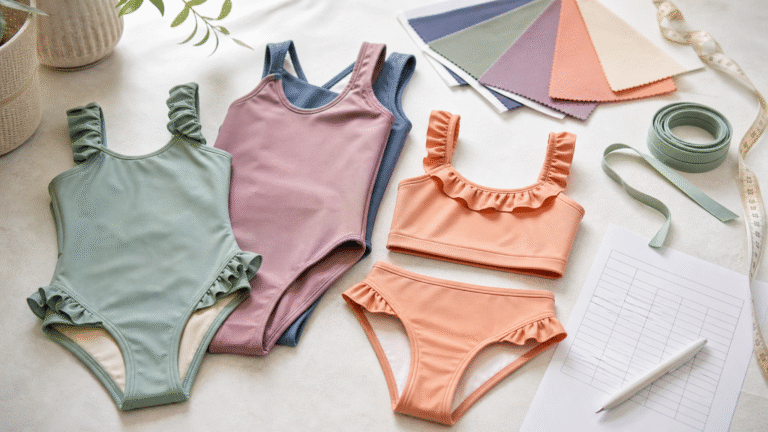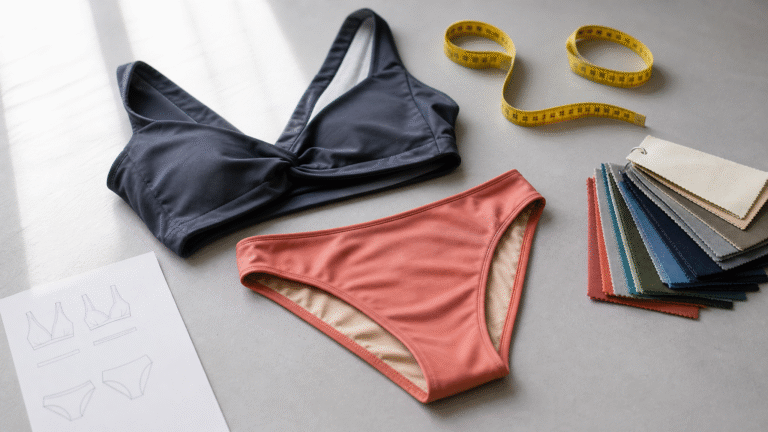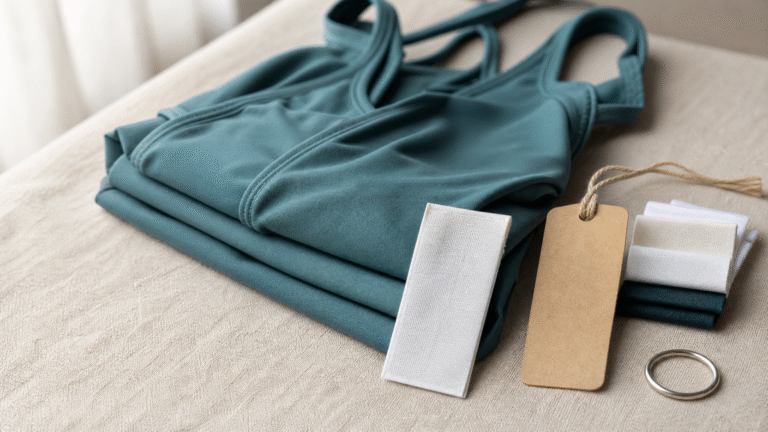

Why Premium Swimwear Costs 2-3x More: A Buyer’s Guide to Workmanship and Fabric Quality
Premium swimwear prices are not arbitrary. The main cost drivers are fabric quality, seam and stitch workmanship, elastics and trims, and quality control tolerance. When a factory quote comes in 2-3 times higher than a standard production quote, those four areas usually explain the gap. If your customer cares about fabric handfeel, shape retention, or seam comfort, the premium is probably justified. If the sell is mainly trend color and low price, a premium build is overspec for your launch.
Where the 2-3x Cost Difference Actually Comes From
A higher price rarely comes from one decision. Material selection, construction time, and rejection risk all add up. The main drivers to compare in a quote are fabric quality, seam construction, elastics and trims, and QC tolerance.
Fabric quality: composition, recovery, and print stability
Standard swimwear often uses basic nylon-spandex blends with lower spandex content and a simpler knit construction. Premium swimwear typically uses higher-grade nylon or recycled polyamide with better shape retention, higher colorfastness ratings, and a denser handfeel. These fabrics cost more per meter and often require higher minimum order quantities for custom colors or prints. For buyers, the practical question is not just GSM but how the fabric behaves after 20 to 30 wears in chlorinated water and under sun exposure. A premium fabric should recover its shape after stretching, resist pilling, and hold color through wash and sweat. If a supplier cannot provide a fabric spec sheet or test report, the premium claim is hard to verify.
Workmanship: seam construction, stitch density, and finishing
Premium swimwear workmanship is visible in details customers feel but rarely see. A standard swimsuit may use a basic overlock stitch with lower stitch per inch and minimal seam taping. A premium garment often uses flatlock seams for next-to-skin comfort, reinforced bartacks at stress points, and consistent thread tension across curved seams. Stitch density matters: more stitches per inch means stronger seams but more production time and thread consumption. Finishing details like clean thread trimming, even seam allowances, and no visible raw edges are also labor-intensive. If you are comparing two private label swimwear quotes, ask the factory to explain the seam type and stitch density from the same tech pack. Often a lower quote simply omits a reinforcement step.
Elastics, lining, and trims: small items with outsized cost impact
Elastic is one of the most underestimated cost drivers in swimwear manufacturing. Premium swimwear uses high-recovery elastic that resists chlorine and salt degradation; cheaper elastic loses tension after a season. The difference per meter may look small, but when multiplied across leg openings, waistbands, and straps, it changes both cost and product lifespan. Lining also matters: premium linings are softer, thicker, and less likely to become transparent when wet. Trims such as branded hardware, custom zippers for one-piece styles, and silicone grippers can add cost if they require custom tooling. For a startup launching a first collection, choosing standard trim finishes can reduce the premium gap without obvious loss in perceived quality.
Quality control: tolerance, inspection, and rework
Premium swimwear factories often price in a stricter QC pass. That means more in-line inspections, a lower acceptable defect rate, and a higher rate of rework or second-grade rejection. A standard production run may allow minor misalignment or slight color variation between panels; a premium run should not. The cost of this control is real: more time per garment, more training for sewing operators, and more rejected material. When a quote is 2-3x higher, part of that amount is simply the factory being conservative about how many units will pass your final inspection standard. Buyers who skip this step often save on unit cost but spend more on returns, chargebacks, or relaunching a poorly reviewed style.
How to Evaluate Whether the Premium Is Justified for Your Brand
The right question is not whether premium is objectively better, but whether your target customer will pay for the difference. A luxury resort label needs different fabrics and finishing than a fast-fashion swimwear line sold at volume. Before accepting or rejecting a premium quote, map the cost drivers to your retail positioning.
- Ask for fabric composition and weight specs, not just the supplier name.
- Request a stretch and recovery test report for the main fabric and lining.
- Compare seam type and stitch density against your tech pack.
- Check elastic type and whether it is chlorine-resistant or standard.
- Confirm trim and hardware sources; custom trims raise cost and MOQ.
- Ask how many in-line QC checks the factory performs per production batch.
- Request a pre-production sample with the exact fabric and trims you will buy.
| Cost driver | Standard production | Premium production | Why it raises price |
|---|---|---|---|
| Fabric | Basic nylon/spandex, lower recovery | High-grade polyamide, higher spandex, tested colorfastness | Higher material cost and custom dye lot minimums |
| Seams | Overlock, lower stitch density, minimal reinforcement | Flatlock or reinforced seams, higher stitch per inch, bartacks | More sewing time and thread |
| Elastics | Standard elastic, lower chlorine resistance | High-recovery, chlorine-resistant elastic | Pricier raw material, more exacting spec |
| Trims | Basic hardware, standard lining | Custom hardware, premium lining, silicone grips | Tooling costs spread over lower volume |
| QC | Final inspection only, looser tolerance | In-line and final inspection, stricter defect limits | More labor and higher rejection rate |
Where Buyers Can Reduce Premium Cost Without Losing Perceived Quality
If the full premium quote is outside your launch budget, you do not have to default to the cheapest alternative. Many brands reduce cost by keeping premium fabric on the main body but selecting a slightly less expensive lining, or by using standard branded hardware instead of custom zippers. Another practical move is to reduce the number of colorways in the first run, which lowers fabric minimums and reduces waste. MOQ planning also helps: a factory can often reduce per-unit premium cost if you commit to a larger bulk order after sample approval. Hongxiu Swim works with private-label buyers on this same tradeoff: separating must-have quality specs from nice-to-have extras before the sample stage.
FAQ: Premium Swimwear Pricing and Workmanship
Is higher fabric GSM always a sign of better quality?
Not always. GSM tells you fabric weight, but premium quality also depends on fiber type, knit structure, and spandex content. A heavy fabric can still pill or sag if the elastic recovery is poor. Ask for composition and stretch recovery data instead of relying on GSM alone.
How do I compare quotes from two suppliers if the tech pack is the same?
Make sure both suppliers are quoting against the same fabric spec, seam construction, and trim list. If one quote is much lower, ask what has been changed or omitted. A lower quote may substitute a standard elastic, reduce stitch density, or skip a sampling step. Request line-item specifications before comparing final prices.
Can I get premium workmanship at a lower MOQ?
Sometimes, but not always. Premium fabrics and custom trims often require higher minimums because of dye lot and hardware tooling constraints. You can reduce cost by using stock hardware, limiting print colors, or committing to a reorder. Discuss MOQ planning with your manufacturer early to avoid quoting a spec that is not feasible at your launch quantity.
What should I check on a pre-production sample before bulk?
Check fabric handfeel and stretch recovery, seam comfort and strength at stress points, elastic tension after wearing, colorfastness under light and water, and overall fit consistency across sizes. A premium sample should look and feel like the production version you expect to sell; if not, the bulk run will not improve on its own.
If you are evaluating private label swimwear quotes and need a practical cost breakdown for fabric, workmanship, and quality control, start by asking your supplier for a spec-by-spec comparison. Hongxiu Swim can help with sample-level details and MOQ planning so you can decide whether a premium build fits your brand before committing to bulk production.