
The Hidden Cost of AI Swimwear Designs: Why Startup Sampling Costs Spike and How to Budget Smarter
AI image generators let anyone visualize swimwear designs, but when those images reach a factory, sampling costs often surprise startups. A design that looked simple on screen may require hours of reworking, sourcing rare materials, and two or three fit samples before it matches the visual. Here’s why AI-generated concepts inflate sampling budgets and how to plan your spending.
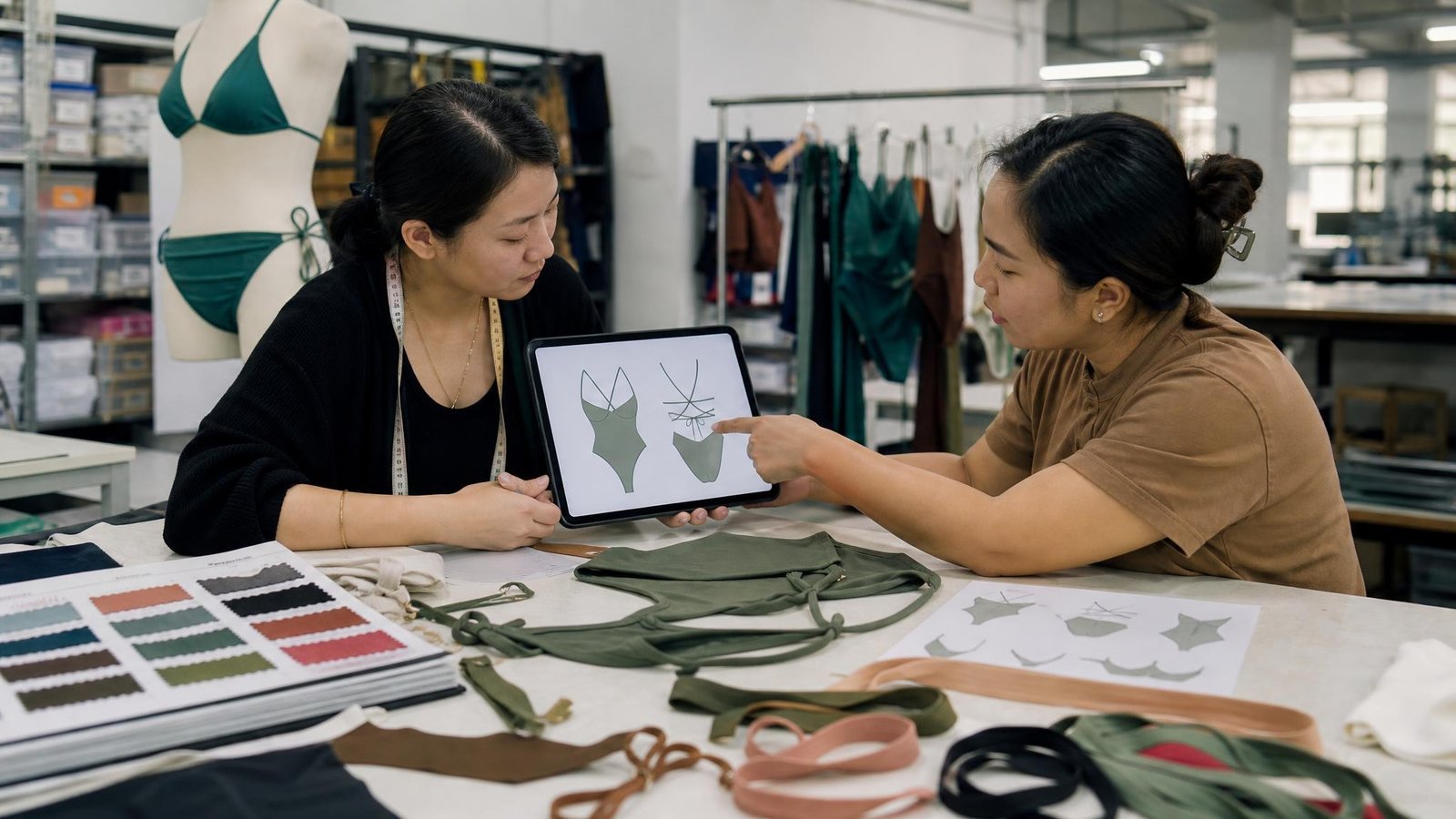
Why AI Swimwear Concepts Overpromise and Under-Deliver for Sampling
Many AI designs ignore the practical constraints of swimwear construction. They might show an intricate lattice of straps that would bunch in water, seamlines that disappear into prints without a stitch mark, or metallic hardware that cannot withstand chlorine. When an entrepreneur sends only an AI image, with no stitch guide, no material callouts, no measurement specs, the factory’s pattern maker has to reverse-engineer the structure from scratch.
The process often leads to multiple toiles, hand-draping unusual cuts, and long discussions to clarify the design intent. Unlike a conventional design where the buyer provides a sketch with basic construction notes, an AI image leaves every seam junction open to interpretation. The result is a first sample that rarely matches the image, triggering a costly revision cycle.
Where the Sampling Budget Mushrooms: 4 Hidden Cost Drivers
| Cost Factor | Conventional Sample | AI-Generated Sample | Reason for Increase |
|---|---|---|---|
| Pattern & Grading | $150–$250 | $300–$600 | Unconventional panel shapes and no flat sketch require extra pattern work |
| Material Sourcing | $50–$100 | $100–$300+ | May need special fabrics or trims not in standard supply |
| Sample Revisions | 1–2 rounds | 2–4 rounds | Missing specs and fabric drape differences lead to multiple fit attempts |
| Communication Time | Minimal | Extensive | Time spent clarifying construction, sourcing alternatives, and aligning expectations |
These numbers are not quotes, but they show the typical pattern. Adding up all four areas, an AI-driven sample often costs two to three times more than a well-documented design.
Budgeting Smarter: A Startup’s Framework for AI-to-Production Sampling
Rather than assuming a single sample fee, plan for the extra work that an AI design often requires. Here is a line-by-line approach that accounts for that uncertainty:
- If you haven’t converted the AI image into a flat sketch with measurements, factor in 4 to 8 hours of internal or external designer time before the factory even quotes.
- Ask for a quote that includes a complexity surcharge if the factory sees an AI image. Expect 30% to 50% above their standard sample rate.
- If the design requires a specific print, unusual metal, or custom-dyed elastics, set aside $200 to $500 for sampling yardage and import fees.
- Plan for at least two fit samples, especially if you can’t approve in person. Each revision may cost 70% to 90% of the first sample.
- Express courier costs add up. One round of samples from Asia to the US or EU can run $50 to $120.
For a single style, a realistic sample development budget might range from $800 to $2,000, not including duplication for multiple sizes. If you already have a tech pack with a flat, labeled sketch, fabric swatch references, trim codes, and measurement charts, you can often halve the cost.
How to Cut Sample Costs Without Compromising Design Intent
The goal isn’t to simplify your designs but to communicate them clearly. Here are specific ways to keep your sampling budget under control:
- Invest in a basic tech pack before contacting factories. Even a hand-drawn front and back view with stitch types, seam placements, and hardware callouts reduces hours of guesswork.
- Choose textile families that are readily available, like standard nylon-spandex jersey, power mesh, and basic elastics stocked by swimwear fabric suppliers. Custom-dyed or specialty laminated fabrics add weeks.
- Limit trims to what swimmers actually tolerate. Avoid large metal parts unless you can provide a ready supplier; many AI renders show oversized rings and chains that rust or snag.
- Pick a supplier that offers a feasibility check before you pay for a sample. Some manufacturers will review AI concepts and flag impossible areas, saving you a wasted round.
If your launch quantity is very low, say 50 pieces per style, the economics of factory-scale sampling may not add up. In that scenario, a small atelier or a startup-focused studio that specializes in single-piece production might give you more face time and lower total cost, even if the per-piece rate looks higher.
Frequently Asked Questions
Why do AI designs cost more to sample than standard designs?
Missing production details drive up costs. A factory needs explicit guidance on seams, fabric, and trims. With only an AI image, the pattern maker guesses, which increases labor and often results in a sample that needs rework.
Can I get by with only one sample round?
Rarely for AI designs. The first sample almost never matches the render because the image shows fabric draping in ways real textiles don’t. Budget for at least two samples; if the first works, you can use the extra money for marketing.
What is the most common mistake startups make when budgeting for custom swimwear?
Assuming the sample fee quoted online for simple styles will apply to their AI-generated design. Complex looks can triple the base sample cost. The mistake grows when brands forget to include courier fees, import duties, and the cost of resourcing a trim mid-project.
If you’re planning a swimwear collection from AI concepts, Hongxiu can review your design and give a feasibility assessment before you commit to sampling. Send your concept image and any initial specs, and we’ll map out what’s producible and where your budget should focus.