
A fitting room cannot tell you how a swimsuit behaves in water
Most swimwear fit approvals happen in a dry room. The sample is measured on a standing body, pinned where it pulls, photographed, and signed off. Everyone sees how the suit looks before it meets water.
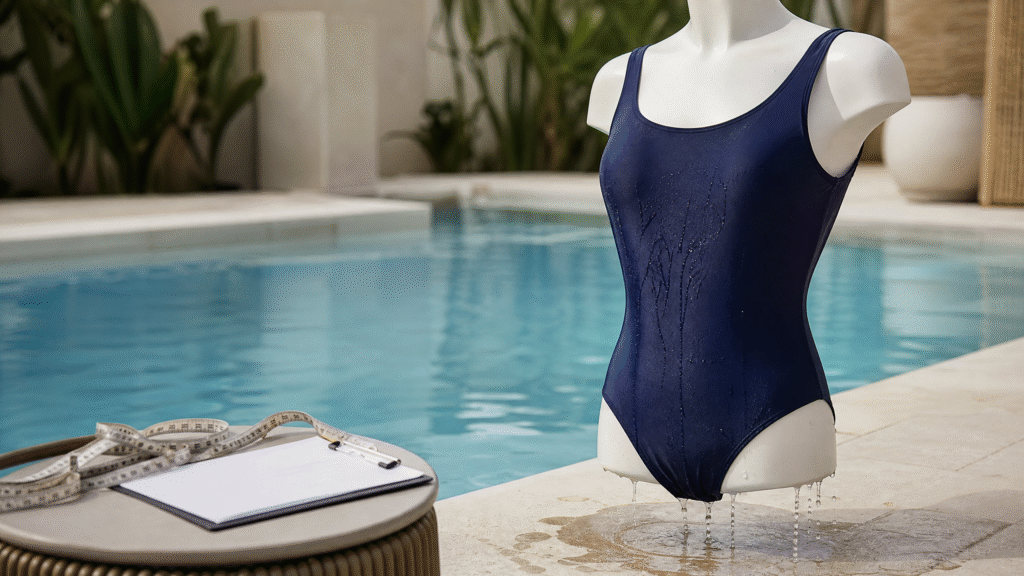
Water changes the load, the opacity, and the way the suit recovers. The knit relaxes, the lining clings, straps take a different pull, and a neckline that sat flat while standing can lift once the wearer starts to swim. A suit that passed every dry measurement can still ride up, turn sheer, or lose support in the pool.
A structured swimwear fit testing session makes those failures visible while the fix is still a sample change rather than a bulk correction. It is not a second fitting. It is a check of what the garment does under the conditions it will meet in use.
Why a dry fit approves the wrong things
A dry fit answers questions about length, seam placement, and appearance. Those questions matter. They just do not cover what happens when fabric absorbs water and the wearer moves against resistance.
Wet fabric weighs more, stretches further under load, and recovers more slowly. A bikini top that feels secure while standing may shift when the wearer raises both arms or pushes off the pool wall. A one-piece may look opaque in the fitting room and show the lining through the front panel in daylight once it is wet.
None of this makes the dry fit unnecessary. It means the dry fit and the water test answer different questions, and approval should wait for both.
Set up the test before the sample arrives
Start with the end use. A performance suit needs laps, turns, and treading. A resort style needs sunbathing, walking from the pool, and sitting on a damp lounger. A family or kids style needs movement and repeated up-and-down. Test the conditions the style will actually meet, not a generic pool session.
Pick wearers who match the target customer in the sizes you plan to sell. One fit model is not enough. If your sampling order includes two pieces per style, use them as one base size and one largest size so the test also checks grading. Ask for those two sizes when you place the sample request.
Brief the wearer to behave normally. Do not let them keep adjusting a strap or pulling down a leg edge during the test without noting it. Those small corrections are evidence.
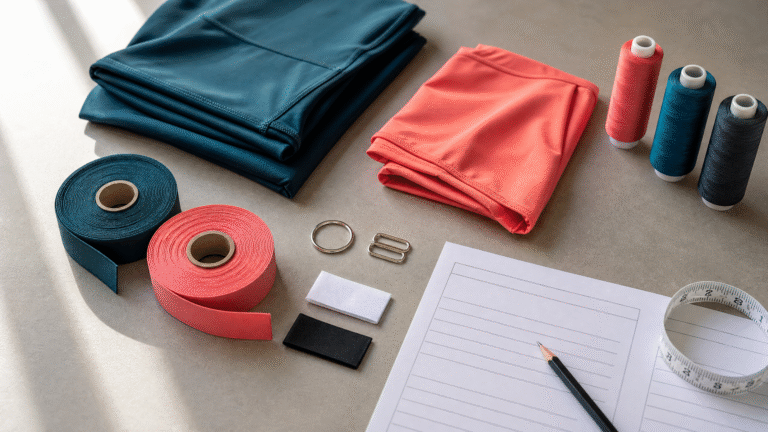
Prepare a simple record: sample code, size, key measurements before wetting, water type, time in water, activities, and what moved. A tape measure, a phone camera, and a printed sheet are enough.
What to do in the water
A quick dip will not wet the fabric through. Plan a session long enough for the suit to soak and for the wearer to move through several positions. Twenty to thirty minutes is a practical starting point, with the last part spent resting in the suit rather than swimming.
Run the same sequence for every sample:
- Enter the water and stand at chest depth.
- Swim one length at a normal pace.
- Tread water for a minute or two.
- Sit on the pool edge and stand up.
- Bend, squat, and reach overhead.
- Lie on a lounger or towel for several minutes.
The order matters less than consistency. If one sample is tested with a different sequence, the notes are hard to compare. For a style sold in both pool and sea markets, run separate sessions in chlorinated and salt water. Chlorine and salt do not stress the fabric in the same way, so a pool-only test is thin evidence for a saltwater range.
After the session, let the suit dry flat or hang in shade. Do not put it in a dryer. Then measure the same points again.
What to look at
Watch the suit as closely as the wearer’s comfort. Discomfort is a useful signal, but it often arrives after a visible fit problem has already appeared.
| Check | Record | Change it may point to |
|---|---|---|
| Front and back coverage | How far the leg edge moves, whether the bust or back gapes, any ride-up after a lap | Pattern, body length, leg elastic |
| Strap position | Slip, digging, length growth, need to shorten mid-test | Swimsuit strap construction, attachment, recovery |
| Underband and cups | Lift, rotation, flattening, spill, pressure marks | Underband tension, cup construction, wire or pad placement, DD cup swimwear support |
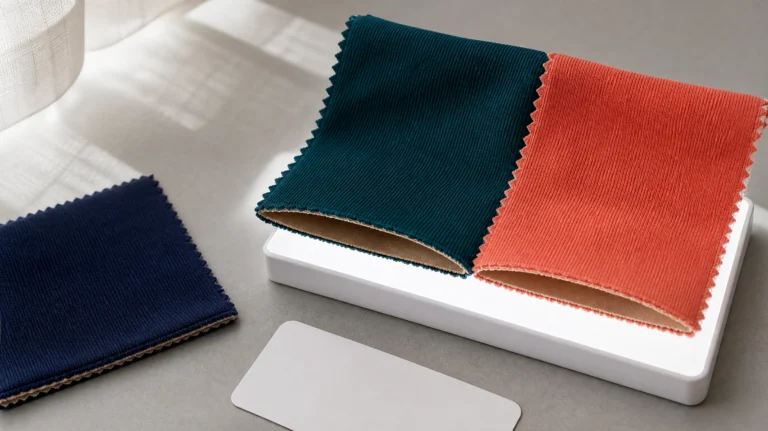
| Opacity | Areas that turn sheer when wet, visible lining edges, shadow through the fabric | Lining coverage, fabric weight, color |
| Seams and edges | Chafing, twisting, pulling, exposed thread | Seam type, edge finish, elastic application |
| Color | Transfer to skin, towel, or light trim | Dye fastness, rinse, chlorine and sunscreen colorfastness |
| Recovery | Measurements after drying, bagging, waviness | Fabric recovery, spandex content, pattern allowance |
Measure again after the suit dries
Compare the dry measurements before and after the session. Use the same tape and the same points. A small change is normal. The question is whether it stays inside the tolerance you set for that fabric and style. The guide to swimwear shrinkage tolerance explains how to set that limit before bulk.
Look for growth in body length, strap length, and underband. Also check whether the suit returns to its shape after a short rest. A suit that stays stretched after drying will keep stretching in the customer’s drawer.
Turn observations into a revision request
Group the findings by cause. A coverage problem may come from the pattern, the leg elastic, or the body length. A support problem may come from the underband, the cup, or the strap. Sending a list of complaints without a likely cause makes the next sample a guess.
Write each change as a specific instruction: which point, which size, which direction, and how much. Add the photo and the measurement. “The underband rides up at the center back on the large size after one length; lower the underband by 1 cm and keep the side seam height” is more useful than “make it tighter.”
A sampling round includes a limited number of revisions, so group the changes. If the fix changes the pattern or the construction, for example turning a two-piece into a one-piece, that is a new development rather than a revision. Keep those decisions separate from the small fit corrections.
Ask the supplier to confirm which changes affect the grade rule. A correction on the base size can break the largest size if the grade is not checked again.
What the test cannot tell you
One session cannot certify a style. It can show how this sample behaves in this water on this wearer, but it cannot predict how a dye performs after repeated washing, how a fabric resists chlorine over a season, or how a whole size range fits a population. Lab tests and a longer wear trial still have a place.
It also cannot prove that the bulk fabric will behave like the sample. Fabric lot variation, shade, and finishing can change the result. Keep the incoming fabric inspection and the test report in the approval file.
What it can do is catch the failures that appear as soon as the suit gets wet. Those failures tend to show up on the first wear, and a brand cannot fix them after the carton leaves the factory.
Before you approve the style
Approve the wet sample only when it keeps coverage, support, and comfort through the planned movements, and when every change is written into the spec for the next sample. If the wearer has to adjust the suit constantly, the sample is not ready.
If you are ordering a fit sample, ask for the two pieces to be made in the sizes you will actually grade, and test them in the water before you sign. Hongxiu’s swimwear sampling service covers development samples for ODM and OEM styles, and the page sets out the revision rounds and timing.