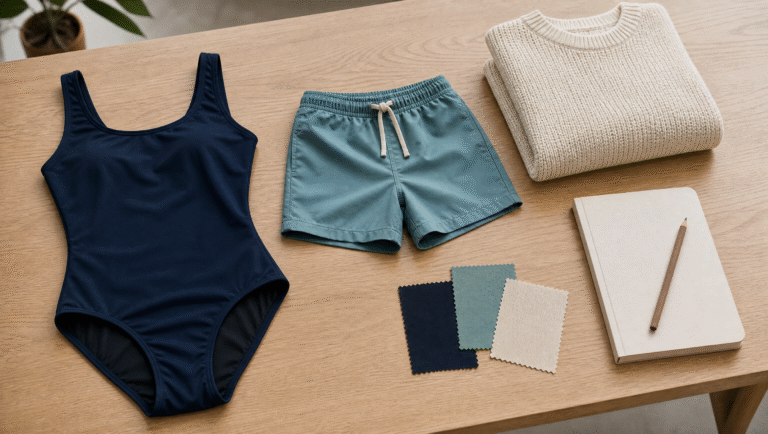

Men’s Beachwear in 2026: Why One Swimsuit Is No Longer Enough
The End of the One-Trunk Beach Trip
For decades, the average man packed a single pair of swim trunks and called it done. That era is fading fast. Consumer behavior data and retail sales patterns across major beach destinations point to a clear shift: men are building beach wardrobes, not just buying swimwear. A week-long coastal trip now demands trunks for the sand, hybrid shorts for the boardwalk, linen trousers for dinner, and a cover-up that works at the pool bar. For brands and retailers, this fragmentation represents both a challenge and a significant growth opportunity.
The modern male consumer is dressing for five or six distinct beach occasions — from morning swim to sunset cocktails — and he is increasingly unwilling to compromise. This behavioral shift is pulling swimwear brands beyond their traditional product boundaries and into resort wear, creating new categories that blur the line between performance and lifestyle.
What Men Actually Want: Fit, Fabric, and Versatility
The data from consumer feedback is remarkably consistent. Men’s swim trunk preferences have coalesced around a few non-negotiable features: a mid-thigh to just-above-knee inseam — typically 5 to 7 inches — quick-dry fabric that does not sag when wet, and colors that transition off the sand without screaming “swimwear.” Solid navy remains the top-selling shade across nearly every market segment, with subtle patterns such as micro-stripes and muted geometrics gaining ground as men grow more adventurous.
For OEM swimwear production, this means precision in pattern grading has never been more critical. A trunk that fits well on a size medium model but loses proportion at XL will generate returns and erode brand trust. The manufacturers winning contracts right now are those offering consistent fit across the full size range — something that requires real technical expertise, not just competitive pricing.
Fabric is the other battleground. Men are rejecting the paper-thin polyester shells that dominated budget swimwear for years. They want substantial, four-way stretch fabrics with a soft hand feel — materials that hold shape after hours of saltwater exposure. Recycled nylon and polyester blends are also moving from niche to mainstream, as sustainable swimwear production becomes a baseline expectation rather than a differentiator. A swimwear manufacturer without sustainable material options in its sourcing portfolio is already losing requests for quotation.
The Linen Factor and the Rise of Hybrid Resort Wear
Perhaps the most telling trend is the surge in demand for products that sit between swimwear and casual clothing. Hybrid shorts — cut like chinos but built with quick-dry, water-ready fabric — are one of the fastest-growing subcategories. Linen and cotton-linen blend shirts, worn open over swim trunks as cover-ups, are driving cross-category purchasing behavior. This is new territory for many swimwear-focused brands, and it is creating demand for wholesale swimwear suppliers who can also deliver coordinated resort wear collections.
From a production standpoint, this creates complexity. A brand that once ordered 5,000 units of one trunk style is now ordering smaller runs across multiple categories — trunks, hybrid shorts, cover-ups, linen trousers. Manufacturers with flexible minimum order quantities and multi-category production capability are best positioned to capture this fragmented demand.
What This Means for the Supply Chain
The men’s beachwear market is maturing, and with maturity comes segmentation. The brands that will thrive are those that treat the beach not as one dress code but as several — and partner with manufacturers who can execute across materials, categories, and production scales. The era of the single-trunk beach trip is over. The brands and suppliers who adapt to the multi-occasion reality will be the ones writing the next chapter of this market.