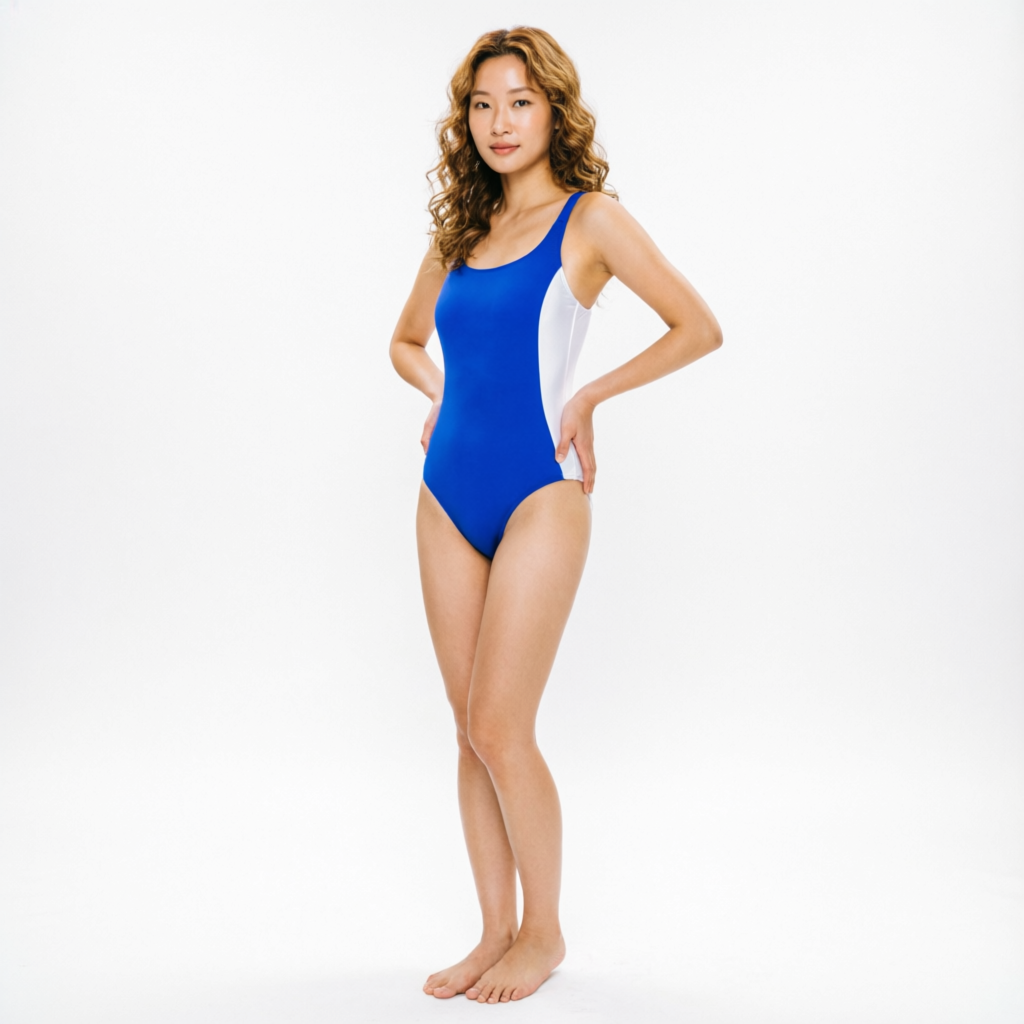

Over the past two years, reversible swimwear has seen surging demand in overseas markets. From Instagram fashion influencers showcasing vacation looks to major European and American swimwear chains launching seasonal collections, the “two looks in one” concept hits the sweet spot for consumers seeking versatility and travel-friendly minimalism. For swimwear buyers and brand owners, a reversible line means more flexible SKU combinations, compelling marketing angles, and higher average order value potential.
However, when purchase orders move from design boards to the production floor, many clients discover that manufacturing reversible swimwear is significantly more complex than standard swimsuits. Drawing on years of hands-on manufacturing experience, we break down the four most common technical challenges—using real cases served by Hongxiu Clothing Co., Ltd. in Xingcheng City—along with field-tested solutions.

Challenge 1: Fabric Show-Through and Weight Balance
The biggest selling point of reversible swimwear is that both sides can be worn outward, meaning both faces of the fabric must deliver excellent visual performance. Regular swimwear only needs to look good on the outside, with the inner layer serving basic comfort functions. Reversible swimwear, by contrast, demands zero color deviation, no pilling, and no visible stitch marks on either side.
Common problems: a light-colored side showing through to the darker fabric underneath; fabric that is too heavy, making the swimsuit bulky and slow to dry; or fabric that is too light, causing inner construction to show through when stretched.
Solution: Fabric Compatibility Testing and Weight Optimization
In practice, we recommend clients choose fabrics of the same composition and weight in contrasting colors for pairing. Hongxiu Clothing’s go-to approach includes:
- Using an 85% polyester + 15% spandex blend (around 200gsm) as the printed face fabric, paired with a solid-color polyester-spandex fabric of the same weight. This combination offers strong chlorine resistance, excellent shape retention under high-stretch conditions, and vibrant heat-transfer prints with high colorfastness.
- If clients prefer the softer hand feel of nylon-spandex (82% nylon + 18% spandex), we add a pre-shrinking treatment to ensure both layers shrink at the same rate after repeated washing, preventing wrinkles or delamination.
- During the sampling stage, we ask clients to provide at least two color-combination options (e.g., black/gold, blue/white) for a 72-hour hanging test to check for color bleeding between layers.
Challenge 2: Edge Finishing Process Selection
The edges of reversible swimwear—necklines, armholes, and leg openings—are where quality truly shows. Regular swimwear can hide edge stitching under a fabric fold, but every edge of a reversible garment is exposed. The smoothness and appearance of the stitching directly determine the product’s grade.
Solution: Clean-Edge Finish
Hongxiu Clothing prioritizes the clean-edge finish for reversible swimwear production. This method uses specialized covering machines to conceal all stitching inside the fabric layers, leaving no raw edges or visible stitch lines on either side. Compared to traditional zigzag or double-needle stitching, the clean-edge finish offers:
- Crisp, clean edges on both sides with a smooth feel against the skin
- Excellent elasticity retention—no sagging even after intense activity or frequent changing
- A nearly seamless look that aligns with premium swimwear positioning
It is worth noting that the clean-edge finish requires highly skilled sewing operators and precise machine tension adjustments based on fabric thickness. This is why we always emphasize “sample first”—through two to three rounds of sample adjustments, our production team can dial in the optimal sewing parameters for each reversible swimwear style.
Challenge 3: Concealed Care Labels and Size Tags
Reversible swimwear imposes a hard requirement on labeling: since both sides are meant for outward wear, sewn-in labels on the side seams or back neck are unacceptable. Yet overseas markets, especially Europe and North America, have strict regulations requiring fabric composition, care instructions, country of origin, and other information on labels—brands cannot simply omit them.
Solution: Heat Transfer Labels + Removable Hang Tags
Our recommended approach is “printed labels first, hang tags as backup”:
- Use heat transfer labels (no-sensation print) to apply size and care information on the inner side of the swimsuit, typically along the side seam. These labels are nearly imperceptible to touch and do not affect appearance or wearing comfort.
- Place detailed composition data, brand stories, and barcode information on removable hang tags. Consumers can simply remove the tags after purchase and enjoy a label-free, minimalist wearing experience.
- For regions that require sewn-in labels, Hongxiu Clothing uses ultra-thin TPU labels sewn inside the side seam in a transparent or white color that closely matches the fabric, minimizing visual intrusion.
Challenge 4: Pattern Design Symmetry and Fit Adaptability
Pattern design for reversible swimwear is far more complex than for standard swimsuits. Regular swimwear only needs to fit well on the front and function properly on the back. Reversible swimwear, however, treats both sides as equals—the pattern must deliver nearly identical fit and comfort when worn either way. The difficulty increases further for styles with padded cups or underwire.
Solution: Base Size + Largest Size Dual Sample Verification
Our proven methodology includes:
- First, produce a base-size sample (e.g., M or size 8) and test the fit on both sides. Adjust dart placement and seam lines to ensure critical areas—bust, hips—do not gape or dig in when the garment is reversed.
- Once the base size is confirmed, produce the largest-size sample for grade-rule verification. Reversible swimwear requires independent stretch allowance calculations for each size, as the fabric’s stress direction changes when the garment is flipped.
- For styles requiring cups, we recommend removable padding rather than fixed sewn-in cups. Removable cups can be repositioned when the garment is reversed, solving fit issues while giving consumers the flexibility to use them or not.
Why Choose Hongxiu Clothing for Reversible Swimwear Production?
Based in Xingcheng, Liaoning—the global swimwear manufacturing hub—Hongxiu Clothing Co., Ltd. is led by a founder with over three decades of swimwear design and production expertise. Our reversible swimwear capabilities include:
- Integrated manufacturing and trading—direct factory pricing with full cost control and no middleman markup
- Flexible minimum order quantities starting at 50 pieces per color per style, supporting small-batch quick-response models to minimize client trial costs
- Rich digital printing resources, particularly heat-transfer printing on polyester-spandex fabrics, with free sampling available—even for single-piece orders
- Comprehensive process support, from clean-edge finishing to heat-transfer labeling, with our technical team matching the best process combination for each style
- Fast sampling turnaround of 3–5 business days, helping you quickly validate design feasibility
Final Thoughts: From Test Run to Bestseller—Technical Depth Defines Product Ceiling
Successfully launching a reversible swimwear line is not just a design achievement—it is a direct reflection of supply-chain technical capability. From fabric compatibility and stitching processes to label handling and pattern adaptation, every detail determines how the final product performs on overseas retail shelves.
If you are planning your next-season reversible swimwear collection, contact us for a free process evaluation and quotation. Hongxiu Clothing supports custom orders based on your sketches or reference samples, and offers end-to-end manufacturing services from design optimization to volume delivery. Reach out now to request a free first-order fabric sample (polyester print) and validate your reversible swimwear bestseller concept with minimal investment.