Hongxiu Clothing has evolved from a traditional OEM swimwear manufacturer to a factory direct partner for brands and retailers. This shift addresses the core inefficiencies of the conventional supply chain, where trading companies act as intermediaries between you and the production floor. Working directly with a swimwear factory in China eliminates those layers, translating into tangible benefits for your product development, cost structure, and time to market.

Why the Traditional Swimwear Supply Chain Creates Bottlenecks
The standard model for sourcing private label swimwear involves your brand, a trading company, and finally the factory. This structure creates several operational and financial frictions that directly impact your business.
- Cost Layering: Each intermediary adds a margin, inflating your final cost without adding proportional value. You pay for the service of coordination, not just the product.
- Communication Lag and Distortion: Technical specifications, fabric queries, or design adjustments must travel through multiple points. Details can get lost or misinterpreted, leading to sampling errors and production delays.
- Reduced Agility: Quick decisions on material substitutions, production scheduling changes, or urgent revisions are slowed down as requests and approvals are relayed back and forth.
- Opaque Problem-Solving: When a quality issue arises, identifying the root cause—whether it’s a material flaw, pattern error, or sewing inconsistency—becomes a three-way conversation, complicating and prolonging the resolution.
For brands focused on speed, margin control, and product integrity, this multi-tiered system often becomes a constraint.
The Direct Factory Model: Core Advantages for Your Brand
Partnering directly with a swimsuit manufacturer like Hongxiu consolidates the supply chain. You gain a single point of contact that is also the production source. This model delivers several concrete advantages.
Uncompromised Cost Transparency and Margin Improvement
Eliminating intermediary margins is the most direct financial benefit. Your quote breaks down into clear components: fabric cost, trims, labor, factory overhead, and a transparent profit margin. This visibility allows for accurate budgeting and can improve your gross margins by 15-25%, depending on the order volume and complexity.
Direct cost discussions are more effective. If a specific Italian lycra is pushing the budget, we can immediately propose a high-performance Korean alternative with similar properties but a better cost structure, facilitating informed trade-off decisions.
Accelerated Development and Production Cycles
Communication is linear: from your design team to our production team. A question about stitch type for chlorine-resistant fabric gets answered by the technician who will execute it, often within hours, not days. This direct line accelerates:
- Sampling: Fewer revision rounds as feedback is implemented and confirmed directly.
- Pre-production: Faster approval of production-ready samples and lab dips.
- Production Scheduling: More agile management of line capacity to accommodate rush orders or phased deliveries.
Direct Technical Collaboration and Innovation
Your designs are interpreted and engineered by the same team that manages the production line. This integration allows for proactive problem-solving and value engineering.
- Constructive Feedback: We can advise on adjusting a seam placement to improve fit or simplify construction, reducing labor cost without compromising design intent.
- Material Sourcing Advantage: Leveraging our direct relationships with fabric mills, we can source new, innovative textiles (like recycled nylon or UV-protective fabrics) and provide accurate cost and performance data upfront.
- Quality Control Integration: Quality standards are set and monitored by the same management overseeing production, ensuring consistency from the first sample to the last unit in the shipment.
Operational Realities and How We Manage Them
Transitioning to a factory direct model required us to develop new capabilities beyond core manufacturing. We address these challenges to provide a seamless client experience.
Integrating Client Services with Production Expertise
A factory’s primary strength is production efficiency, not necessarily client communication. We established a dedicated client management team with bilingual staff who understand both swimwear technicalities and brand development needs. This team acts as your liaison, translating your requirements into precise technical briefs for the factory floor and vice-versa.
Bridging Language and Technical Communication Gaps
Clear communication is non-negotiable. We use standardized tech packs, visual references, and approved physical samples as the single source of truth. All correspondence, from emails to comments on CAD files, is conducted in clear, simple English by assigned account managers, eliminating the confusion that can arise from indirect translation.
Maintaining Specialization While Offering Full Service
As a specialist swimwear factory, our expertise is deep but focused. We don’t produce jeans or jackets. This specialization means our pattern makers, cutters, and seamstresses are experts in handling elastic fabrics, flatlock stitching, and lining techniques specific to swimwear. The trade-off is that we are not a one-stop shop for a full apparel collection, ensuring we deliver excellence within our core competency.
What to Expect When Sourcing Direct from Our Factory
A successful direct partnership is built on clear expectations and mutual understanding of the process. Here’s a practical overview.
Defining Your Project with Precision
The foundation is a comprehensive tech pack. The more detailed your initial information, the smoother the process. Essential elements include:
- Detailed CAD sketches with all measurements (flat measurements are critical).
- Clear fabric and trim specifications (composition, weight, GSM, supplier references if available).
- Stitch and construction details (seam type, elastic application method).
- Labeling, packaging, and packing instructions.
We will review your tech pack and may ask clarifying questions before quoting, ensuring no assumptions are made.
Understanding Minimum Order Quantities (MOQs)
MOQs exist to make production runs efficient and cost-effective. Our MOQs are typically set by style and colorway.
- For a single style/color: MOQs usually start at 300-500 pieces.
- For multiple colors of the same style: Total order volume can often be split across colors, with a minimum per color (e.g., 200 pieces per color for a total order of 1000 pieces).
We discuss MOQs transparently during initial consultations and can often suggest strategies, like using a base fabric across multiple styles, to help newer brands meet volume requirements.
The Sampling Process: A Collaborative Investment
Sampling is a critical phase for alignment, not a mere formality. We typically follow a two-stage process:
- Proto Sample: Made with similar substitute fabrics to check pattern, fit, and silhouette. Focus is on construction and proportions.
- Pre-Production Sample (PP Sample): Made with the actual production fabrics and trims. This sample is for final approval of look, hand-feel, fit, and workmanship.
Each sample round includes detailed comments from us on manufacturability. We treat sampling as a collaborative development stage to perfect the product before cutting the bulk order.
Logistics, Compliance, and Shipping
As the factory, we handle production and preparation of goods for export. Key points include:
- FOB Terms: We deliver goods to the port of shipment, cleared for export. You or your nominated freight forwarder handles main carriage shipping and insurance. This is the most common and cost-effective arrangement.
- Quality Control: We conduct in-line inspections during production and a final random inspection (based on AQL standards) before packing.
- Documentation: We provide all necessary export documents: Commercial Invoice, Packing List, and Certificate of Origin.
- Compliance: We guide you on relevant compliance standards for your market (e.g., REACH, CPSIA) regarding material safety and labeling, though final certification is typically the importer’s responsibility.
Key Considerations for Material and Production
To ensure your project’s success, understanding a few technical and commercial aspects is crucial.
Selecting the Right Swimwear Fabrics
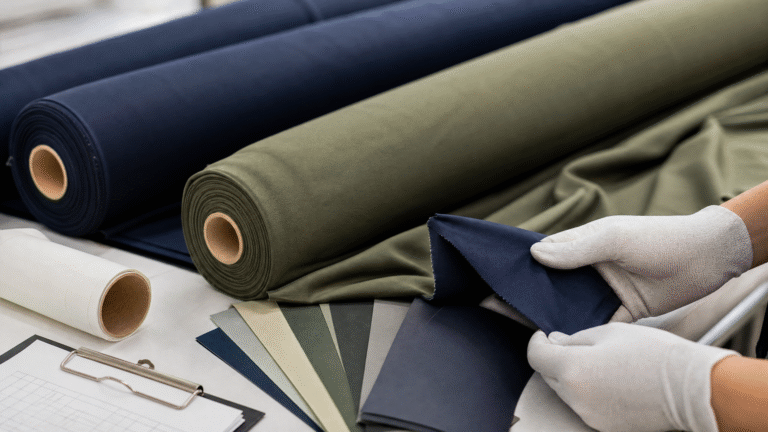
Fabric choice dictates performance, cost, and longevity. The main categories we work with are:
- Nylon/Spandex (Polyamide/Elastane): The industry standard for its durability, color vibrancy, and recovery. Ideal for fashion and performance swimwear.
- Polyester/Spandex (PES/Elastane): Highly chlorine-resistant, making it perfect for swim team apparel and frequent pool use. It has a different hand-feel and dye process than nylon.
- Specialty Fabrics: Including recycled nylon (Econyl), UV50+ fabrics, and printed digital knits. Each has specific cost, minimum, and lead time implications.
We advise on the best fabric for your design, target price point, and intended use, providing swatches and technical data sheets.
The Importance of Fit and Grading
Swimwear fit is exceptionally technical due to the fabric’s stretch. A well-drafted pattern is vital.
- We recommend developing your sample on a fit model whose measurements represent your target customer.
- Grading (creating sizes from your base sample size) must account for the fabric’s stretch properties to ensure consistent fit across the size run. Our pattern makers use specialized software and expertise to grade for stretch fabrics accurately.
Lead Time Realities
A realistic timeline prevents rushed decisions and quality compromises. A typical timeline for a new style is:
- Sampling: 2-3 weeks per round (depending on fabric availability).
- Production: 4-6 weeks after final sample approval and deposit, for a standard order of 2000-3000 pieces.
Factors that extend lead times include custom fabric development (8+ weeks), complex prints, or intricate embellishments like beading.
Evaluating If a Direct Factory Partner Fits Your Needs
This model is powerful but not universally ideal for every business stage. Consider these points:
A direct factory is likely a strong fit if you:
- Have in-house design capability or work with a designer who can create detailed tech packs.
- Value cost transparency and aim to maximize product margins.
- Plan for seasonal collections with a defined number of SKUs.
- Are comfortable managing or appointing your own freight forwarder for shipping.
- See your swimwear line as a core, growing part of your business.
A trading company or full-service agent might still be preferable if you:
- Are a very new brand and need extensive hand-holding in design conceptualization and market guidance.
- Require sourcing of non-swimwear items (cover-ups, accessories) for a complete collection from a single source.
- Have extremely low volume orders (below 300 pieces per style) that do not meet factory MOQs.
- Prefer a completely hands-off approach where one agent manages everything from factory sourcing to door delivery.
For brands ready to engage deeply with the production process, partnering directly with a specialist swimwear manufacturer in China offers control, cost savings, and a collaborative pathway to bringing high-quality designs to market. If you have a developed tech pack or design concept, we can provide a preliminary analysis of cost, feasibility, and timeline.