How Hongxiu Swimwear Dropshipping Works
Swimwear dropshipping looks simple from the storefront. A shopper checks out, and the order is fulfilled somewhere else. The difficult part is the handoff. Product data, stock, prices, store listings, supplier orders and tracking all have to stay aligned. Hongxiu’s dropshipping service puts those pieces in the Partner Portal and connects them to Shopify through the Hongxiu Dropshipping API app.
This guide explains what the service includes, how the portal and Shopify app work together, and what a store owner still needs to manage. It is written for Shopify swimwear stores, boutique owners and sourcing teams that want to add swimwear without holding inventory.
What the Hongxiu dropshipping service includes
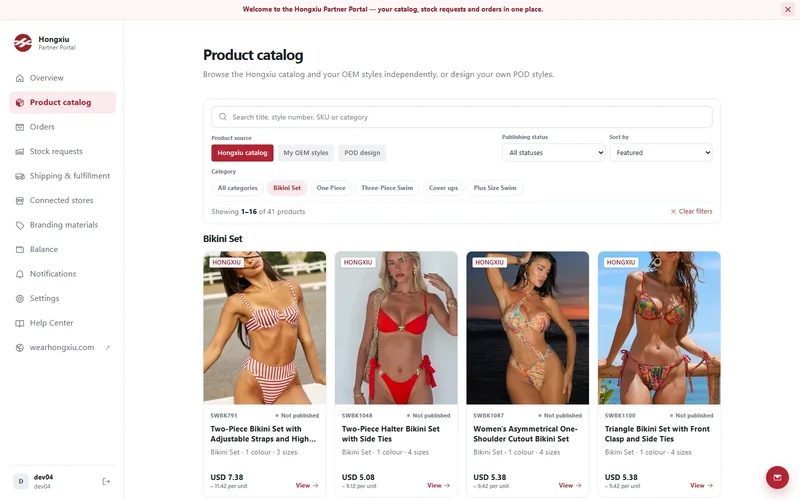
Hongxiu is a swimwear manufacturer in Xingcheng, China. The Partner Portal is the working area. It holds the Hongxiu catalog, the product details prepared for a specific store, stock information, supplier orders and tracking. The Shopify app is the bridge that creates or updates listings, sends orders to the portal and returns tracking to the store.
- The Hongxiu product catalog for ready-to-ship styles, with no minimum order on stock products.
- Store-specific preparation for titles, descriptions, images, variants, selling prices and publication status.
- Order handling, supplier payment, fulfillment and tracking updates from one workspace.
- Optional pre-stock reservations for styles or variants you expect to sell repeatedly.
Treat Hongxiu as the supply and fulfillment layer. Treat the Shopify store as the sales and brand layer. The two systems need clean handoffs, not a shared login.
The four operating steps
Create your account
Register the business with its own email address. The account belongs to the store or sourcing team, not to an individual employee, because the portal holds order, payment and store-connection records. After signing in, the first useful step is to connect a Shopify store.
Connect Shopify
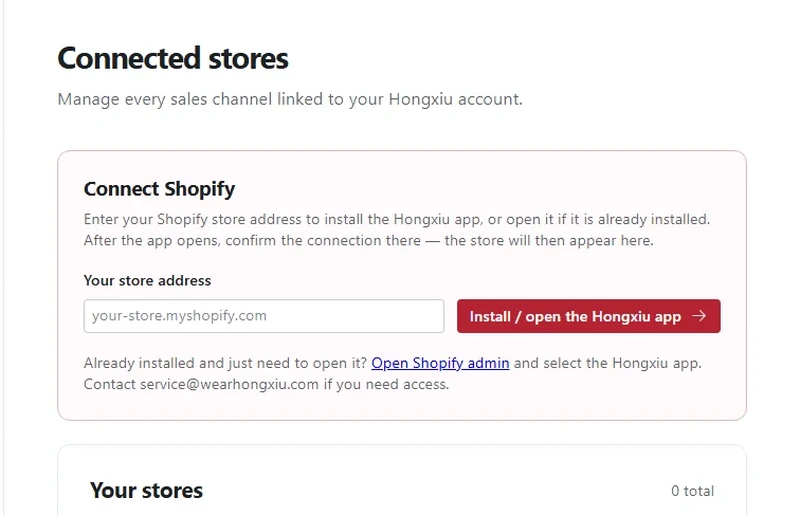
Install the Hongxiu Dropshipping API app in the Shopify admin, then connect that store in the portal. The app asks for the permissions it needs to create products, read orders, update inventory and send tracking back. The portal should show the store as connected before you prepare any listings.
Choose and publish products
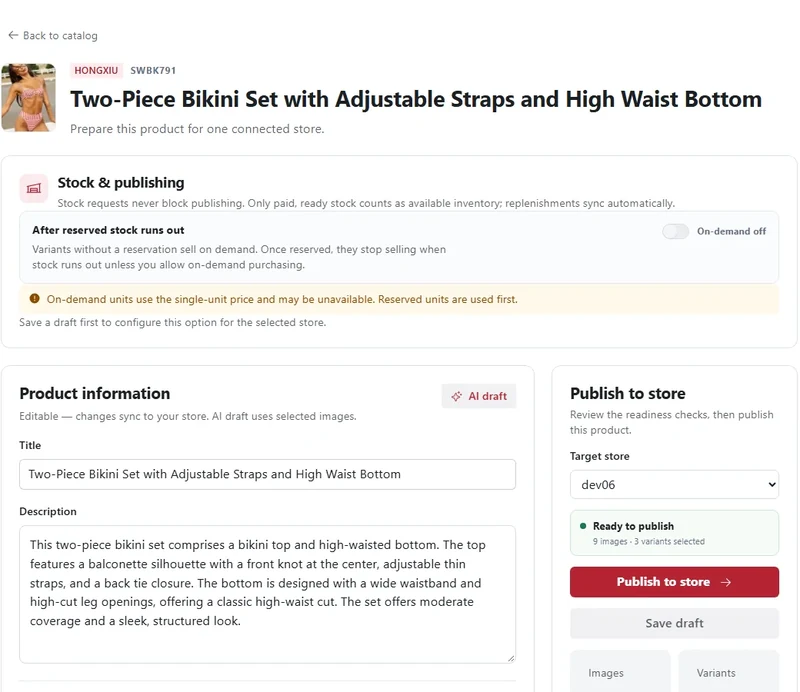
Pick a style from the catalog and prepare the version that belongs to the selected store. Review the title, description, gallery order, colour images, sizes, SKUs and selling price. The portal separates supplier content from store content, so a change made for one store does not silently rewrite another store’s listing.
When the product is ready, publish it to the Online Store. The Shopify app creates the product and variants and applies the selected images. If the supplier later changes product information, the change should be reviewed as an unpublished change rather than pushed over the merchant’s own edits without confirmation.
Fulfill and track orders
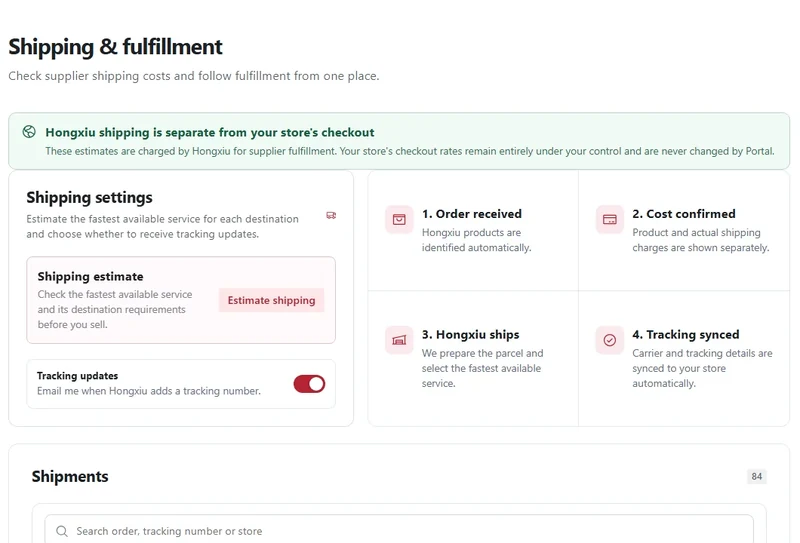
When a shopper orders, the order reaches the portal through the Shopify connection. The merchant reviews the order, confirms the supplier cost and shipping charge, and pays Hongxiu. Hongxiu then prepares the parcel, ships it and sends the tracking number back to the store.
The portal is also where you see the order state between payment and delivery. That matters for customer service: a store owner can answer a shipping question from the order record instead of searching an inbox thread.
Three catalog models, one store
The dropshipping service covers three ways to build a swimwear range. They share the same portal and Shopify connection, but they have different stock and production rules.
- Ready to ship. Choose proven Hongxiu styles held in factory stock. There is no MOQ, and pre-stock is optional when you need reserved units for a launch or a repeat seller.
- POD. Put your own artwork on an existing Hongxiu base style with the built-in designer. There is no MOQ, and production happens after the order.
- OEM. Develop a custom product to your specification. OEM production is quoted separately, usually starts around 100 pieces per style and colour, and the finished stock is stored in Hongxiu’s warehouse for dropship fulfillment.
A store can use more than one model. A ready-to-ship core range can sit beside a small POD collection and a few OEM pieces that carry the brand’s own design direction.
Stock, pricing and the numbers to watch
The portal separates the supplier purchase price from the price your customer pays. You set the store selling price. The Shopify app converts the portal amounts into the store currency using its cached exchange rate, so the price shown in Shopify matches the currency your customers use. Check the final listing after publishing, especially if the store currency is not USD.
Stock is a moving number. The figure in the catalog is the latest supplier snapshot, not a promise that every unit is reserved for your store. A pre-stock request reserves units for the variants you choose. Without a reservation, standard products can be bought on demand, subject to supplier availability.
Build the margin from the full cost, not only the product price. Include supplier shipping, payment fees, returns, advertising and the staff time needed to answer shopper questions. A style with a low unit cost can still be a poor seller if returns or delivery questions eat the margin.
Branding and the customer experience
Hongxiu products normally ship with generic, unbranded labels, hang tags and poly bags. Customers see your store’s packaging and your store’s customer service, not Hongxiu’s brand. If you want custom labels, hang tags or bags, the portal’s branding and packaging workflow lets you choose materials and swap them into fulfillment. Any material cost is quoted before production.
Shipping works the same way. Hongxiu handles the supplier side, and your Shopify store handles the checkout rates and delivery promise shown to the shopper. DDP service is available for supported destinations, so customers in those markets do not receive a separate duty or tax bill. Review the shipping policy and your own store settings before taking orders.
What you still manage
Dropshipping removes the need to hold every size and colour in your own stock. It does not remove the work of running a store. You still own the storefront, the product positioning, advertising, promotions, shopper emails and the returns policy your customers see. You also decide which styles fit your brand and which price points make sense.
Hongxiu handles the supplier product, production or stock, packing and dispatch. If an item arrives damaged or incorrect, the after-sales process starts with the order record and the evidence you provide. Clear product content, a swimwear size guide and realistic delivery expectations prevent many avoidable support cases.
A practical start checklist
- Choose one catalog model and a small starting range instead of publishing the entire catalog at once.
- Connect the Shopify store and confirm that products, inventory and orders can move between the two systems.
- Review the product title, images, variants, size labels and selling price for the selected store.
- Set store shipping rates, delivery regions and the returns policy before the first sale.
- Publish a small test group, place a test order if possible, and follow the order through payment, fulfillment and tracking.
- Keep an eye on stock and reorder or reserve the styles that sell, rather than assuming the catalog will always be available.
The Hongxiu swimwear dropshipping page shows the full workflow and the current catalog entry points. Start there, then use the portal to prepare the products that fit your store.