
New Research Puts Swimwear Fabrics Under the Microscope
Growing scientific attention on microplastic pollution is zeroing in on an uncomfortable reality for the swimwear industry: the very fibers that give swimwear its performance — stretch, chlorine resistance, and shape retention — are also among the most significant contributors to microfiber shedding. A 2025 study published in Environmental Toxicology and Chemistry found that a single dryer cycle releases roughly 138 milligrams of microfibers, while research from Columbia Climate School estimates that an average laundry load sheds hundreds of thousands of synthetic fibers into wastewater systems. For an industry built on nylon, polyester, and elastane, these findings carry implications that extend far beyond the washing machine.
Why Swimwear Fabrics Are Central to the Microfiber Conversation
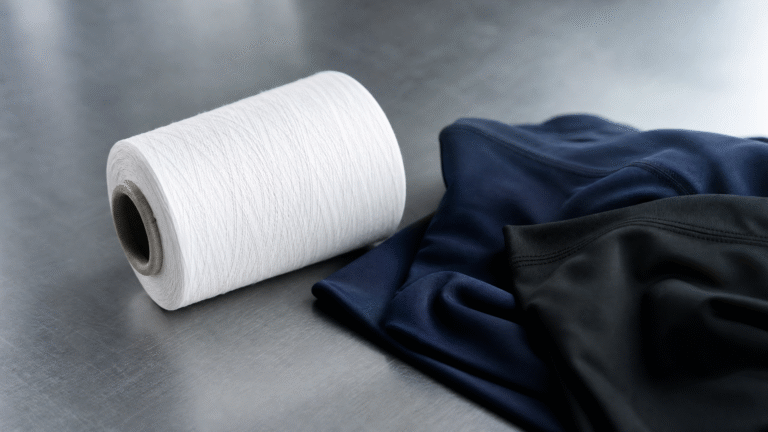
Polyester, nylon, and elastane — the three pillars of modern swimwear construction — are all synthetic polymers, chemically similar to PET plastic bottles spun into thread form. When these fabrics are washed, friction and water turbulence loosen microscopic fibers that wastewater treatment plants cannot fully capture. According to ocean biochemist Joaquim Goes of Columbia Climate School, laundry effluent is “the biggest source of microplastic fibers in our waterways.” These fibers then account for nearly 35 percent of primary microplastics found in the ocean.
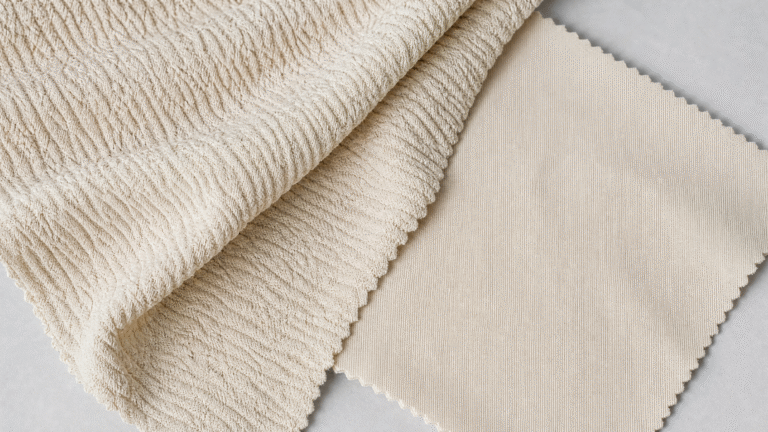
This matters acutely for swimwear manufacturers and brands. Swimwear garments are worn in water and washed frequently, often after every use. They are also constructed with high-stretch elastane blends — sometimes 20 percent elastane or more — and the looser weave structures that allow stretch can exacerbate fiber release. From an OEM swimwear production standpoint, this research underscores a need to reexamine fabric sourcing, weave density, and finishing processes. Tightly woven, high-gauge knits have been shown to shed significantly fewer fibers than open, brushed constructions like fleece, yet swimwear presents a unique challenge: it must balance low-shed density with the four-way stretch consumers expect.
Chemical Additives Add Another Layer of Concern
Beyond the fibers themselves, synthetic swimwear textiles often carry chemical additives that can leach during wear and washing. PFAS compounds used for water and stain resistance, phthalates in printed designs, and BPA residues from polyester manufacturing all introduce toxicological risks alongside physical microfiber pollution. The industry is already seeing regulatory momentum: jurisdictions in the European Union and several U.S. states are tightening restrictions on PFAS in textiles, and brands sourcing wholesale swimwear should anticipate that these requirements will continue to expand. From a manufacturing perspective, this reinforces the value of pursuing OEKO-TEX and GOTS certifications — not merely as marketing assets, but as proactive compliance measures.
Practical Pathways for the Swimwear Supply Chain
The most effective interventions operate at multiple levels. At the fabric stage, sourcing tightly woven constructions, exploring recycled nylon and polyester with optimized filament integrity, and avoiding intentionally fuzzy or brushed finishes can reduce shedding at the source. Garment-level solutions include pre-washing finished swimwear in controlled industrial settings before shipment — an approach that captures loose fibers at the factory rather than sending them into consumer wastewater. Emerging aftermarket washing machine filters, which have demonstrated roughly 87 percent capture rates in peer-reviewed studies, also point toward a future where brands might collaborate with filter manufacturers or offer consumer guidance as part of their brand positioning.
There is also a quieter but meaningful shift toward natural-blend innovation. While 100 percent natural fiber swimwear remains niche due to performance limitations, incremental progress in hemp-cotton and wool-blend swim fabrics hints at a segment that could grow if consumer pressure intensifies. For now, the near-term opportunity lies in optimizing synthetic construction: higher-density weaves, reduced elastane content where feasible, and transparent fiber-shed testing as part of quality assurance.
What This Means Going Forward
Consumer awareness of microplastic pollution is rising, and swimwear — a garment category defined by its relationship with water — is naturally positioned at the center of the conversation. Brands that engage with this issue now, whether through better fabric choices, supply chain transparency, or consumer education on cold-water washing and full-load practices, will be better placed to meet evolving expectations. For sustainable swimwear production, the science is clear: incremental changes in fiber selection, construction density, and pre-shipment finishing are not just environmental considerations — they are becoming competitive differentiators in an increasingly informed global market.