

Swimwear pricing is not only about adding a markup to the factory quote. A profitable price has to cover landed cost, channel margin, brand overhead, returns, promotions and future product development. If the first price model is wrong, even a well-made swimsuit can become difficult to scale.
This guide explains how to move from factory cost to wholesale and retail pricing. It is designed for private label buyers, startup brands and B2B swimwear teams that need a practical pricing structure before placing a bulk order.
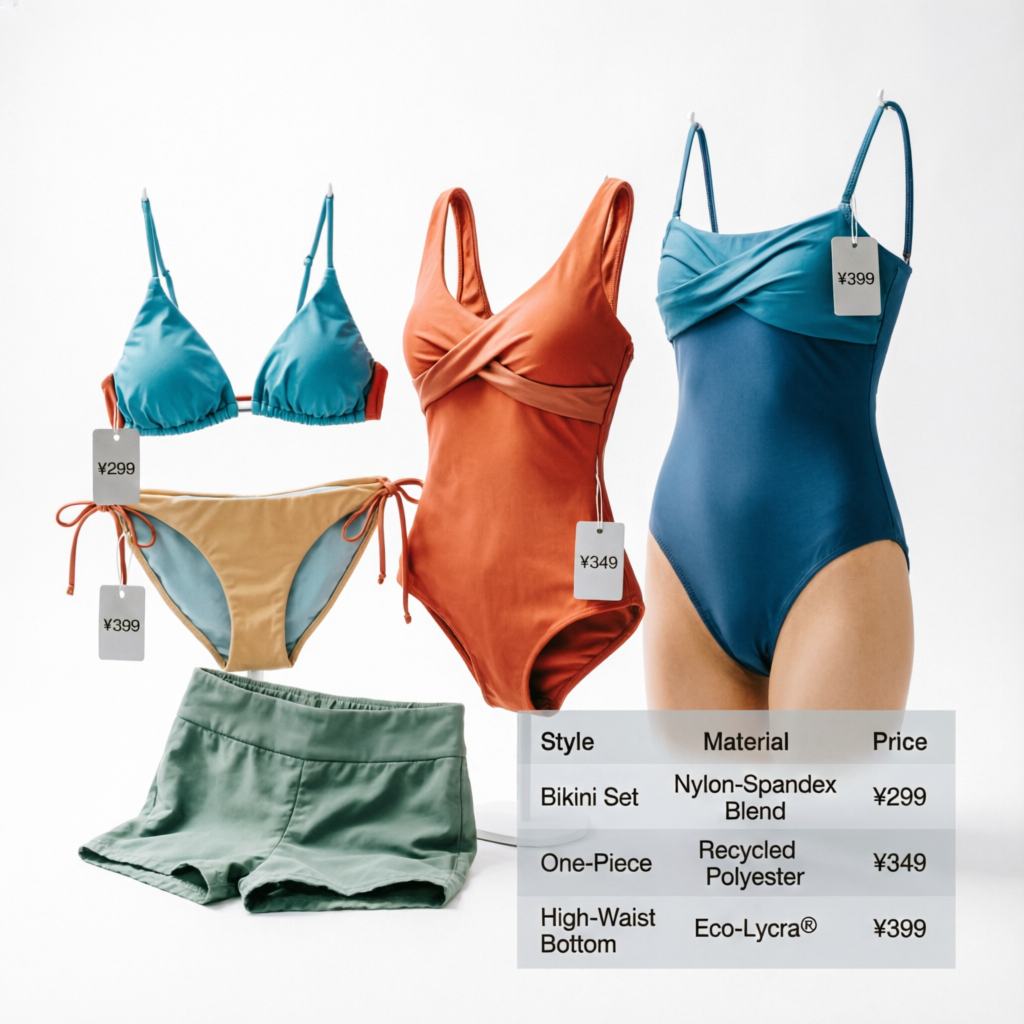
Start With Landed Cost, Not Factory Price
The factory price is only the starting point. Your real cost is landed cost: the total cost of getting the product into your warehouse or fulfillment system.
Landed cost = factory price + freight + duties + payment fees + inspection or handling costs + packaging adjustments
For example, a style that leaves the factory at $8 may become $10 or more after freight and duties. If your pricing model uses the $8 number, your real margin will be overstated from the beginning.
Understand What Drives Factory Cost
Factory cost changes based on more than fabric consumption. Swimwear is sensitive to construction details, lining, support level, pads, trims, print method, order volume and sewing complexity.
- Fabric: nylon-spandex, polyester-spandex, recycled fabric and textured fabric all create different cost structures.
- Construction: a simple bikini top and a structured one-piece require different labor time.
- Trims: rings, sliders, clasps, removable pads and custom labels add both cost and sourcing steps.
- MOQ: higher quantities can reduce unit cost, but they also increase inventory risk.
- Customization level: private label, ODM and full custom projects carry different development costs.
If you are not sure how the production model affects cost, review the private label vs custom swimwear cost guide before finalizing prices.
Wholesale Pricing: Protect Margin and Channel Fit
Wholesale pricing needs to leave enough margin for your business while still allowing retailers to earn their own margin. A common approach is to multiply landed cost by a wholesale markup, then test whether the resulting retail price is realistic for the target customer.
| Positioning | Typical wholesale logic | What to watch |
|---|---|---|
| Entry or mass market | Lower markup, higher volume focus | Cost control and SKU discipline |
| Mid-market brand | Balanced markup with stronger product story | Margin after promotions and returns |
| Premium or designer | Higher markup supported by design, fit and brand value | Customer willingness to pay |
Retail Pricing: Work Backward From the Customer
Retail pricing should reflect what your target customer expects to pay for the style, quality level and brand positioning. A retail price that looks profitable in a spreadsheet can fail if it does not match the market.
Work backward from likely retail price, then calculate whether the landed cost and wholesale price can support the margin you need. This is especially important for startup brands, where photography, returns, paid ads and sample seeding can absorb more budget than expected.
A Simple Pricing Chain Example
- Factory price: $8.00
- Landed cost after freight and duties: $10.00
- Wholesale price at 2x landed cost: $20.00
- Retail price at 2.2x wholesale: $44.00
This example is not a rule. It is a way to test whether the production cost, wholesale channel and retail positioning can work together. If the target retail price is too high for your customer, the solution may be a simpler style, different fabric, tighter SKU plan or different production model.
Pricing Mistakes New Swimwear Brands Should Avoid
- Using factory price instead of landed cost as the margin base.
- Launching too many styles before knowing which sizes and silhouettes sell.
- Ignoring return rates, markdowns and paid acquisition costs.
- Choosing custom details that raise cost but do not raise customer value.
- Setting wholesale prices without checking retailer margin expectations.
For a first collection, pricing and product planning should be handled together. The swimwear startup cost guide can help you connect pricing decisions back to total launch budget.
How Supplier Communication Improves Pricing
A clear supplier brief helps you receive a more accurate quote. Share the target retail price, expected quantity, fabric direction, trim requirements, packaging needs and quality level. This allows the manufacturer to suggest practical cost adjustments before sampling begins.
For custom projects, a detailed tech pack and sample approval process can reduce quote changes later. For private label projects, choosing from existing styles can make the pricing path clearer and faster.