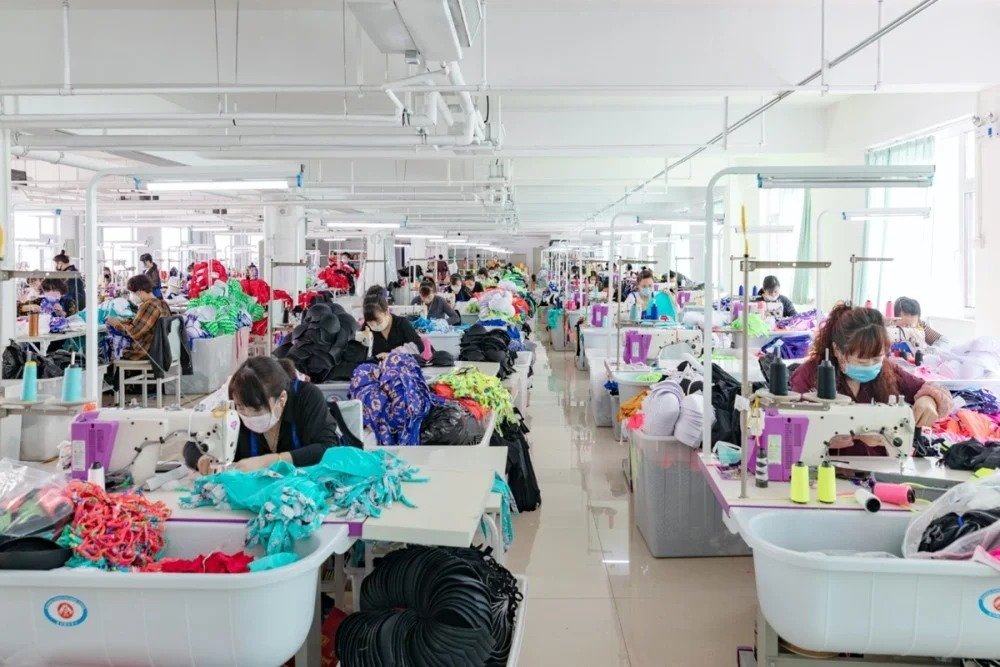
For brands and wholesalers sourcing swimwear, the choice of manufacturing hub directly impacts supply chain resilience, product quality, and speed to market. The Xingcheng swimwear manufacturing hub in Liaoning Province, China, represents a mature, vertically integrated ecosystem specifically engineered for producing performance swimwear and activewear. This concentration of specialized knowledge, from fabric development to final assembly, offers B2B buyers a level of supply chain integration and technical expertise difficult to replicate elsewhere.
How a Regional Focus Built a Global Swimwear Center
Xingcheng’s position wasn’t accidental. Its evolution into a premier swimsuit manufacturing cluster began with a deliberate focus on knitwear and stretch fabrics in the late 20th century. While other regions produced general apparel, local enterprises concentrated on mastering the materials and construction techniques unique to swim and athletic wear. This specialization created a self-reinforcing cycle: skilled labor attracted more swimwear production, which in turn deepened the collective expertise in handling nylon-spandex blends, chlorine-resistant fabrics, and complex elastics. The result is a dense network where hundreds of factories and workshops operate in close proximity, fostering both competition and collaboration. This environment has made the region the operational base for numerous international labels, who rely on its ecosystem not just for bulk orders, but for the entire development cycle from prototyping to delivery.

The Integrated Supply Chain: From Yarn to Finished Garment
The primary advantage for buyers sourcing from Xingcheng is geographic and supply chain consolidation. Nearly every element required for swimwear production is available within a short radius, drastically reducing logistical complexity.
- Raw Material Sourcing: Proximity to major synthetic fiber producers in Northern China ensures reliable access to nylon, polyester, and spandex yarns at competitive prices. Local fabric mills specialize in knitting, dyeing, and finishing these yarns into performance textiles, including printed fabrics and technical blends with UV or chlorine resistance.
- Specialized Component Network: The cluster hosts dedicated manufacturers for all hardware and findings. This includes molded and sewn cups, adjustable straps, rust-proof rings and sliders, and specialty elastics designed for saltwater and chlorine exposure. Sourcing these components locally allows for rapid iteration during sampling and minimizes the risk of supply disruptions.
- Streamlined Production Services: A full suite of supporting services operates in sync with assembly factories. Pattern grading, precision laser cutting for complex shapes, sublimation printing for all-over designs, and independent quality inspection labs are all integral parts of the local ecosystem. This cohesion enables a tech pack to move into physical sampling within days, not weeks.
This vertical integration translates to tangible benefits: shorter lead times, tighter control over quality at each stage, and greater agility in responding to design changes or market trends.
Core Production Capabilities and Technical Specialization
Factories within the Xingcheng hub have developed technical proficiencies that address the specific challenges of swimwear manufacturing. Their expertise goes beyond basic assembly to encompass material science and advanced construction.
Fabric and Material Expertise: Technicians possess deep knowledge of stretch fabric behavior, including recovery, tension, and drape. This is critical for achieving consistent fit across sizes. They are adept at working with:
- Two-way and four-way stretch fabrics
- Laminated fabrics for seamless constructions
- Recycled nylon and polyester blends
- Fabrics with specialty finishes (quick-dry, anti-microbial)
Advanced Construction Techniques: The region’s specialization is evident in the mastery of complex sewing operations. This includes flat-lock stitching (flat-seaming) to prevent chafing, the application of silicone grippers or elastic at leg and neck openings for security, and the precise attachment of hardware under consistent tension. Many factories employ ultrasonic cutting and bonding for clean finishes on technical styles.
Sampling and Development Support: A strong technical design capability is a hallmark of established suppliers here. They can provide constructive feedback on a tech pack regarding fabric suitability, construction feasibility, and cost-engineering suggestions to achieve a target price point without compromising integrity.
Quality Infrastructure and Compliance Frameworks
For B2B buyers, consistent quality and compliance are non-negotiable. The Xingcheng manufacturing base has institutionalized these aspects through dedicated infrastructure and standardized processes.
Quality control is embedded throughout production, not just as a final inspection. In-process checks monitor stitch density, seam strength, elasticity, and hardware attachment at various stages. Dedicated labs within factories or the broader cluster perform standardized tests, such as:
- Colorfastness to chlorinated water, salt water, and sunlight
- Dimensional stability and recovery after stretch
- Fabric weight and composition verification
- Metal detection for broken needles
Compliance readiness is another key factor. Reputable manufacturers in the area maintain certifications that align with global market requirements, including:
- ISO 9001: For quality management systems.
- OEKO-TEX Standard 100: Ensuring fabrics are free from harmful substances.
- Global Recycled Standard (GRS): For products using recycled materials.
- Brand-specific social compliance audits (e.g., SEDEX, BSCI).
This established infrastructure provides buyers with auditable evidence of quality and ethical production practices.
Strategic Sourcing for Different Business Models
The structure of the Xingcheng hub supports diverse buyer needs, from startups to established brands. Your sourcing strategy should align with your business model and volume.
For Emerging Brands & Startups: Leverage the cluster’s flexibility for low-minimum-order-quantity (MOQ) sampling. Smaller workshops or factories with dedicated small-order lines can be ideal partners. Focus on suppliers who offer comprehensive development services—helping refine designs for producibility. Be clear about your growth trajectory to ensure the factory can scale with you.
For Established Brands & Wholesalers: Your priority is likely consistent quality at scale. Partner with larger factories that have dedicated production lines for high-volume orders. These suppliers often have stronger in-house QC labs and more robust compliance documentation. Negotiate based on annual volume commitments rather than per-order pricing to secure better terms.
For Retailers with Private Labels: The integrated supply chain is particularly advantageous. You can work with a factory to develop exclusive fabrics or prints, sourced from local mills, creating a differentiated product. The speed of the local network supports faster turnaround times for seasonal collections.
Regardless of size, the key is to identify partners whose capabilities and capacity match your specific requirements for complexity, volume, and lead time.
Navigating Material Selection and Development
A significant part of sourcing swimwear involves material decisions. The proximity to fabric mills in Xingcheng allows for hands-on collaboration during this phase.
Key Fabric Considerations:
- Nylon/Spandex vs. Polyester/Spandex: Nylon blends offer a softer hand and better color vibrancy for prints but may be less resistant to chlorine degradation. Polyester blends are generally more chlorine-resistant and durable, though the hand feel can be firmer. Discuss the primary use case (frequent chlorinated pool vs. ocean/beach) with your supplier.
- Fabric Weight: Measured in grams per square meter (GSM). Lighter weights (e.g., 160-180 GSM) are used for minimalist styles and offer less coverage. Medium weights (190-220 GSM) provide good support and durability for most applications. Performance or athletic styles may use heavier fabrics.
- Print vs. Solid: Sublimation printing, widely available in the hub, allows for unlimited, fade-resistant colors and patterns. For solids, consider piece-dyed versus yarn-dyed fabrics; yarn-dyeing often provides better colorfastness.
Prototyping with Physical Swatches: Always request physical fabric swatches and have them tested for your specific quality parameters before locking in a material. A good factory will guide you toward fabrics that perform well for your design’s intended use and construction method.
Mitigating Common Sourcing and Production Risks
Even within an efficient hub, challenges can arise. Proactive planning is essential.
Communication and Spec Management: The most frequent issues stem from unclear specifications. Provide comprehensive tech packs with clear, numbered callouts, approved physical samples, and reference fabrics. Use a single point of contact at the factory and schedule regular video calls during critical phases like sample approval and production start.
Lead Time Realism: While the integrated supply chain speeds processes, build realistic timelines. Account for:
– Fabric sourcing and testing (2-3 weeks)
– Sample development and revisions (3-4 weeks)
– Bulk fabric procurement and approval (2-3 weeks)
– Production and quality inspection (4-6 weeks, depending on order size)
– Shipping and logistics (variable)
Quality Assurance Protocols: Don’t rely solely on the factory’s final inspection. Define your AQL (Acceptable Quality Level) standards upfront (e.g., AQL 2.5 for major defects). Hire a third-party inspection service for pre-shipment inspections, especially for initial orders. Be present for pilot run approvals if possible.
Managing Cost Fluctuations: Raw material costs, particularly for synthetic fibers, can be volatile. Discuss pricing structures with potential partners—some may offer firm quotes for 30-60 days, while others may have raw material price adjustment clauses. Understanding this upfront prevents disputes later.
Future Trends and Evolving Capabilities
The Xingcheng swimwear production center is not static. It is adapting to global market demands, which presents new opportunities for forward-thinking brands.
Sustainability Integration: Investment in sustainable production is growing. This includes increased capacity for fabrics made from recycled materials (ECONYL®, recycled polyester), development of bio-based fibers, and implementation of water-saving dyeing technologies (e.g., dope-dyeing). Factories are also improving waste management systems for fabric off-cuts.
Digitalization and Speed: Adoption of 3D design software for virtual sampling is accelerating, allowing for faster iteration and reduced physical sample waste. Digital printing technologies are enabling more economical small-batch, on-demand production runs.
Advanced Product Categories: The technical expertise is expanding into adjacent high-performance categories. This includes athletic swimwear for training, sophisticated shapewear incorporating swim fabric technology, and hybrid apparel designed for water-to-land wear.
For buyers, this evolution means the hub is poised to support more complex, value-added, and sustainable product lines, reinforcing its long-term viability as a strategic sourcing partner.
Sourcing from the Xingcheng swimwear manufacturing hub provides access to a deep pool of specialized knowledge and a streamlined supply chain. Success depends on selecting the right swimwear manufacturer partner within that ecosystem—one whose technical capabilities, quality systems, and business philosophy align with your brand’s needs. A thorough due diligence process, clear communication, and a collaborative approach will yield the consistency, quality, and innovation required in today’s competitive swimwear market.